Tag: benefit

  • Make a Difference: The Surprising Ways Volunteering Can Benefit Your Career

    Make a Difference: The Surprising Ways Volunteering Can Benefit Your Career

    Introduction

    In today’s fast-paced and competitive job market, professionals are constantly looking for ways to differentiate themselves, enhance their skills, and build meaningful connections. While many focus on traditional methods such as taking courses or attending networking events, there’s a often-overlooked strategy that can significantly impact one’s career: volunteering. Volunteering, or the act of giving one’s time and energy to help others without expectation of payment, is widely recognized for its societal benefits. However, it also has a profound impact on personal and professional development. This article will delve into the surprising ways volunteering can benefit your career, from enhancing your skill set and broadening your network, to boosting your career prospects and fostering a sense of fulfillment.

    Enhancing Your Skill Set

    Volunteering provides a unique opportunity to develop and refine skills that are highly valued by employers. Whether it’s leadership, communication, problem-solving, or teamwork, volunteering can help you hone these skills in real-world settings. For instance, managing a volunteer project can teach you about planning, budgeting, and executing tasks, all of which are crucial in any professional environment. Similarly, working with diverse groups of people can improve your interpersonal skills, adaptability, and empathy, making you a more effective collaborator in the workplace.

    Moreover, volunteering can expose you to new industries, roles, and challenges, allowing you to explore different career paths without making long-term commitments. This can be particularly beneficial for students, recent graduates, or those looking to transition into a new field, as it provides hands-on experience and insight into what a particular career entails. By taking on volunteer roles that align with your career aspirations, you can gain practical experience, build your portfolio, and demonstrate your capabilities to potential employers.

    Broadening Your Network

    Volunteering is an excellent way to meet like-minded professionals, establish meaningful connections, and expand your professional network. The contacts you make through volunteering can lead to valuable recommendations, mentorship opportunities, and even job openings. Many organizations use volunteer programs as a way to identify and recruit talented individuals who share their mission and values. By volunteering, you can get your foot in the door and showcase your skills and commitment to potential employers.

    Additionally, the diversity of volunteer environments means you can interact with people from various backgrounds, industries, and levels of expertise. These interactions can lead to learning from others’ experiences, gaining new perspectives, and developing a more nuanced understanding of your field. Networking opportunities are not limited to the volunteer organization itself; many volunteers attend community events, conferences, and workshops related to their cause, further expanding their professional circle.

    Boosting Your Career Prospects

    The impact of volunteering on career prospects should not be underestimated. Employers view volunteering as a positive trait, indicating a candidate’s willingness to take initiative, contribute to society, and work towards a common goal. In a competitive job market, highlighting volunteer experience can make a candidate’s resume more attractive, demonstrating their proactive approach to skill development and community engagement.

    Moreover, volunteering can lead to career advancement opportunities within your current organization. Demonstrating your commitment and value through volunteer work can position you for promotions or new roles, as it showcases your leadership potential, work ethic, and ability to handle additional responsibilities. In some cases, volunteer experience can be directly applicable to your professional role, allowing you to apply the skills and knowledge gained through volunteering to improve your performance and contribute more significantly to your organization.

    Fostering a Sense of Fulfillment

    Beyond the professional benefits, volunteering has a profound impact on personal fulfillment and happiness. Contributing to a cause you believe in can give you a sense of purpose and satisfaction, improving your overall well-being and life balance. This, in turn, can lead to increased positivity, resilience, and motivation, benefiting all areas of your life, including your career.

    Furthermore, the challenges and achievements experienced through volunteering can enhance your self-confidence and self-esteem. Overcoming obstacles and seeing the positive impact of your efforts can be incredibly empowering, allowing you to approach your professional life with more confidence and ambition. By integrating volunteering into your lifestyle, you can cultivate a more positive and growth-oriented mindset, which is essential for achieving long-term career success and personal fulfillment.

    Overcoming Challenges and Finding Opportunities

    While the benefits of volunteering are numerous, there are challenges to consider, such as finding the time, identifying the right opportunity, and balancing volunteering with other commitments. However, with a little creativity and planning, these challenges can be overcome. Many volunteer roles are flexible, offering part-time, remote, or project-based opportunities that can fit into even the busiest of schedules.

    To find the right opportunity, reflect on your interests, skills, and career goals. Look for volunteer roles that align with these aspects, as this will not only make the experience more enjoyable but also more beneficial for your career. Utilize online platforms, community centers, and professional networks to discover volunteer opportunities. Some organizations also offer volunteer abroad programs, which can be a unique way to gain international experience and broaden your cultural understanding.

    Conclusion

    Volunteering is a powerful tool for career development, offering a wide range of benefits from enhancing your skill set and broadening your network, to boosting your career prospects and fostering a sense of fulfillment. By incorporating volunteering into your professional strategy, you can differentiate yourself in the job market, gain valuable experience, and contribute to causes that matter. Whether you’re looking to advance in your current role, transition into a new field, or simply build meaningful connections, volunteering can play a significant role in achieving your career goals. So, take the first step today, explore volunteer opportunities that resonate with you, and discover the surprising ways volunteering can make a difference in your career.

    FAQs

    Q: How do I find volunteer opportunities that align with my career goals?

    A: Utilize online volunteer platforms, professional networks, and community centers to find opportunities. Reflect on your interests, skills, and career aspirations to identify roles that are a good fit.

    Q: Can volunteering really lead to job opportunities?

    A: Yes, volunteering can lead to job opportunities. Many organizations use volunteer programs as a way to identify and recruit talented individuals. Additionally, the contacts and networks you build through volunteering can lead to job recommendations and openings.

    Q: How can I balance volunteering with my busy schedule?

    A: Look for flexible volunteer opportunities such as part-time, remote, or project-based roles. Prioritize your commitments and plan your time effectively to ensure you can fulfill your volunteer responsibilities.

    Q: What skills can I expect to gain through volunteering?

    A: Volunteering can help you develop a wide range of skills including leadership, communication, problem-solving, teamwork, and time management. The specific skills you gain will depend on the type of volunteer work you do.

    Q: Is volunteering beneficial for recent graduates or those looking to change careers?

    A: Yes, volunteering can be particularly beneficial for recent graduates or those looking to transition into a new field. It provides hands-on experience, insight into different careers, and the opportunity to build a professional network in your desired field.

  • Do Heart Stents Benefit Angina Chest Pain? 

    Do Heart Stents Benefit Angina Chest Pain? 

    Sham surgery trials prove that procedures like non-emergency stents offer no benefit for angina pain—only risk to millions of patients.

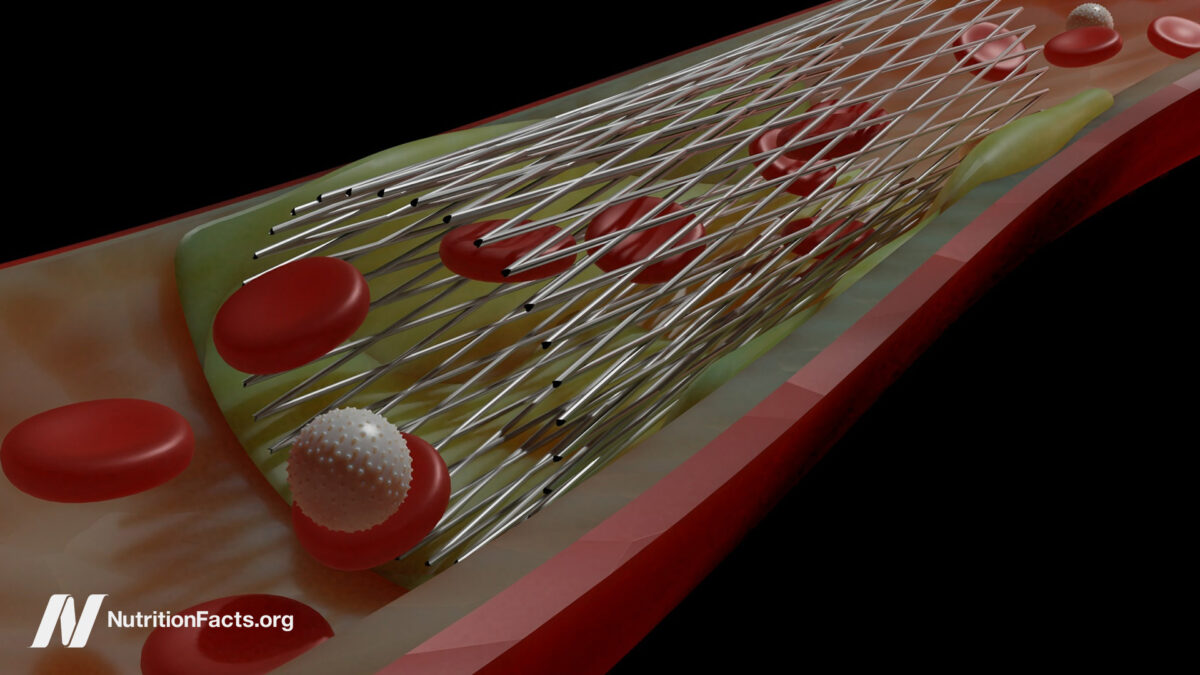
    Angioplasty and stents—percutaneous coronary intervention (PCI)—for stable, non-emergency coronary artery disease are among “the most common invasive procedures performed in the United States.” Though they appeared to offer immediate relief of angina chest pain in stable patients with coronary artery disease, that didn’t actually translate into a lower risk of heart attack or death. This is because the atherosclerotic plaques that narrow blood flow tend not to be the ones that burst and kill us. Symptom control is important, though, and is much of what we do in medicine, but cardiology has a bad track record when it comes to performing procedures that don’t actually end up helping at all.

    Case in point: internal mammary artery ligation. Though it didn’t make much anatomical sense—why would tying off arteries to the chest wall and breast somehow improve coronary artery circulation?—it worked like a charm with immediate improvement in 95 percent of hundreds of patients. Could it have just been an elaborate placebo effect, and surgeons were cutting into people for nothing? There’s only one way to find out: Cut into people for nothing.

    As I discuss in my video Do Heart Stent Procedures Work for Angina Chest Pain?, people were randomized to get the actual surgery or a sham (or fake) surgery where patients were cut open and the surgeon got to the last step but didn’t actually tie off those arteries. The result? “Patients who underwent a sham operation experienced the same relief.” Check out the testimonials: “Practically immediately, I felt better.” “I’m about 95 percent better.” “No chest trouble even with exercise.” “Believe I’m cured.” And these are all people who got the fake surgery. So, it was just an extravagant placebo effect. Think about it. “The frightened, poorly informed man with angina [chest pain], winding himself tighter and tighter, sensitizing himself to every twinge of chest discomfort, who then comes into the environment of a great medical center and a powerful positive personality and sees and hears the results to be anticipated from the suggested therapy is not the same total patient who leaves the institution with the trademark scar.” He hears how great he’s going to feel, goes through the whole operation, and leaves a new man with that trademark scar.

    One sham patient was actually cured, though. “The patient is optimistic and says he feels much better.” The next day’s office note reads: “Patient dropped dead following moderate exertion.” This has happened over and over.

    What if we burn holes into the heart muscle with lasers to create channels for blood flow? It seemed to work great until it was proven that it doesn’t work at all. Cutting the nerves to our kidneys was heralded as a cure for hard-to-treat high blood pressure until sham surgery proved that procedure was a sham, too. “The necessity for placebo-controlled trials has been rediscovered several times in cardiology, typically to considerable surprise.” Before they are debunked, “often a therapy is thought to be so beneficial that a placebo-controlled trial is deemed unnecessary and perhaps unethical.” That was the case with stents.

    Hundreds of thousands of angioplasties and stents are done every year, yet placebo-controlled trials have never been done. Why? Because cardiologists were so unquestioningly sure it worked “that it might be unethical to expose patients to an invasive placebo procedure.” Why perform a fake surgery to prove something we already know is true? “When patients are aware they have had PCI, they have a clear reduction in angina and improved quality of life.” But what if they weren’t aware they had a stent placed inside them? Would it still work?  

    Enter the ORBITA trial. After all, “anti-anginal medication is only taken seriously if there is blinded evidence of symptom relief” against a placebo pill, so why not pit stents against a placebo procedure? “In both groups, doctors threaded a catheter through the groin or wrist of the patient and, with X-ray guidance, up to the blocked artery. Once the catheter reached the blockage, the doctor inserted a stent or, if the patient was getting the sham procedure, simply pulled the catheter out.”

    The researchers had problems getting the study funded. They were told: “We know the answer to this question—of course, PCI works.” And that’s even what the researchers themselves thought. They were interventional cardiologists themselves. They just wanted to prove it. Boy, were they surprised. Even in patients with severe coronary artery narrowing, angioplasty and stents did not increase exercise time more than the fake procedure.

    “Unbelievable,” read the New York Times headline, remarking that the results “stunned leading cardiologists by countering decades of clinical experience.” In response to the blowback, the researchers wrote that they “sympathize with our community’s shock and its instinct to invalidate the trial. Applying a positive spin could have smoothed the reception of the trial, but as authors we have a duty to preserve scientific integrity.”

    While some “commended them for challenging the existing dogma around a procedure that has become routine, ingrained, and profitable,” others questioned their ethics. After all, four patients in the placebo group had complications from the insertion of the guide wire and required emergency measures to seal the tear made in the artery. There were also three major bleeding events in the placebo group, so they suffered risks without even a chance of benefit. But “far from demonstrating the risks of sham-controlled PCI trials, this demonstrates exactly what patients are being subjected to on a routine basis, without evidence of benefit.”

    Those few complications in the trial “are dwarfed in magnitude” by the thousands who have been maimed or even killed by the procedure over the years. Do you want unethical? How about the fact that an invasive procedure has been performed on millions of people before it was ever actually put to the test? Maybe “we should consider the absence, not the presence, of sham control trials to be the greater injustice.”

    When a former commissioner of the U.S. Food and Drug Administration was asked at the American Heart Association meeting “whether sham controls should be required for device approval, he thought that it was more of a decision for the clinical community: ‘Do you want to get the truth or not?’”


    Source link

  • Can Fish Oil Benefit Older Adult Brains? Here’s What Study Says

    Can Fish Oil Benefit Older Adult Brains? Here’s What Study Says

    Can fish oil benefit brain health in older adults? Well, it depends. A new study found that while a specific group of older adults could benefit from regular fish oil use, the general population did not experience the same advantages.

    A clinical trial conducted at the Oregon Health & Science University (OHSU) examined the brain health effects of fish oil among older adults and discovered that omega-3 fatty acid use could benefit those with a genetic predisposition to Alzheimer’s. However, researchers did not find significant benefits for all older adults in general.

    The researchers examined WML (white matter lesion) progression and neuronal integrity breakdown, the factors associated with increased risk of Alzheimer’s disease among 102 participants aged 75 or older.

    The participants typically had relatively low blood levels of omega-3 fatty acids, which are found in fish oil. To assess the amount of change in white matter lesions in the brain, they underwent magnetic resonance imaging (MRI) of their brains during enrollment and at the end of three years. These participants either took a three-year treatment with 1.65 g of Omega-3 polyunsaturated fatty acids or a soybean oil placebo that tasted and looked similar.

    “Our findings showed that over three years, there was not a statistically significant difference between the placebo and the group that took fish oil. I don’t think it would be harmful, but I wouldn’t say you need to take fish oil to prevent dementia,” Lynne Shinto, senior co-author from OHSU, said in a news release.

    “Although ω-3 treatment failed to reach a significant reduction in WML progression and neuronal integrity breakdown among all participants at risk for dementia, the findings suggest that APOE*E4 carriers may benefit from ω-3 treatment,” the researchers wrote in the study published in the journal Jama Network. APOE*E4 carriers are a known genetic risk factor for late-onset Alzheimer’s disease.

    The study has certain limitations due to the participants being demographically and geographically homogeneous, limiting the generalizability of the findings. “A future multisite trial will have the ability to enroll a more ethnically, racially, and geographically diverse population and provide an adequate sample size to permit the assessment of clinical benefits, ” the researchers wrote.

    Source link