Tag: beat

  • How to Beat Heart Disease Before It Starts

    How to Beat Heart Disease Before It Starts

    Why might healthy lifestyle choices wipe out 90% of our risk for having a heart attack, while drugs may only reduce risk by 20% to 30%?

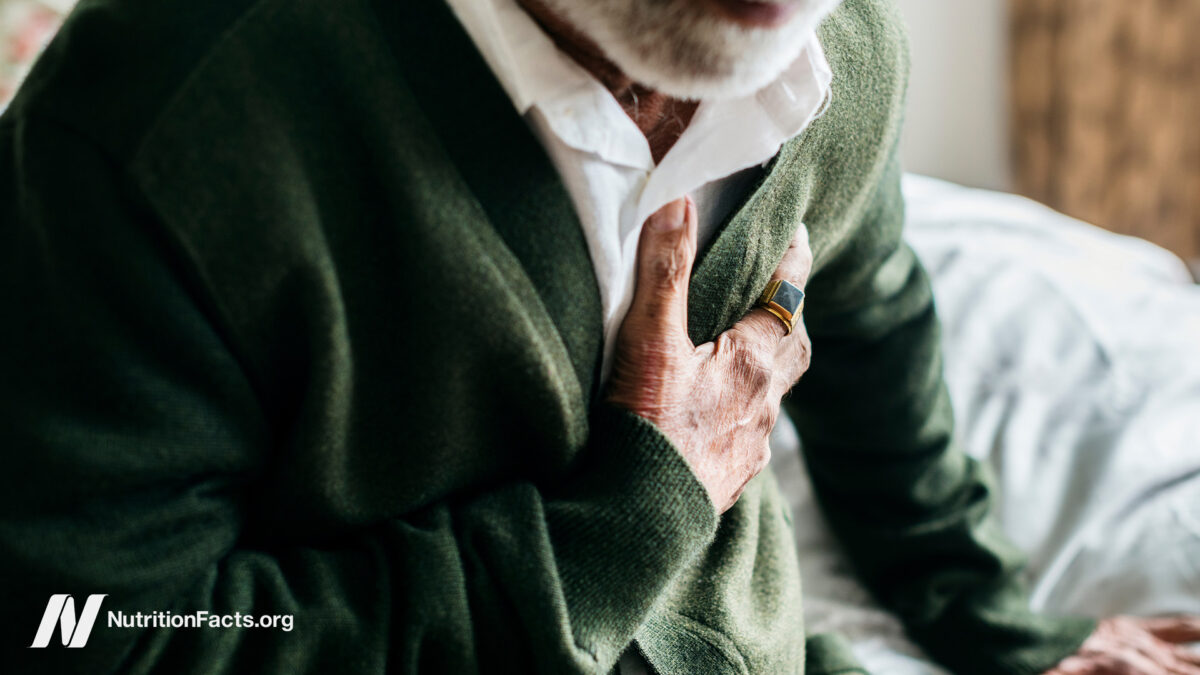
    On the standard American diet, atherosclerosis—hardening of the arteries, the number one killer of men and women—has been found to start in our teens. Investigators collected about 3,000 sets of coronary arteries and aortas (the aorta is the main artery in the body) from victims of accidents, homicides, and suicides who were 15 to 34 years old and found that the fatty streaks in arteries can begin forming in our teens, which turn into atherosclerotic plaques in our 20s that get worse in our 30s and can then become deadly. In the heart, atherosclerosis can cause a heart attack. In the brain, it can cause a stroke. See the progression below and at 0:35 in my video Can Cholesterol Get Too Low?.

    How common is this? All of the teens they looked at—100% of them—already had fatty streaks building up inside their arteries. By their early 30s, most already had those streaks blossoming into atherosclerotic plaques that bulged into their arteries. From ages 15 through 19, their aortas had fatty streaks building up throughout them, but no plaques yet, on average, as seen below and at 1:15 in my video.

    The plaques started appearing in their abdominal aorta in their early 20s and worsened by their late 20s, by which time fatty streaks had infiltrated throughout. By their early 30s, their arteries were in bad shape, as seen below and at 1:25 in my video.

    But that’s just the abdominal aorta, the main artery running through the torso that splits off into our legs. What about the coronary arteries that feed the heart?

    Researchers found the same pattern: fatty streaks in teens, early signs of plaque in early 20s that progress with age, and by the early 30s, most people already had plaques in their coronary arteries, as seen below and at 1:47 in my video.

    Atherosclerosis starts as early as adolescence.

    That’s why we shouldn’t wait until heart disease becomes symptomatic to treat it. If it starts in our youth, we should start treating it when we’re youths. If you knew you had a cancerous tumor, you wouldn’t want to wait until it grew to a certain size to treat it. If you had diabetes, you wouldn’t want to wait until you started going blind before you did something about it. So, how do you treat atherosclerosis? You lower LDL cholesterol through a diet low in saturated fat and cholesterol—a diet that’s low in eggs, meat, dairy, and junk.

    If we want to stop this epidemic, we have to “alter our lifestyle accordingly, beginning in infancy or early childhood. Is such a radical proposal totally impractical?” (Eating more healthfully? Radical?!) It would take serious dedication to change our behavior, but atherosclerosis is our number one cause of death. In the case of cigarettes, we did pretty well, slashing smoking rates and dropping lung cancer rates. And, yes, healthy eating is safe. According to the Academy of Nutrition and Dietetics, the largest and oldest association of nutrition professionals in the world, even strictly plant-based diets are appropriate for all stages of life, starting from pregnancy. (NutritionFacts.org is among the websites recommended by the Academy for more information.)

    The title of an important study published in the Journal of the American College of Cardiology declares: “Curing Atherosclerosis Should Be the Next Major Cardiovascular Prevention Goal.” What evidence do we have that a lifelong suppression of LDL will do it? There is a genetic mutation of a gene called PCSK9 that about 1 in 50 African Americans are lucky to be born with because it gives them about a 40% lower LDL cholesterol level their whole lives. Indeed, they were found to have dramatically lower rates of coronary heart disease—an 88% drop in risk compared to those without the genetic mutation, despite otherwise terrible cardiovascular risk factors on average. Most had high blood pressure and were overweight, almost a third smoked, and nearly 20% had diabetes, but that highlights how a lifelong history of low LDL cholesterol levels can substantially reduce the risk of coronary heart disease, even when there are multiple risk factors.

    This near-90% drop in events like heart attacks or sudden death occurred at an average LDL level of 100 mg/dL, compared to 138 mg/dL in those without the genetic mutation. This means LDL can drop below even 100 mg/dL. Why does a drop in LDL cholesterol by about 40 mg/dL from a lucky genetic mutation lower the risk of coronary heart disease by nearly 90%, while the same reduction with statin drugs lowers it by only about 20%? The most probable explanation? Duration. When it comes to lowering LDL cholesterol, it’s not only about how low it is, but how long it’s been low.

    That’s why healthy lifestyle choices may wipe out about 90% of our risk for having a heart attack, while drugs may reduce it by only 20% to 30%. If you’re getting treated with drugs later in life, you may have to get your LDL under 70 mg/dL to halt the progression of coronary atherosclerosis. But if we start making healthier choices earlier, it may be enough to lower LDL cholesterol just to 100 mg/dL, which should be achievable for most of us. That’s consistent with country-by-country data that suggested death from heart disease would bottom out at a population average of about 100 mg/dL, as seen below and at 5:21 in my video.

    But that’s only if you can keep your LDL cholesterol down your whole life.

    If you’re relying on medication later in life to halt disease progression, you may need to get your LDL below 70 mg/dL, and if you’re trying to use drugs to reverse a lifetime of bad food choices, you may not get to zero coronary heart disease events until your LDL drops to about 55 mg/dL. If your heart disease is so bad that you’ve already had a heart attack but you’re trying not to die from another one, ideally, you might want to push your LDL down to about 30 mg/dL. Once you get that low, not only would you likely prevent any new atherosclerotic plaques, but you’d also help stabilize the plaques you already have so they’re less likely to burst open and kill you.

    Is it even safe to have cholesterol levels that low, though? In other words, can LDL cholesterol ever be too low? We’ll find out next.

    Doctor’s Note

    Didn’t know atherosclerosis could start at such a young age? See Heart Disease Starts in Childhood.

    For more on drugs versus lifestyle, check out my video The Actual Benefit of Diet vs. Drugs.

    Want to learn more about so-called primordial prevention? See When Low Risk Means High Risk.

    Does Cholesterol Size Matter? Watch the video to find out.


    Source link

  • How to Beat Creative Blocks at Work

    How to Beat Creative Blocks at Work

    Hit a wall at work? This quick video shares one piece of advice to help you beat creative blocks and generate fresh ideas.

    It’s Monday afternoon and maybe that second cup of coffee isn’t getting your brain geared quite the way you expected it to (although maybe another three will be okay, according to a Harvard neuroscientist.)

    When you’ve hit a wall at work, this video from New York Magazine‘s Science of Us suggests it’s time to go into tinker-mode. Research on creative problem solving shows people don’t spend enough time in this phase. The solution? Keep at it. People come up with better solutions the longer they spend working on them.


    Tinkering is key—the brain has “leaky filters,” as science columnist Sharon Begley writes. When we give ourselves the time, disparate items can sift together to form new combinations: the essence of creativity. “Short of a personality or brain transplant, you can maximize your inherent creativity by sheer perseverance.”  

    “Original ideas tend to be remote,” Mark Runco, professor of creativity studies at the University of Georgia and founder of the Creativity Research Journal argues, which means that the first 10 uses of string you think of will likely be commonplace, but if you push yourself, the next 10 will include some quite creative ones.

    The upshot? When it comes to creative blocks, if original ideas come late in the creative process, he points out, we should give ourselves time and space to come up with those “remote” ideas—time for our leaky filters to allow notions that have never made each other’s acquaintance to come together and undergo a kind of alchemy.


    Source link

  • How To Walk For A Steady Beat

    How To Walk For A Steady Beat

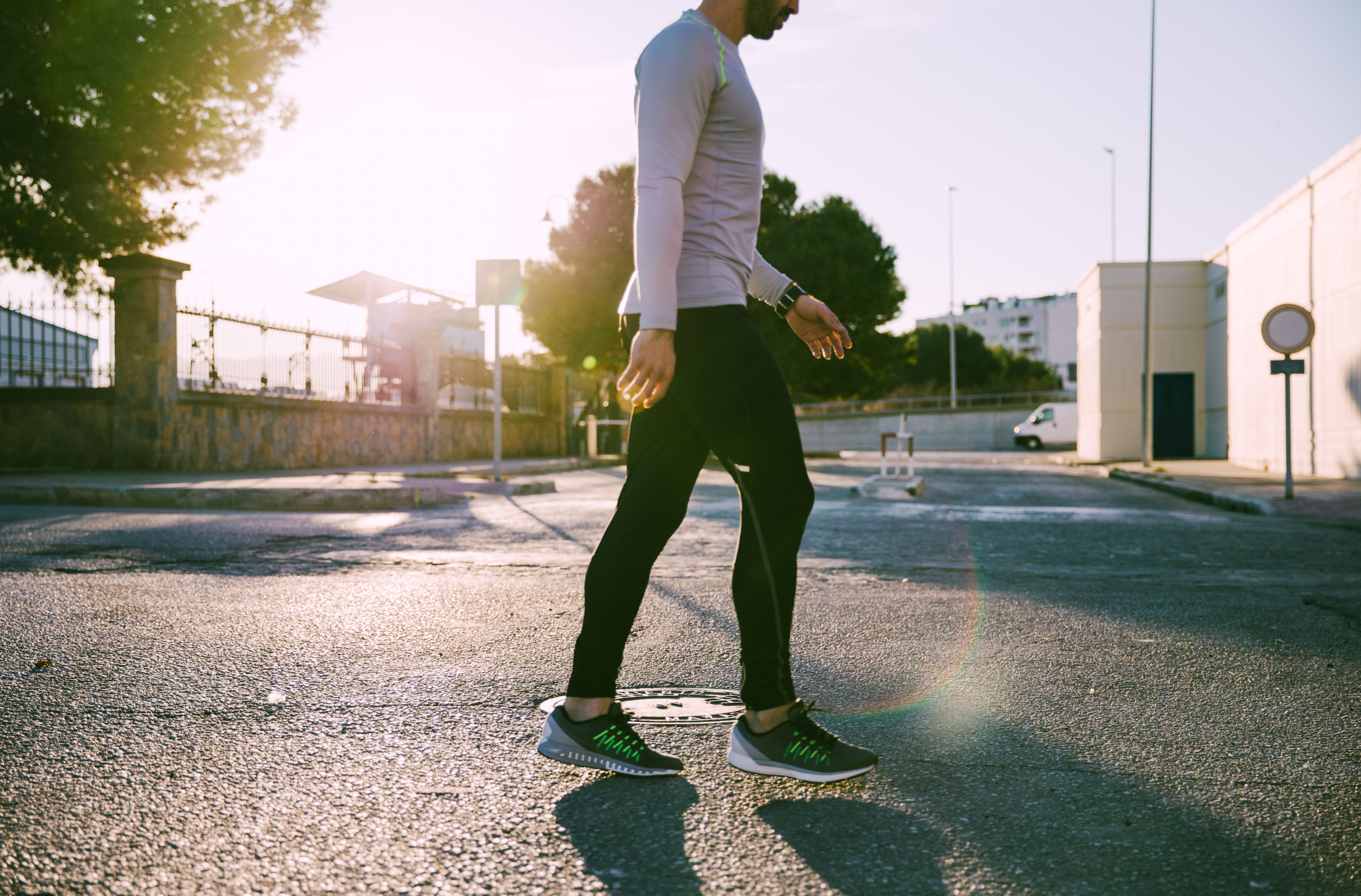
    Walking is considered one of the best forms of exercise for heart health. Researchers now say, it’s not just how much you walk but the pace at which you stride also counts when it comes to heart rhythms.

    A recent study published in the journal Heart suggests that not just walking but walking briskly and for sustained periods, may significantly lower the risk of developing heart rhythm disorders. These include atrial fibrillation, a common condition that causes an irregular and often rapid heartbeat; tachycardia, where the heart beats too fast; and bradycardia, where it slows down more than it should.

    In a large-scale study that looked at the walking pace and heart rhythm disorders of 420,925 participants of the UK Biobank, researchers found that people who walked at an average pace (3–4 miles per hour) or brisk pace (over 4 miles per hour) had up to a 43% lower risk of developing heart rhythm issues compared to slow walkers (under 3 miles per hour). Specifically, brisk walkers saw a 46% drop in risk for atrial fibrillation and a 39% lower risk for other arrhythmias.

    Participants who walked briskly were generally younger, more likely to be White and male, and had healthier lifestyles. They also displayed lower risk factors such as smaller waists, reduced body weight, better grip strength, and lower levels of metabolic risk factors, including blood fats, fasting glucose, and inflammation.

    The researchers also noted that 36% of the association between walking pace and heart rhythm abnormalities was influenced by metabolic and inflammatory factors. The association between walking pace and heart health was strongest among women, those under 60, non-obese individuals, those with high blood pressure, and those with two or more long-term conditions.

    Another notable finding was that spending more time walking at a brisk or average pace was associated with a 27% lower risk of heart rhythm abnormalities, while slow walking showed no such benefit in reducing the risk.

    “This study is the first to explore the pathways underpinning the association between walking pace and arrhythmias, and to provide evidence that metabolic and inflammatory factors may have a role: walking faster decreased the risk of obesity and inflammation, which, in turn, reduced the risk of arrhythmia,” the researchers wrote.

    The researchers caution that, as an observational study, it cannot prove cause and effect. They also note some limitations, including reliance on self-reported data and a study population that did not represent a wide range of ages and ethnic backgrounds.

    Source link

  • Beat the Heat: 10 Essential Tips for Preventing Dehydration During Exercise

    Beat the Heat: 10 Essential Tips for Preventing Dehydration During Exercise

    As the weather heats up, many of us can’t wait to hit the great outdoors for a run, a bike ride, or a hike. However, it’s essential to remember that exercising in the heat can be a serious challenge for our bodies. Heat exhaustion and dehydration can creep up quickly, and the consequences can be severe. But fear not, dear exercisers! With these 10 essential tips for preventing dehydration during exercise, you’ll be well-equipped to tackle the heat and stay safe while having a blast.

    Hydrate, Hydrate, Hydrate: A Pre-Exercise Must

    Before we dive into the nitty-gritty details, let’s hammer home the importance of hydration. Drinking plenty of water before exercise is crucial. Aim to drink at least 16-20 ounces (about 500ml) of water 2-3 hours before your workout. This allows your body to absorb the fluid, reducing the risk of dehydration during exercise.

    Electrolytes: The Unsung Heroes

    Electrolytes, such as sodium, potassium, and calcium, play a vital role in regulating fluid balance in the body. During exercise, electrolytes are lost through sweat, which can lead to dehydration. To combat this, make sure to consume electrolyte-rich foods or supplements, especially if you’re engaging in high-intensity or long-duration activities. Coconut water, bananas, and avocados are all excellent sources of electrolytes.

    The Progressive, Perilous Effects of Dehydration

    Dehydration can start with mild symptoms such as headaches, dizziness, and fatigue. As dehydration worsens, the risks increase dramatically. Prolonged exposure to heat can lead to heat-related illnesses, including heat exhaustion and heat stroke, which can be life-threatening. Don’t wait until it’s too late – prevention is key!

    Beat the Heat: 10 Essential Tips for Preventing Dehydration

    1. Wear Light, Breathable Clothing: Lightweight, loose-fitting clothing allows for optimal airflow, keeping you cool and dry. Leave those heavy, dark colors for another day.

    2. Stay in the Shade: Whenever possible, stay in the shade, especially during the hottest part of the day (11am-3pm). This simple trick can make a significant impact on your body temperature and hydration levels.

    3. Take Frequent Breaks: If you’re exercising outdoors, take regular breaks to rest and rehydrate. This allows your body to recover and replenish fluids lost through sweat.

    4. Monitor Your Body: Pay attention to your body’s signals. If you’re experiencing any of the following symptoms, it’s time to take action: excessive thirst, dark urine, headaches, dizziness, or nausea. Stop immediately and rehydrate.

    5. Stay Aerated: Avoid overexertion by pacing yourself and taking deep breaths. This will help regulate your breathing and prevent overheating.

    6. Time It Right: Avoid exercising during the hottest part of the day (11am-3pm) and opt for early morning or late afternoon sessions instead.

    7. Hydrate with Electrolyte-Rich Foods: In addition to water, consume electrolyte-rich foods like bananas, avocados, and dates to maintain a healthy balance of fluids and electrolytes.

    8. Avoid Salty Snacks: While electrolytes are crucial, it’s essential to balance your intake with wholesome, low-sodium snacks like fruit, nuts, or energy bars to avoid overloading on sodium.

    9. Listen to Your Body: If you’re feeling fatigued, dizzy, or experiencing headaches, it’s likely your body is asking for a break. Listen to your body and take a break, rehydrating and re-energizing before continuing.

    10. Use Technology to Your Advantage: Wearable fitness trackers, smartwatches, or apps can monitor your vital signs, tracking heart rate, body temperature, and hydration levels, offering valuable insights to adjust your exercise routine and prevent dehydration.

    Conclusion

    Staying hydrated and prepared is the key to beating the heat and staying safe while exercising. By incorporating these 10 essential tips into your pre-exercise routine, you’ll be well-equipped to tackle even the most challenging weather conditions. Remember, prevention is key, and with the right mindset and strategies, you’ll be enjoying the great outdoors in no time.

    Frequently Asked Questions (FAQs)

    Q: What are some good sources of electrolytes for hydration?
    A: Coconut water, bananas, avocados, and dates are all excellent sources of electrolytes.

    Q: How often should I rehydrate during exercise?
    A: Take frequent breaks to rehydrate, ideally every 15-20 minutes during intense or long-duration activities.

    Q: Can I use sports drinks to rehydrate?
    A: Yes, sports drinks can be helpful for high-intensity activities lasting over 60 minutes. Look for low-sodium, electrolyte-rich options.

    Q: What are the warning signs of dehydration?
    A: Thirst, dark urine, headaches, dizziness, and nausea are all signs of dehydration. If you experience any of these symptoms, stop and rehydrate ASAP.

    Q: Can I exercise in the heat with a medical condition or taking medication?
    A: Consult with your doctor or healthcare provider regarding any pre-existing conditions or medications. They will advise on safe exercise practices and heat-related precautions.

    By following these simple, effective tips, you’ll be able to tackle the heat with confidence, staying hydrated and safe while enjoying your outdoor adventures. Happy trails!

    beat-the-heat-10-essential-tips-for-preventing-dehydration-during-exercise