
Tag: arent

  • Islam Wardak on Why Diet and Exercise Aren’t Enough Without Spinal Health

    Islam Wardak on Why Diet and Exercise Aren’t Enough Without Spinal Health

    When it comes to personal health, many people focus on visible markers, such as weight, diet, or fitness levels. While these are important, Islam Wardak notes that deeper systems often go unnoticed—particularly those related to spinal health. The spine plays a central role in how the body functions, communicates, and recovers.

    Fatigue, poor posture, and chronic aches can all be traced back to the spine, yet it’s rarely addressed until pain becomes chronic. Being mindful doesn’t demand a complete lifestyle overhaul, just small, consistent actions that protect and enhance one of the body’s most vital structures.

    The Spine’s Role

    The spine is more than just a structural support—it’s a central highway for the nervous system. Signals between your brain and body travel through the spinal cord, influencing everything from digestion to circulation. If alignment is off, these signals can be disrupted, creating a ripple effect across multiple systems. This kind of interference can exacerbate existing conditions or slow down the body’s natural repair processes.

    When people experience low energy, poor sleep, or sluggish recovery after workouts, the spine is rarely the first thing they consider. Yet even minor misalignments can interfere with how the body heals, performs, and manages stress. A misfiring nervous system can quietly hinder progress, even when your diet and workouts are on point. In athletes and active individuals, this becomes even more important as spinal tension can limit strength and flexibility gains.

    Signs Your Spine Needs Attention

    Tight shoulders, recurring headaches, or a stiff lower back might seem like minor annoyances, but they can be signals of an underlying spinal imbalance. Many people attribute these issues to stress or aging without realizing they may stem from poor spinal alignment. Subtle warning signs like uneven shoe wear or one hip sitting higher than the other can also indicate an imbalance.

    Postural changes, like slouching at a desk or carrying weight unevenly, can gradually lead to discomfort that limits mobility. When these patterns go unchecked, they can reduce the benefits of exercise by restricting movement or increasing the risk of strain. Paying attention to these early signs can make a meaningful difference in long-term health. Even small adjustments in posture or work habits can ease pressure and restore better spinal alignment.

    The Limits of Diet and Exercise

    Clean eating and regular workouts are often seen as the gold standard for health, yet many still experience plateaus or unexplained fatigue despite their best efforts. What’s often overlooked is how spinal misalignment can restrict blood flow, compress nerves, and reduce the body’s ability to fully recover from physical activity.

    You might follow a strict meal plan and train consistently, but if your spine isn’t supporting your body efficiently, nutrients may not get absorbed properly, or muscles might not engage as they should. This can leave you feeling like your progress doesn’t match your effort, leading to frustration and burnout over time. Addressing spinal health can often reignite progress and bring balance back into a wellness routine.

    Everyday Habits That Support Spinal Health

    Long hours at a desk, poor posture while scrolling on a phone, or even sleeping in awkward positions can gradually wear down spinal alignment. Making small adjustments—like setting up a more ergonomic workspace or taking walking breaks—can ease that strain and promote better balance throughout the day.

    Daily exercise matters, especially when it includes activities that strengthen the core and encourage flexibility. Simple habits like stretching upon waking or staying mindful of your posture while standing in line can go a long way. Over time, these efforts help reinforce spinal stability and overall resilience.

    Building a Stronger Wellness Foundation

    True wellness isn’t about one perfect habit—it’s about how your systems work together. When spinal health is factored into your routine alongside nutrition and exercise, everything starts to function more cohesively. The body recovers faster, moves with greater efficiency, and responds better to healthy habits.

    Integrating spinal care into your lifestyle doesn’t require dramatic changes. It’s more about awareness and alignment—literally and figuratively. When the spine is supported, the entire body benefits, laying a more stable foundation for long-term vitality.
    Source link

  • Why Aren’t Angioplasty Heart Stents More Effective? 

    Why Aren’t Angioplasty Heart Stents More Effective? 

    Most heart attacks are caused by nonobstructive plaques that infiltrate the entire coronary artery tree. There is no such thing as “1-vessel disease,” “2-vessel disease,” or “left main disease.” Atherosclerotic plaque is continuous throughout the coronary arteries of heart attack victims. 

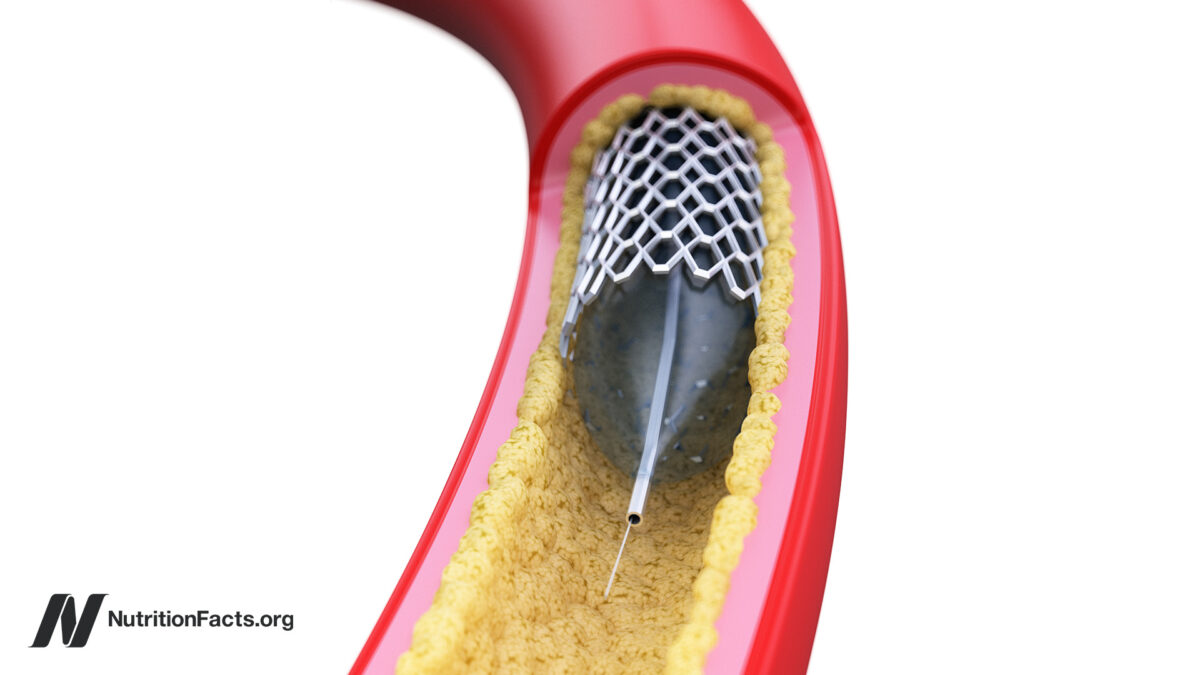
    In angioplasty, a tiny balloon is inserted into a narrowed coronary artery that feeds the heart to force it to open wider to improve blood flow. It wasn’t put to the test in a randomized controlled trial until 1992. It not only failed to prevent heart attacks, but it also failed to show any survival benefit. However, the researchers only followed patients for six months and included people with relatively minor diseases who might not have been sick enough to benefit from the procedure. Enter the MASS trial. Researchers enrolled those with severe blockage high up in their left anterior descending coronary artery—the widow-maker or widower-maker (since coronary artery disease is also the number one killer of women)—and followed them for years. The findings? There was no difference in subsequent mortality or heart attack rates. There were only about 200 patients in that trial, though. Maybe the benefit was so subtle that a greater number of patients were needed to tease out the effect. Enter the RITA-2 study, which randomized more than a thousand patients. Researchers did indeed find a clear difference in the risk of future death and heart attack, but it was in the wrong direction. The angioplasty group suffered twice the risk compared to those randomized to forgo surgery, as shown below and at 1:18 in my video Why Angioplasty Heart Stents Don’t Work Better

    This was all before stents came into vogue, though. Instead of just ballooning up the artery, how about permanently inserting a stent, a metal mesh tube, to prop open the artery, as you can see here and at 1:33 in my video? Surely, that’s got to help. 

    Enter the MASS-II trial, which, again, saw no benefit after one year—but no benefit was seen after five years or even ten years. Then came the Courage Trial, which randomized thousands of patients, and it, too, fell flat on its face. 

    Those mostly used bare metal stents, though, not the newer “drug-eluting” ones that release drugs slowly. And what about high-risk groups, such as those diagnosed with diabetes and other more serious diseases, or those who have 100 percent blocked arteries days after having a heart attack? In meta-analysis after meta-analysis, looking at five trials with 5,000 patients, there was no reduction in death, heart attack, or even angina pain. In ten trials with more than 6,000 patients, there was no benefit for survival, heart attacks, or pain relief. Now, we’re up to more than a dozen major trials and nothing: no benefit from angioplasty and stents. “Furthermore, multiple analyses have failed to identify a single high-risk subset that benefits…” How is that possible? You’re physically opening up blood flow.

    The reason it doesn’t work is that the majority of heart attacks in real life are caused by narrowings less than 70 percent—“i.e., most likely non-flow-limiting lesions”—so the plaques in our arteries that kill us tend not to be the ones that are restricting blood flow. Shown below and at 3:21 in my video are two atherosclerotic plaques. The one circled in green and labeled “Flow-limiting lesion” is squeezing off the blood flow so much that it can be seen on an angiogram and doctors can go after it with a stent. 

    Problem solved and life saved, right? No, because it was the invisible one (circled in yellow below) that wasn’t even impeding blood flow that was going to kill us all along, as you can see here and at 3:27.

    Indeed, most heart attacks are caused by nonobstructive plaques that don’t even cut blood flow by 50 percent, as seen below and at 3:40 in my video

    There’s a misconception, a “clogged pipe analogy of stable coronary heart disease [that] has been particularly difficult to dislodge,” in which cholesterol plaques slowly and inexorably encroach on blood flow, eventually cutting it off completely and triggering a heart attack. In reality, “coronary artery disease…is an inflammatory disease in which cholesterol from the blood is deposited in artery walls, causing an inflammatory reaction, like a pimple. When those pimples pop, they cause the blood in the arteries to clot at the site…Before rupture, these plaques often do not limit flow and may be invisible to angiography and stress tests. They are, therefore, not amenable to percutaneous coronary intervention (PCI),” that is, to angioplasty and stents. Old plaques are like “scarred old pimples.”

    The tightest blockages are made up of mostly calcified and dense fibrous scar tissue. They can still rupture and kill us, but there are so many more of the smaller lesions brewing, which are hidden from view. The way we visualize coronary arteries is with an angiogram. X-rays are taken after a black-looking dye is injected into the arteries, so we can only see plaques that encroach on the blood flow. That’s why we get these kinds of tip-of-the-iceberg illustrations, the point of which “is to emphasize that most of the atherosclerotic plaque in the coronary arteries is not seen well by angiography,” as you can see below and at 4:49 in my video. To really understand what’s going on in people’s arteries, we must turn to autopsy. William Clifford Roberts is probably the most pre-eminent cardiovascular pathologist in the world. What did he learn after studying coronary arteries for 50 years? After examining nearly 2,000 bodies, he learned that atherosclerosis is a systemic disease. 

    “In patients with fatal coronary artery disease…the quantity of plaque is enormous. There is not just 1 plaque here, another plaque there, with normal lumen [clean arteries] between plaques. Plaques are continuous! Not a single 5-mm segment is devoid of plaque” in the entire coronary artery tree. So, says Dr. Roberts: “Isolated coronary disease is a myth. There are no such things as ‘1-vessel disease,’ and ‘2-vessel disease.’ Plaque is in all of the epicardial coronary arteries if it is in 1 of them.”

    Four main coronary arteries feed the heart—the right coronary artery, the left main coronary artery, the circumflex coronary artery, and the left anterior descending coronary artery, as seen here and at 6:00 in my video

    If we add up their lengths, that’s about 11 inches (28 cm) of coronary arteries, which, for examination, can be cut into about 50 quarter-inch (5-mm) slices. Shown below and at 6:17 in my video is what is seen: Plaque isn’t gunking up one or two slivers but throughout all the coronary arteries. If we look at more than a thousand of these slices from dozens of patients who died of heart attacks, “not a single segment was devoid of plaque.” So, it’s no wonder that stenting open in just one area has no impact on heart attacks or death.


    Source link

  • BMI, Waist Size Aren’t Only Risk Factors Of Heart Disease, This Hidden Fat May Matter More

    BMI, Waist Size Aren’t Only Risk Factors Of Heart Disease, This Hidden Fat May Matter More

    For years, health experts have debated if Body Mass Index (BMI) is the best measure of a person’s health. While waist size has been highlighted as a key factor in predicting heart disease, a recent study reveals that neither BMI nor waist measurement is the ultimate predictor.

    Instead, a hidden factor, intermuscular fat, the fat stored inside muscles might be a more accurate indicator of heart disease risk. Researchers noted that those having higher amounts of this particular type of fat face a greater risk of death and hospitalization from heart attacks or heart failure, regardless of BMI or waist size.

    “Obesity is now one of the biggest global threats to cardiovascular health, yet body mass index – our main metric for defining obesity and thresholds for intervention – remains a controversial and flawed marker of cardiovascular prognosis. This is especially true in women, where high body mass index may reflect more ‘benign’ types of fat,” Professor Viviany Taqueti, who led the study said in a news release.

    The study analyzed how different muscle and fat compositions affected the small blood vessels or “microcirculation” of the heart and influenced the risk of developing heart failure, heart attack, and death.

    The research involved 669 patients at Brigham and Women’s Hospital, with an average age of 63, who were assessed for chest pain or shortness of breath but had no evidence of obstructive coronary artery disease.

    The patients underwent cardiac PET/CT scans to evaluate heart function and CT scans to analyze body composition, including fat and muscle distribution in the torso. Researchers introduced a new measurement called the fatty muscle fraction, which quantifies the ratio of intermuscular fat to total muscle and fat.

    The participants were followed up for around six years to check for outcomes including hospitalization and deaths from a heart attack or heart failure.

    The analysis revealed that higher levels of fatty muscle fraction were linked to a 2% increased risk of coronary microvascular dysfunction (CMD) and a 7% higher risk of future serious heart disease, with every 1% increase in fatty muscle fraction, regardless of other risk factors and BMI.

    “Compared to subcutaneous fat, fat stored in muscles may be contributing to inflammation and altered glucose metabolism leading to insulin resistance and metabolic syndrome. In turn, these chronic insults can cause damage to blood vessels, including those that supply the heart, and the heart muscle itself,” Professor Taqueti explained.

    Source link