Tag: Anxiety

  • The Rewire Protocol – Small Penis Anxiety Guide

    The Rewire Protocol – Small Penis Anxiety Guide

    Product Name: The Rewire Protocol – Small Penis Anxiety Guide

    Click here to get The Rewire Protocol – Small Penis Anxiety Guide at discounted price while it’s still available…

    All orders are protected by SSL encryption – the highest industry standard for online security from trusted vendors.

    The Rewire Protocol – Small Penis Anxiety Guide is backed with a 60 Day No Questions Asked Money Back Guarantee. If within the first 60 days of receipt you are not satisfied with Wake Up Lean™, you can request a refund by sending an email to the address given inside the product and we will immediately refund your entire purchase price, with no questions asked.

    (more…)

  • Do Vitamin C Supplements Help Reduce Anxiety?

    Do Vitamin C Supplements Help Reduce Anxiety?

    What are the risks and benefits of using vitamin C for depression and anxiety?

    “In adults, emerging evidence suggests that higher daily intake of fiber-rich fruit and vegetable servings is associated with lower incidences of anxiety, greater happiness, higher life satisfaction, and greater social-emotional well-being,” says a review in the journal Nutrients. So, “persuading people to consume more fruits and vegetables may not only benefit their physical health in the long-run, but also their mental well-being in the short-run,” concluded a study in Social Science & Medicine. Fruit consumption, for example, has a protective association with leading killers like heart disease, stroke, diabetes, and cancer, as well as depression. The question is why?

    Several mechanisms have been proposed. For example, one posits it’s the antioxidant and anti-inflammatory properties of produce, which scavenge the free radicals that are involved in some of the inflammation associated with depression. If that’s the case, what about simply taking vitamin C supplements? The brain has some of the highest levels of vitamin C in the body, so it’s thought that if extra vitamin C is consumed, it may have some sort of therapeutic role in brain diseases, especially given that it is not just an antioxidant, but also has other critical functions in the brain, such as helping to build neurotransmitters like dopamine. But you don’t know whether it actually helps until you put it to the test.

    One study found a beneficial effect of adding vitamin C as an adjunct treatment to an antidepressant, while another study found no benefit from vitamin C supplementation.

    So, there are mixed results for vitamin C and depression. Another study found no benefit when it came to depression, but those randomized to vitamin C instead of placebo pills did show a significant decrease in anxiety level. And this wasn’t only seen in that study.

    The effects of oral vitamin C supplementation on anxiety in high school students were studied in a double-blind, randomized, placebo-controlled trial. The teens were given 500 mg a day of vitamin C or a placebo. That daily amount of vitamin C is about what you’d find in five oranges, four yellow kiwifruit or guavas, or one and a half yellow bell peppers. Within just two weeks, the vitamin C reduced anxiety levels compared to placebo, as well as provided a significant drop in heart rate.

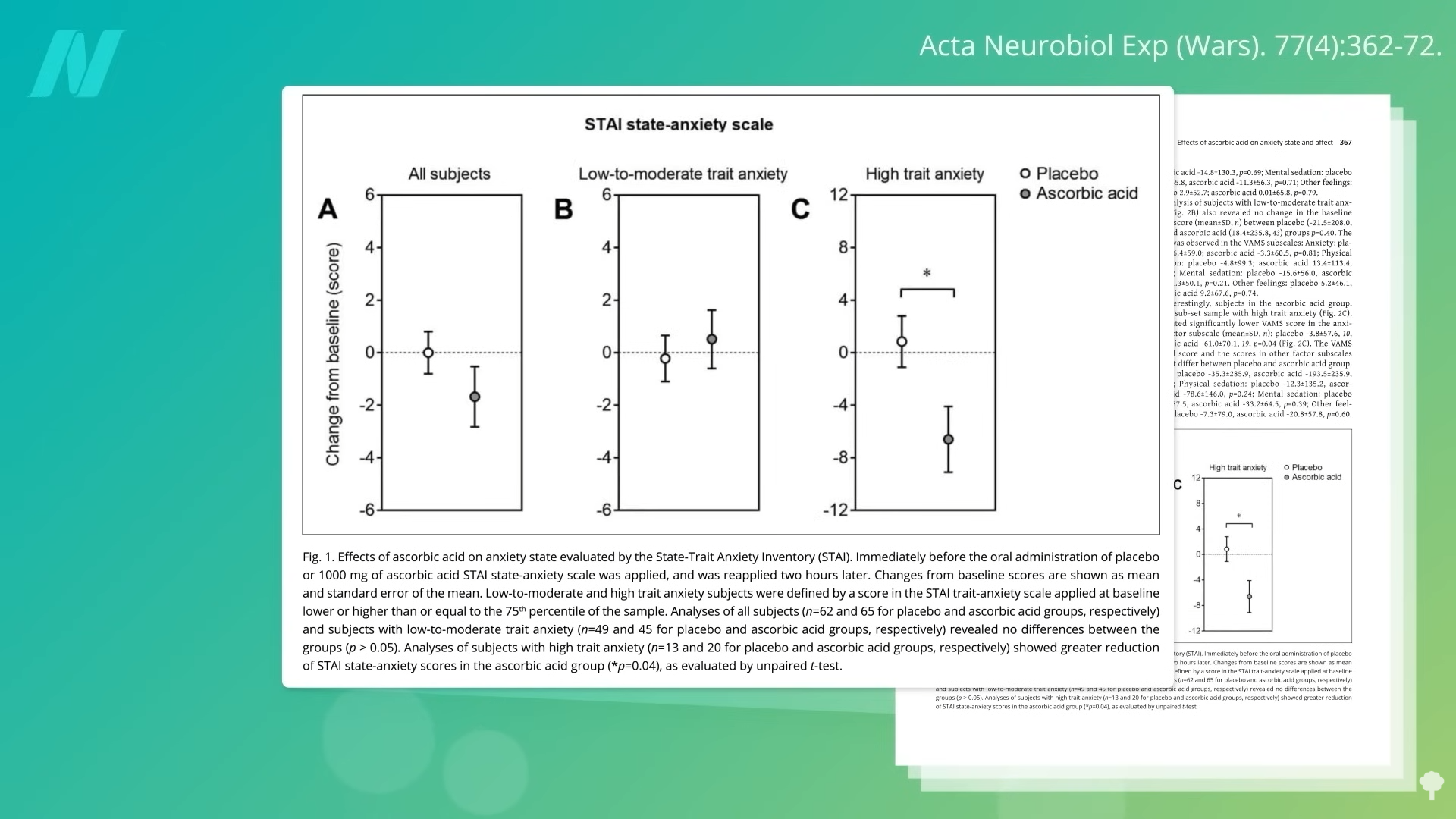
    Given these data showing that vitamin C may have an anxiety-reducing effect, researchers sought to find out if a single dose could acutely affect emotional states. And indeed, within only two hours of taking some vitamin C, study participants experienced a significant drop in anxiety compared to placebo, though only among those who started out the most anxious in the first place, as you can see below and at 2:42 in my video Do Vitamin C Supplements Help With Anxiety?.


    As a bonus, vitamin C supplementation may lower our blood pressure a few points, but whole fruits and vegetables can do the same thing—and may even do it better for those who need it the most, as shown below and at 2:53 in my video.

    As I’ve shown previously, simply adding just two servings of fruits and vegetables a day can have psychological well-being benefits within only two weeks—and without the kidney stone risk associated with vitamin C supplements, though that appears to be only a problem in men.

    Doctor’s Note

    For more on vitamin C and on anxiety, check out related posts below.


    Source link

  • From Stress to Serenity: How Gratitude Practice Can Reduce Anxiety and Burnout

    From Stress to Serenity: How Gratitude Practice Can Reduce Anxiety and Burnout

    Introduction to Gratitude Practice

    In today’s fast-paced world, stress and anxiety have become an unfortunate norm for many individuals. The constant pressure to perform, the fear of not meeting expectations, and the overwhelming amount of information we are exposed to daily can lead to feelings of burnout and exhaustion. However, there is a powerful tool that can help alleviate these negative emotions and cultivate a sense of serenity: gratitude practice. By focusing on the things we are thankful for, we can shift our perspective, calm our minds, and improve our overall well-being.

    The Science Behind Gratitude

    Gratitude is more than just a feeling; it’s a practice that can have a profound impact on our mental and physical health. Research has shown that practicing gratitude can increase the production of neurotransmitters such as dopamine, serotonin, and endorphins, which are associated with feelings of happiness, relaxation, and reduced stress. Additionally, gratitude has been linked to lower levels of cortisol, the hormone responsible for stress and anxiety. By incorporating gratitude into our daily routine, we can literally change our brain chemistry and develop a more positive outlook on life.

    How Gratitude Reduces Anxiety and Burnout

    So, how exactly does gratitude practice reduce anxiety and burnout? When we focus on the things we are grateful for, we begin to shift our attention away from negative thoughts and worries. This helps to calm the mind and reduce rumination, which is a common symptom of anxiety. By acknowledging the good things in our lives, we also begin to develop a sense of perspective, realizing that our problems are not the only things that exist. This can help us feel more grounded and centered, even in the midst of chaos. Furthermore, gratitude practice can help us develop a sense of resilience, allowing us to bounce back from adversity and navigate challenging situations with greater ease.

    Simple Ways to Incorporate Gratitude into Your Daily Life

    Incorporating gratitude into your daily life is easier than you think. Here are a few simple ways to get started:

    • Keep a gratitude journal: Take a few minutes each day to write down three things you are thankful for.
    • Share gratitude with a friend or family member: Express your appreciation for someone in your life, whether it’s a kind word, a text message, or a small gift.
    • Practice mindfulness: Take a few minutes each day to focus on the present moment, without judgment, and acknowledge the good things that are happening right now.
    • Create a gratitude ritual: Develop a daily or weekly ritual, such as lighting a candle or saying a prayer, to help you focus on the things you are grateful for.

    The Benefits of Gratitude Practice

    The benefits of gratitude practice are numerous and well-documented. Some of the most significant advantages include:

    • Improved mental health: Gratitude has been shown to reduce symptoms of anxiety and depression, and even help alleviate symptoms of post-traumatic stress disorder (PTSD).
    • Better sleep: Practicing gratitude before bed can help improve sleep quality and duration.
    • Stronger relationships: Expressing gratitude towards others can strengthen relationships and build stronger bonds.
    • Increased resilience: Gratitude can help us develop a sense of resilience, allowing us to navigate challenging situations with greater ease.
    • Improved physical health: Studies have shown that gratitude is linked to lower blood pressure, a healthier weight, and a stronger immune system.

    Overcoming Obstacles to Gratitude Practice

    While gratitude practice can be incredibly beneficial, it’s not always easy to get started. Here are a few common obstacles to gratitude practice, and some tips for overcoming them:

    • Difficulty finding things to be grateful for: Start small, and focus on the little things, such as a good cup of coffee or a beautiful sunset.
    • Feeling like you don’t have time: Incorporate gratitude into your daily routine, such as right before bed or during your morning commute.
    • Struggling with negative thoughts: Practice mindfulness and acknowledge your negative thoughts, but also make an effort to focus on the positive aspects of your life.

    Gratitude in the Workplace

    Gratitude is not just limited to our personal lives; it can also have a profound impact on our professional well-being. When we practice gratitude in the workplace, we can:

    • Improve our relationships with colleagues and supervisors
    • Increase our sense of job satisfaction and engagement
    • Develop a more positive and resilient attitude towards challenges and setbacks
    • Improve our communication and collaboration skills
    • Enhance our overall well-being and reduce burnout

    Cultivating Gratitude in Children

    Teaching children the practice of gratitude can have a lasting impact on their mental and emotional well-being. Here are a few ways to cultivate gratitude in children:

    • Model gratitude yourself: Children learn by example, so make sure to express gratitude in front of them.
    • Create a gratitude ritual: Develop a daily or weekly ritual, such as sharing three things you are grateful for at dinner time.
    • Encourage gratitude journaling: Help your child start a gratitude journal, and encourage them to write or draw something they are thankful for each day.
    • Practice mindfulness: Teach your child mindfulness techniques, such as deep breathing and meditation, to help them focus on the present moment.

    Conclusion

    In conclusion, gratitude practice is a powerful tool that can help reduce anxiety and burnout, and cultivate a sense of serenity in our lives. By incorporating gratitude into our daily routine, we can shift our perspective, calm our minds, and improve our overall well-being. Whether it’s through journaling, mindfulness, or simply sharing gratitude with others, there are many ways to make gratitude a part of our lives. So why not give it a try? Take a few minutes each day to focus on the things you are thankful for, and watch your life transform in amazing ways.

    FAQs

    Q: What is gratitude practice, and how does it work?
    A: Gratitude practice is the act of focusing on the things you are thankful for, and it can have a profound impact on our mental and physical health. By practicing gratitude, we can shift our perspective, calm our minds, and improve our overall well-being.
    Q: How can I incorporate gratitude into my daily life?
    A: There are many ways to incorporate gratitude into your daily life, including keeping a gratitude journal, sharing gratitude with a friend or family member, practicing mindfulness, and creating a gratitude ritual.
    Q: What are the benefits of gratitude practice?
    A: The benefits of gratitude practice include improved mental health, better sleep, stronger relationships, increased resilience, and improved physical health.
    Q: Can gratitude practice really reduce anxiety and burnout?
    A: Yes, gratitude practice has been shown to reduce symptoms of anxiety and depression, and even help alleviate symptoms of post-traumatic stress disorder (PTSD).
    Q: How can I teach my child to practice gratitude?
    A: You can teach your child to practice gratitude by modeling gratitude yourself, creating a gratitude ritual, encouraging gratitude journaling, and practicing mindfulness.
    Q: Is gratitude practice a replacement for therapy or medication?
    A: No, gratitude practice is not a replacement for therapy or medication. While it can be a powerful tool for improving mental health, it should be used in conjunction with other forms of treatment, under the guidance of a healthcare professional.

  • From Stress to Serenity: How Journaling Can Help You Manage Anxiety

    From Stress to Serenity: How Journaling Can Help You Manage Anxiety

    Introduction to Journaling and Stress Management

    In today’s fast-paced world, stress and anxiety have become ubiquitous companions for many of us. The pressures of work, family, and social obligations can leave us feeling overwhelmed and drained. However, there are effective tools that can help manage these feelings and lead us towards a path of serenity. One such powerful tool is journaling. The act of putting your thoughts and feelings down on paper can be incredibly cathartic, allowing you to process your emotions, gain clarity, and develop a greater understanding of yourself. In this article, we will explore how journaling can be a pivotal practice in transitioning from stress to serenity, helping to manage anxiety and cultivate a more peaceful, balanced life.

    Understanding Stress and Anxiety

    Before diving into the benefits of journaling, it’s essential to understand the nature of stress and anxiety. Stress is the body’s natural response to a perceived threat or pressure. It’s what prepares your body to either face the situation head-on (fight) or flee from it (flight). While stress can sometimes motivate us to take action, chronic stress can lead to anxiety, which is a persistent and excessive worry about everyday things, even when there’s no apparent reason to worry. Anxiety can interfere with daily life, causing difficulties in relationships, work, and overall well-being.

    How Journaling Helps

    Journaling is a simple yet powerful technique that involves writing down your thoughts, feelings, and experiences. By committing these to paper, you begin to externalize your internal world, which can offer several benefits in managing stress and anxiety:

    • Clarification of Thoughts and Feelings: Journaling helps you identify and understand your thoughts and emotions better. Often, when we’re stressed or anxious, our thoughts can be muddled and overwhelming. Writing them down allows you to untangle them, making it easier to pinpoint the sources of your stress and anxiety.
    • Emotional Release: The act of journaling can be therapeutic, providing a safe space to express and release pent-up emotions. By putting your feelings into words, you can begin to let go of them, which can be particularly helpful for those dealing with anxiety.
    • Reflection and Insight: Regular journaling encourages reflection on your experiences, helping you to identify patterns and gain insights into your behaviors and emotions. This increased self-awareness can be instrumental in making positive changes and developing coping strategies for stress and anxiety.
    • Mindfulness: The practice of journaling can foster mindfulness, encouraging you to stay present and aware of your current thoughts and feelings, rather than worrying about the future or past.

    Effective Journaling Techniques for Stress and Anxiety

    While journaling can be incredibly beneficial, incorporating certain techniques can enhance its effectiveness in managing stress and anxiety:

    • Morning Pages: Starting your day by writing down your thoughts without editing or censoring yourself can clear your mind and set a positive tone for the day.
    • Gratitude Journaling: Focusing on the things you’re grateful for can help shift your perspective, making you more appreciative and less worried about negative aspects of your life.
    • Prompt-Based Journaling: Using specific prompts related to your anxiety and stress can guide your reflections and help you delve deeper into the root causes of your feelings.
    • Mindfulness Journaling: Combining journaling with mindfulness practices, such as meditation or deep breathing, can enhance the calming effects and promote a greater sense of serenity.

    Overcoming Barriers to Journaling

    Some people may find it challenging to start or maintain a journaling practice due to various barriers:

    • Lack of Time: Finding even a few minutes each day can be challenging, but journaling doesn’t have to be time-consuming. Even a brief reflection can be beneficial.
    • Self-Criticism: The fear of not writing “well” or the belief that your thoughts aren’t worth writing down can be daunting. However, journaling is for your eyes only, and its value lies in the process, not the product.
    • Privacy Concerns: If you live with others, finding a private space to journal might be difficult. Consider using a lockable journal or finding an outdoor spot where you can write undisturbed.

    Real-Life Examples and Testimonials

    Many individuals have found solace and relief from stress and anxiety through journaling. Personal stories and testimonials often highlight the profound impact journaling can have on mental health, showcasing how it can be a turning point in managing anxiety and finding calm in chaotic times.

    Conclusion

    Journaling is a versatile and accessible tool that can be a companion on your journey from stress to serenity. By providing a space to express emotions, clarify thoughts, and gain insights, journaling helps in effectively managing anxiety and cultivating a more peaceful life. It’s a practice that complements other stress management techniques, such as meditation and therapy, and can be tailored to suit individual needs and preferences. Whether you’re dealing with chronic anxiety or occasional stress, incorporating journaling into your daily routine can be a significant step towards a more balanced and serene you.

    FAQs

    • Q: Do I need to write in my journal every day?
      A: While consistency can be beneficial, it’s not necessary to write every day. Even journaling a few times a week can have positive effects on your mental health.
    • Q: What if I don’t know what to write about?
      A: Starting with prompts or simply writing about your day can help. As you continue journaling, you’ll find your own rhythm and topics to explore.
    • Q: Is journaling only for people with severe anxiety or stress?
      A: No, journaling can benefit anyone looking to improve their mental health, whether they’re dealing with anxiety, stress, or just seeking a tool for self-reflection and growth.
    • Q: Can I journal digitally, or do I need to use a physical journal?
      A: Both physical and digital journaling have their benefits. Physical journals can offer a tactile experience, while digital journals provide convenience and accessibility. Choose the method that works best for you.
  • A Series on Anxiety | You Deserve to Breathe

    A Series on Anxiety | You Deserve to Breathe

    Product Name: A Series on Anxiety | You Deserve to Breathe

    Click here to get A Series on Anxiety | You Deserve to Breathe at discounted price while it’s still available…

    All orders are protected by SSL encryption – the highest industry standard for online security from trusted vendors.

    A Series on Anxiety | You Deserve to Breathe is backed with a 60 Day No Questions Asked Money Back Guarantee. If within the first 60 days of receipt you are not satisfied with Wake Up Lean™, you can request a refund by sending an email to the address given inside the product and we will immediately refund your entire purchase price, with no questions asked.

    (more…)

  • Where To Start When There Is So Much Suffering

    Where To Start When There Is So Much Suffering

    Let’s face it: Things feel incredibly hard right now. Of course, there are always difficulties and challenges, but particularly at this moment, I find myself heartbroken, overwhelmed, and angry more often than usual. Maybe you can relate?

    Perhaps like you, I am at a loss for what to do to address the suffering around me at this time. There is heartbreak, struggle, anger, fear, and despair in our homes, communities, and on the news and social media. Though there are some things we can do and action we can take, often much of this suffering is beyond our capacity to control.

    Self-Compassion Works for Collective Pain, Too

    When it starts to feel like too much to bear, I find myself wondering how to be with it all. How to be with the heartbreak, the suffering, the difficulties inherent in life. In my experience and work, I have found that one of the most helpful ways to navigate these challenges is through self-compassion. 

    Of course, self-compassion is a powerful ally when we are personally experiencing a difficulty. But self-compassion is also a powerful internal resource we can draw on in response to the suffering of others. Even if it is someone we don’t know, our hearts are touched when others are struggling. That is why it is essential to start with ourselves so that we can respond from a place of love and care, rather than fear, despair, frustration, or anger.

    So, what is self-compassion? Imagine if a dear friend was struggling with something, and then consider how you would respond to them. Now, gently turn that care, warmth, and kindness toward yourself; that is self-compassion.

    In the research, self-compassion is shown to have many benefits, including increasing resilience and optimism as well as decreasing anxiety and depression. It helps us hold suffering, both our own and that of others, more spaciously and with tenderness and warmth. The ability to offer ourselves compassion helps buffer the emotional distress that can accompany the empathetic response.

    Though self-compassion doesn’t necessarily fix the problem, it does invite a deeper calm and clarity as we approach it, because we tend to make wiser choices when we feel cared for. Caring for ourselves, especially when things are hard, enhances our capacity to navigate those difficulties and is a skill that we can learn and access readily.

    Practices You Can Try Today

    These practices work to strengthen our awareness and compassion, which can  help us avoid the extremes of being either overwhelmed or numbing out.

    One For Me And One For You:

    Based on the giving and receiving compassion practice from the Mindful Self-Compassion Program, the “one for me and one for you” practice can be tremendously helpful when we are feeling overwhelmed by the suffering of others. With a little repetition, it can even be accessible in the moment when encountering someone who is struggling.

    Bring to mind someone, even a group of people, who you know are suffering. This could be someone you know personally or hear about on the news. Now, check in with yourself and see what would best support you in being with their struggles as much as possible. It could, for example, be patience, calm, strength, or acceptance. Bring your attention to your breath and consciously offer that to yourself on the inhale and gently release on the exhale.

    After a few rounds, and if it feels right for you, you may now consider what they most need—they may have even voiced this need. It may be the same thing you need or something different. Continue to take in for yourself what you need on the inhale and offer them what they need as you exhale. You can even let go of the specific words and simply say to yourself, “One for me, and one for you,” as you continue to focus on your breathing.

    Kind Touch:

    Offering yourself a tender and gentle touch is one of the easiest ways to access self-compassion. Try putting a hand on your heart, holding your own hand, gently touching your cheek, or rubbing your arms like a gentle self-hug. Though it may initially feel awkward, research shows the benefits of this practice. Just as we might reach out to hug a friend or gently touch the arm of someone in need, we can also offer this loving, caring touch to ourselves. This kind touch releases the chemicals that support comfort, care, and connection, giving our body the message that we are safe and cared for in the moment.

    Of Course…Honey Practice:

    This phrase integrates the three aspects of self-compassion—mindfulness, common humanity, and self-kindness—used in the Mindful Self-Compassion Program. When you are struggling with something, you can say to yourself, “Of course, this is hard, honey,” or “Of course, you are scared, honey,” or “Of course you feel sad (angry, overwhelmed…), honey.” Saying the words “of course” as part of this phrase acknowledges our common humanity, that anyone in our circumstances could feel this way. Feeling like this is simply part of being human. Naming the emotion is the mindfulness aspect of the phrase, and using the term ‘honey’ (or another term of endearment) is an expression of self-kindness. I often use this phrase, usually with my hand on my heart, and have found it to be invaluable, especially when caught in a moment of intense reactivity.

    Start Where You Are, and Go From There

    If you are feeling heartbreak, fear, outrage or anything else in response to the depth and breadth of suffering in the world (or in your own life), start right where you are. Take a moment to care for your own heart and mind before responding to the world, which so desperately needs our loving presence.


    Source link

  • A 2-Minute Practice to Calm Anxiety and Nurture Curiosity

    A 2-Minute Practice to Calm Anxiety and Nurture Curiosity

    Anxiety often contributes to keeping us stuck in habits we don’t want. This mindfulness practice lets us soothe racing thoughts by letting us tune in to embodied awareness.

    Over the years, as I’ve studied how habits work in the brain and the ways in which mindfulness can help, I’ve found that curiosity is a simple tool that helps people—regardless of language, culture and background—drop directly into their embodied experience. Curiosity lets us tap into our natural capacity for wonder and interest, putting us right in that sweet spot of openness and engagement. From this state of mind, we’re more empowered to help ourselves break old habits and build new ones.  

    Let me walk you through a simple curiosity exercise. Doing this 2-minute practice can work as a kind of panic button for when anxiety hits. 

    Step 1: 

    Find a quiet comfortable place. You can be sitting, lying down or standing up; you just need to be able to concentrate without being distracted.

    Step 2: 

    Recall your most recent run-in or incident with a habit loop, which is any habit you find yourself returning to whenever you’re worried or anxious.

    See if you can remember the scene and relive that experience, focusing on what you felt right at the time when you were about to act out your habitual behavior. What did that urge to go ahead and “do it” feel like?

    Step 3: 

    Check in with your body. What sensation can you feel most strongly right now?

    Here’s a list of single words or phrases to choose from. Pick only one—the one you feel most strongly:

    • Tightness
    • Pressure
    • Contraction
    • Restlessness
    • Shallow breath
    • Burning
    • Tension
    • Clenching
    • Heat
    • Pit in stomach
    • Buzzing/vibration

    Step 4: 

    Notice where this sensation is in your body. Is it more on the right side or the left? In the front, middle, or back of your body? Where do you feel it most strongly?

    And was there anything you noticed about being curious about what part of your body you felt the sensation in? Did being a little curious help with getting closer to this sensation?

    Step 5: 

    Explore what else you can feel in your body. If the sensation is still there in your body, see if you can get curious and notice what else is there. Are there other sensations you’re feeling? What happens when you get curious about them? Do they change? What happens when you get really curious about what they feel like?

    Step 6: 

    Follow them over the next 30 seconds—not trying to do anything to or about them—but simply observing them. Do they change at all when you observe them with an attitude of curiosity?

    Whenever I do this exercise, I like to use the sound “Hmmmm”—as in, the hmm you naturally emit when you’re curious about something (and not to be confused with the traditional mantra “Om”). I find saying “hmm” to myself gets me out of my head and into a direct experience of being curious. It also allows me to bring a playful, even joyful attitude to what I’m doing; it is hard to take yourself too seriously when you are hmm-ing.

    This short exercise is just intended to give you a taste of curiosity and to support your natural capacity to be aware about what is happening in your body and your mind at any moment instead of getting caught up in a habit loop. If you notice that by being curious you gained even a microsecond more of being with your thoughts, emotions and body sensations than you have in the past, then you’ve taken a huge step forward.

    Sometimes I get the question “What happens if I’m not curious?” My response is to use the sound of “hmmm” to drop right into your experience. Ask yourself: “Hmm, what does it feel like not to be curious?”

    This helps people move from their thinking, fix-it mind state into a curious awareness of their direct sensations and emotions in their bodies and move out of their thinking heads and into their feeling bodies.

    Find more information and science-backed practices for working with your anxiety in the Unwinding Anxiety app.

    Unwinding Your Anxiety Habit Loop 

    Coping with anxiety is difficult, but we can begin to untangle our anxious loops when we recognize how they show up in our daily activities.
    Read More 

    • Kira M. Newman
    • February 28, 2024


    Source link

  • The Science of Stress Relief: Understanding and Overcoming Anxiety

    The Science of Stress Relief: Understanding and Overcoming Anxiety

    Introduction to Stress Relief

    Stress is an inherent part of life, and it can have a profound impact on both physical and mental health. Chronic stress can lead to anxiety, depression, and a host of other health problems, including diabetes, hypertension, and a weakened immune system. The science of stress relief is a multidisciplinary field that draws on psychology, neurobiology, and physiology to understand the mechanisms of stress and develop effective strategies for managing and overcoming it. In this article, we will delve into the science of stress relief, exploring the causes and consequences of stress, the physiological and psychological responses to stress, and the most effective techniques for reducing stress and anxiety.

    The Physiology of Stress

    When we perceive a threat, whether physical or emotional, our body’s "fight or flight" response is triggered, releasing stress hormones like cortisol and adrenaline into our system. These hormones prepare our body to either confront the threat or flee from it, causing a range of physiological changes, including increased heart rate, blood pressure, and respiration. While this response is necessary for survival, chronic activation of the stress response can have deleterious effects on our health, including weight gain, insomnia, and digestive problems.

    The Psychology of Stress

    Stress is not just a physiological response; it also has a profound psychological component. When we experience stress, our brain’s amygdala, which processes emotions, is activated, leading to feelings of anxiety, fear, and apprehension. Chronic stress can also affect our mood, motivation, and cognitive function, making it difficult to concentrate, make decisions, and enjoy activities we once found pleasurable. Furthermore, stress can exacerbate underlying mental health conditions, such as depression, anxiety disorders, and post-traumatic stress disorder (PTSD).

    The Impact of Stress on Mental Health

    The impact of stress on mental health cannot be overstated. Chronic stress can lead to the development of anxiety disorders, including generalized anxiety disorder, panic disorder, and social anxiety disorder. It can also contribute to the development of depressive disorders, including major depressive disorder and dysthymic disorder. Moreover, stress can exacerbate symptoms of PTSD, making it challenging for individuals to recover from traumatic experiences.

    Effective Stress Relief Techniques

    Fortunately, there are many effective techniques for reducing stress and anxiety. These include:

    • Mindfulness Meditation: Mindfulness meditation involves focusing on the present moment, without judgment or distraction. Regular mindfulness practice can reduce stress, anxiety, and depression, while improving emotional regulation, cognitive function, and overall well-being.
    • Exercise: Exercise is a natural stress-reliever, reducing anxiety and depression by releasing endorphins, also known as "feel-good" hormones. Regular physical activity can also improve sleep quality, boost self-esteem, and enhance cognitive function.
    • Deep Breathing: Deep breathing techniques, such as diaphragmatic breathing, can help reduce stress and anxiety by slowing down heart rate, lowering blood pressure, and promoting relaxation.
    • Yoga: Yoga combines physical movement, deep breathing, and meditation to reduce stress, anxiety, and depression. Regular yoga practice can also improve flexibility, balance, and overall physical health.
    • Social Support: Social support from friends, family, or a therapist can provide emotional support, reduce feelings of loneliness and isolation, and help individuals develop coping strategies for managing stress.

    The Role of Nutrition in Stress Relief

    Nutrition plays a critical role in stress relief, as a healthy diet can provide the necessary fuel for our body to manage stress. Foods rich in omega-3 fatty acids, such as salmon, walnuts, and chia seeds, can reduce inflammation and promote brain health. Complex carbohydrates, such as whole grains, fruits, and vegetables, can help regulate blood sugar levels and provide a sense of fullness and satisfaction. Additionally, foods high in vitamin C, such as citrus fruits, bell peppers, and leafy greens, can help reduce cortisol levels and promote relaxation.

    The Benefits of Sleep for Stress Relief

    Sleep is essential for stress relief, as it allows our body to repair and rejuvenate itself. During sleep, our body repairs damaged cells, builds bone and muscle, and strengthens our immune system. Chronic sleep deprivation can lead to increased stress, anxiety, and depression, while also impairing cognitive function, mood, and overall well-being. Establishing a consistent sleep schedule, avoiding caffeine and electronics before bedtime, and creating a relaxing sleep environment can help improve sleep quality and reduce stress.

    Conclusion

    In conclusion, the science of stress relief is a complex and multifaceted field that draws on psychology, neurobiology, and physiology to understand the mechanisms of stress and develop effective strategies for managing and overcoming it. By understanding the causes and consequences of stress, the physiological and psychological responses to stress, and the most effective techniques for reducing stress and anxiety, individuals can take control of their mental and physical health. Whether through mindfulness meditation, exercise, deep breathing, yoga, social support, nutrition, or sleep, there are many effective ways to reduce stress and promote overall well-being.

    FAQs

    Q: What are the most common causes of stress?

    A: The most common causes of stress include work-related stress, financial stress, relationship stress, health-related stress, and trauma.

    Q: How can I reduce stress and anxiety?

    A: Effective stress relief techniques include mindfulness meditation, exercise, deep breathing, yoga, social support, nutrition, and sleep.

    Q: Can stress lead to mental health problems?

    A: Yes, chronic stress can lead to the development of anxiety disorders, depressive disorders, and post-traumatic stress disorder (PTSD).

    Q: How can I improve my sleep quality to reduce stress?

    A: Establishing a consistent sleep schedule, avoiding caffeine and electronics before bedtime, and creating a relaxing sleep environment can help improve sleep quality and reduce stress.

    Q: What role does nutrition play in stress relief?

    A: Nutrition plays a critical role in stress relief, as a healthy diet can provide the necessary fuel for our body to manage stress. Foods rich in omega-3 fatty acids, complex carbohydrates, and vitamin C can help reduce inflammation, promote brain health, and regulate blood sugar levels.

    Q: Can exercise reduce stress and anxiety?

    A: Yes, exercise is a natural stress-reliever, reducing anxiety and depression by releasing endorphins, also known as "feel-good" hormones. Regular physical activity can also improve sleep quality, boost self-esteem, and enhance cognitive function.

    Q: How can I find social support to reduce stress?

    A: Social support can be found through friends, family, or a therapist. Joining a social group or club, volunteering, or participating in community activities can also provide opportunities for social connection and support.

    Q: Can mindfulness meditation reduce stress and anxiety?

    A: Yes, mindfulness meditation can reduce stress, anxiety, and depression, while improving emotional regulation, cognitive function, and overall well-being. Regular mindfulness practice can also reduce symptoms of PTSD and improve sleep quality.

  • An SOS Meditation to Unwind Anxiety

    An SOS Meditation to Unwind Anxiety

    In this week’s guided meditation, teacher and author Melli O’Brien offers a practice to unwind anxiety by connecting with a gentle and steady awareness when you are feeling stressed.

    Often the toughest part of experiencing anxiety is just the sense of being helplessly caught up in the thought loops that keep us feeling stuck and stressed. It’s tough to unwind anxiety, and we long for the kind of support that could actually help escape the tangle of those anxious webs. 

    In this week’s guided meditation, teacher and author Melli O’Brien offers a practice that uses gentle, steady awareness to help you find your calm center again when you’re feeling wound up with stress or anxiety.

    SOS Meditation to Unwind Anxiety

    Read and practice the guided meditation script below, pausing after each paragraph. Or listen to the audio practice.

    1. If you’re playing this meditation, chances are that something has you feeling a bit stressed or anxious or the body and mind are feeling really tense or wound up. I’m here to support you in finding your center again and helping you to ground in a gentle and steady awareness.
    2. Make sure that you are sitting comfortably. Even if the mind is very busy or the body’s really tense right now, we’re still taking the time to settle. You might even like to lie down on the ground or on a lounge chair or a bed. When you’re ready, allow the eyes to gently close, if that feels okay for you, knowing that you have this time and space just for yourself.
    3. Remember, you don’t have to try to figure anything out or mentally fix anything. There’s nothing you really need to worry about during this time, and there’s no problem to solve. You’ve given yourself this time for meditation, so give yourself full permission to let go of everything else for a while and simply be present, grounding yourself in the here and now and following these instructions as best you can.
    4. Start by letting go of any agenda to get rid of stress or anxiety, or actually to get rid of any part of your experience. Instead, we’re going to practice relaxing with this moment just as it is, and making peace with it.
    5. Take some deeper, slower, and fuller breaths into the belly. As you breathe in, allow the belly to swell a little like a balloon. As you breathe out, allow the belly to soften and subside. Again, long steady and smooth breath in, filling the belly. And then a long, steady, smooth breath out. If anything about this practice feels uncomfortable for you, you can feel free to just let the breath be natural. If there’s any sense of strain or gasping for air, then you can make the breath much more gentle, much more subtle. You might even like to place a hand or both hands on the belly, so you can really feel that rising and falling sensation. Focus on the feeling of the breath in the belly and allowing the movement of the breath to soothe you and settle you. You’re doing great.
    6. As you continue breathing into the belly like this, see if you can get a sense of softening and relaxing a little more with each and every exhale. Let tension begin to melt and soften in the body. Really surrender the weight of your body into gravity, knowing that the ground beneath you is more than able to take your weight and support you and that it’s safe to let go and relax the tension into the here and now.
    7. At the top of this next inhale, if it feels okay for you, hold the breath for a count of three. So breathe in and hold for 1, 2, 3, and then let the breath go. Continue on like that, holding the breath in for the count of 3, and then letting it go. If that doesn’t feel right for any reason, then just continue as before.
    8. Now, after the next exhale, let go of controlling the breath at all. Let the body settle back into its own natural rhythm of breathing, but continue to focus on that rising and falling sensation of the breath in the belly. Again, you can place a hand or both hands there and just feel the hands rising and falling. That’s it. 
    9. As you follow the breath, if at any point you get lost in thought again, it’s not a problem. Each time you’re drawn by a distraction, mentally note to yourself, Just thinking. Then guide your focus back into the breath, feeling the rising and falling of the belly. Ride the waves of breath moment by moment, letting everything else go, resting here in the present moment and breathing, giving yourself this time to rejuvenate, to tap into inner strength. Notice how the body is being rocked and cradled by the flowing sensations of the breath moment by moment.
    10. Remember, distraction is normal. You can return as many times as you need to, settling into the breath, letting yourself soften into the present moment. Continue practicing like this. 
    11. As this practice begins to draw to a close, take another deep, slow, full breath in, and let it go. Two more in the same way, so breathing in…and breathing out. One more time breathing in, this time rolling the shoulders up toward the ears a little on the inhale. As you exhale, relax the shoulders down. Then begin to wriggle your fingers and your toes. Open your eyes, looking around the room, taking in the colors and the shapes all around you.
    12. As you prepare now to go about the rest of your day, make an intention now to take this more centered energy with you into the rest of your day. Thank you for your practice. Go gently with yourself today. And as always, let’s go out there and be kind, be brave, and be the change we want to see.


    Source link

  • 10 Best Yoga Poses for Stress Relief: Reduce Anxiety and Find Inner Peace (Target keywords: yoga poses for stress relief, reduce anxiety)

    10 Best Yoga Poses for Stress Relief: Reduce Anxiety and Find Inner Peace (Target keywords: yoga poses for stress relief, reduce anxiety)

    Stress and anxiety have become an integral part of modern life, affecting millions of people worldwide. The constant pressure to perform, the strain of daily responsibilities, and the uncertainty of the future can all take a toll on one’s mental and emotional well-being. Fortunately, there are many effective ways to manage stress and anxiety, and one of the most popular and beneficial methods is practicing yoga. Yoga poses for stress relief have been shown to reduce anxiety, promote relaxation, and improve overall mental health. In this article, we will explore the 10 best yoga poses for stress relief, and provide tips on how to incorporate them into your daily routine.

    Understanding the Benefits of Yoga Poses for Stress Relief

    Yoga is a ancient practice that combines physical postures, breathing techniques, and meditation to promote physical, mental, and emotional well-being. When it comes to reducing anxiety and stress, yoga poses for stress relief can be particularly effective. By practicing these poses, individuals can experience a range of benefits, including reduced muscle tension, improved mood, and enhanced cognitive function. Additionally, yoga poses for stress relief can help to slow down the heart rate, lower blood pressure, and promote relaxation, all of which can contribute to a sense of inner peace and calm.

    Top 10 Yoga Poses for Stress Relief

    1. Child’s Pose (Balasana): This pose is a great starting point for anyone looking to reduce anxiety and stress. By kneeling on the mat and stretching the arms out in front, individuals can release tension in the neck and back, and promote a sense of relaxation.
    2. Downward-Facing Dog (Adho Mukha Svanasana): This pose is a staple of yoga practice, and can help to reduce stress and anxiety by stretching the entire body, from the shoulders to the toes.
    3. Cobra Pose (Bhujangasana): This pose is a great way to open up the chest and shoulders, and can help to reduce tension and stress in the upper body.
    4. Cat-Cow Pose (Marjaryasana-Bitilasana): This pose is a gentle and flowing movement that can help to loosen up the spine and neck, and promote relaxation.
    5. Seated Forward Fold (Paschimottanasana): This pose is a great way to stretch the entire back side of the body, from the shoulders to the heels, and can help to reduce stress and anxiety.
    6. Plank Pose (Phalakasana): This pose is a great core strengthener, and can help to reduce stress and anxiety by engaging the entire body and promoting a sense of focus.
    7. Tree Pose (Vrksasana): This pose is a great way to improve balance and stability, and can help to reduce stress and anxiety by promoting a sense of grounding and calm.
    8. Seated Twist (Bharadvajasana): This pose is a great way to release tension in the spine and torso, and can help to reduce stress and anxiety by promoting a sense of relaxation.
    9. Legs Up The Wall Pose (Viparita Karani): This pose is a great way to invert the body and promote relaxation, and can help to reduce stress and anxiety by slowing down the heart rate and promoting a sense of calm.
    10. Savasana (Corpse Pose): This pose is a great way to end a yoga practice, and can help to reduce stress and anxiety by promoting a sense of deep relaxation and inner peace.

    Tips for Practicing Yoga Poses for Stress Relief

    When practicing yoga poses for stress relief, there are several tips to keep in mind. Firstly, it’s essential to listen to your body and only go as far as feels comfortable. secondly, try to focus on your breath and let go of any distracting thoughts or worries. thirdly, practice regularly, ideally at the same time each day, to experience the full benefits of yoga poses for stress relief. Lastly, consider incorporating other stress-reducing techniques, such as meditation or deep breathing, into your yoga practice to enhance the benefits.

    Reducing Anxiety with Yoga Poses for Stress Relief

    In addition to reducing stress, yoga poses for stress relief can also be highly effective in reducing anxiety. By practicing these poses, individuals can experience a range of benefits, including reduced symptoms of anxiety, improved mood, and enhanced cognitive function. Some of the most effective yoga poses for anxiety include Child’s Pose, Downward-Facing Dog, and Savasana, all of which can help to promote relaxation and reduce feelings of anxiety.

    Conclusion

    Yoga poses for stress relief are a powerful tool for reducing anxiety and promoting relaxation. By incorporating these poses into your daily routine, individuals can experience a range of benefits, including reduced muscle tension, improved mood, and enhanced cognitive function. Remember to listen to your body, focus on your breath, and practice regularly to experience the full benefits of yoga poses for stress relief. Whether you’re a beginner or an experienced yogi, these poses can help you to reduce anxiety, find inner peace, and improve your overall mental health.

    Frequently Asked Questions

    Q: What are the best yoga poses for stress relief?
    A: The 10 yoga poses outlined in this article, including Child’s Pose, Downward-Facing Dog, and Savasana, are all highly effective in reducing stress and anxiety.

    Q: How often should I practice yoga poses for stress relief?
    A: Ideally, practice yoga poses for stress relief at the same time each day, ideally 2-3 times per week, to experience the full benefits.

    Q: Can yoga poses for stress relief help with anxiety?
    A: Yes, yoga poses for stress relief can be highly effective in reducing anxiety, and can help to promote relaxation, improve mood, and enhance cognitive function.

    Q: Do I need to be flexible to practice yoga poses for stress relief?
    A: No, you don’t need to be flexible to practice yoga poses for stress relief. These poses are designed to be accessible to everyone, regardless of age or ability.

    Q: How long should I hold each pose?
    A: Hold each pose for 3-5 breaths, or as long as feels comfortable, to experience the full benefits of yoga poses for stress relief.

    Q: Can I practice yoga poses for stress relief at home?
    A: Yes, you can practice yoga poses for stress relief at home, using online tutorials or following along with a yoga video. However, it’s recommended to practice with a qualified yoga instructor to ensure proper alignment and technique.

    10-best-yoga-poses-for-stress-relief-reduce-anxiety-and-find-inner-peace-target-keywords-yoga-poses-for-stress-relief-reduce-anxiety