Tag: Age

  • Is Arthritis Inevitable With Age? Early Arthritis Symptoms and Proven Treatment Options for Joint Pain at Any Age

    Is Arthritis Inevitable With Age? Early Arthritis Symptoms and Proven Treatment Options for Joint Pain at Any Age

    Arthritis, a condition characterized by joint inflammation and pain, is often associated with aging. However, is it truly inevitable as people grow older? This article explores whether arthritis is a natural part of aging, the early symptoms to watch for, and effective treatment options that can help manage the condition and preserve joint health. Understanding arthritis treatment, arthritis symptoms, and age-related joint pain is crucial for maintaining mobility and quality of life.

    Is Arthritis Inevitable as You Get Older?

    Aging does affect joint health, but arthritis is not an unavoidable consequence of growing older. While many older adults may experience joint pain as part of normal wear and tear, this does not necessarily mean they have arthritis.

    Arthritis is a chronic condition characterized by joint inflammation, which multiple factors, including genetics, injury, autoimmune processes, and lifestyle factors such as obesity can trigger. Normal joint aging may cause some stiffness and discomfort, but persistent inflammation and damage are not guaranteed in every individual. Therefore, arthritis development involves risk factors beyond just age.

    What Are the Early Symptoms of Arthritis?

    Recognizing early arthritis symptoms is key to timely diagnosis and treatment. Common symptoms include joint pain, swelling, stiffness, especially noticeable in the morning or after periods of inactivity, and reduced range of motion. These signs distinguish arthritis-related joint pain from age-related discomfort, which tends to be less persistent and severe. Early detection allows for intervention before significant joint damage occurs, improving treatment outcomes.

    Effective Early Treatment Options for Arthritis

    The primary goals of arthritis treatment are to relieve pain, reduce inflammation, and maintain joint function. Treatment often involves a combination of approaches tailored to the patient’s specific type of arthritis and severity of symptoms.

    • Medications: Nonsteroidal anti-inflammatory drugs (NSAIDs) such as ibuprofen or naproxen help reduce pain and swelling. Acetaminophen can also relieve mild to moderate pain. For inflammatory arthritis, disease-modifying antirheumatic drugs (DMARDs) target the underlying disease process to slow progression. Corticosteroid injections provide quick relief in inflamed joints. Newer options like duloxetine and tramadol may be prescribed for chronic pain management.
    • Physical Therapy and Exercise: Structured exercise programs focusing on strength, flexibility, and aerobic fitness improve joint mobility and reduce symptoms. Physical therapists design customized routines that promote joint stability and function. Low-impact activities like swimming or walking are particularly beneficial.
    • Lifestyle Changes: Weight management reduces mechanical stress on joints; each pound lost can lower knee joint load by about four pounds. An anti-inflammatory diet rich in omega-3 fatty acids and low in processed foods supports joint health. Joint protection techniques and assistive devices can help minimize strain.
    • Alternative and Emerging Therapies: Platelet-rich plasma (PRP) therapy and regenerative treatments aim to promote healing by harnessing the body’s own growth factors. Although promising, these require further validation. Some patients benefit from complementary therapies like massage or shockwave therapy.

    Can Early Treatment Prevent Arthritis Progression?

    Early and consistent management of arthritis can effectively slow disease progression, especially in inflammatory conditions such as rheumatoid arthritis. Non-surgical treatments are most effective when initiated before extensive joint damage, according to the World Health Organization. If symptoms worsen despite these measures, surgical options such as joint replacement or realignment (osteotomy) may be considered to restore function.

    How to Manage Joint Pain Related to Aging

    Joint pain at any age can be managed through various strategies:

    • Using heat or cold therapy for symptomatic relief
    • Taking over-the-counter NSAIDs or acetaminophen as needed
    • Incorporating low-impact exercise to maintain mobility
    • Ensuring proper ergonomics and using braces or orthotics for joint support

    It is essential to understand that some age-related joint pain does not always signal arthritis but should still be addressed to preserve joint health, according to the Centers for Disease Control and Prevention.

    When Should You See a Doctor for Joint Pain?

    Medical evaluation is recommended if joint pain persists for more than a few weeks, is accompanied by swelling, redness, or warmth, limits daily activities, or is accompanied by systemic symptoms such as fever or unexplained weight loss. Doctors use medical history, physical exams, imaging, and laboratory tests to diagnose the specific type of arthritis and recommend a personalized treatment plan.

    This comprehensive overview shows that while joint pain with age is common, arthritis is not an inevitable part of aging, and early treatment options can significantly improve outcomes. Effective arthritis treatment involves a multidisciplinary approach, including medications, physical therapy, lifestyle modifications, and emerging therapies to control symptoms and preserve joint function. Recognizing arthritis symptoms early and consulting healthcare professionals promptly can prevent progression and enhance quality of life at any age.

    Frequently Asked Questions

    1. Can lifestyle changes prevent the onset of arthritis?

    Lifestyle modifications such as maintaining a healthy weight, eating a diet rich in omega-3 fatty acids, and engaging in regular low-impact exercise may reduce the risk of developing certain types of arthritis or delay the onset of symptoms. Avoiding smoking and protecting joints from injury also contribute to prevention efforts.

    2. What types of exercise are best for people at risk of arthritis?

    Low-impact aerobic exercises like walking, swimming, and cycling are recommended to keep joints flexible and strengthen surrounding muscles without overloading the joints. Flexibility exercises such as stretching, yoga, and Pilates help maintain joint mobility and reduce stiffness.

    3. How does weight management influence arthritis symptoms?

    Excess weight increases mechanical stress on weight-bearing joints, such as the knees and hips, accelerating cartilage wear and joint inflammation. Losing even a small percentage of body weight can significantly reduce joint pain and improve function, underscoring the importance of weight management in arthritis treatment and prevention.

    4. Are there ways to protect joints from damage in daily activities?

    Yes, joint protection techniques such as using proper lifting methods, avoiding repetitive strain motions, and using assistive devices when needed can help reduce joint stress and prevent injury. Taking breaks and using ergonomic supports also help preserve joint health over time.


    Source link

  • Workplace Wellbeing in This Digital Age: Mindful Guidance for Digital Fatigue and Burnout

    Workplace Wellbeing in This Digital Age: Mindful Guidance for Digital Fatigue and Burnout

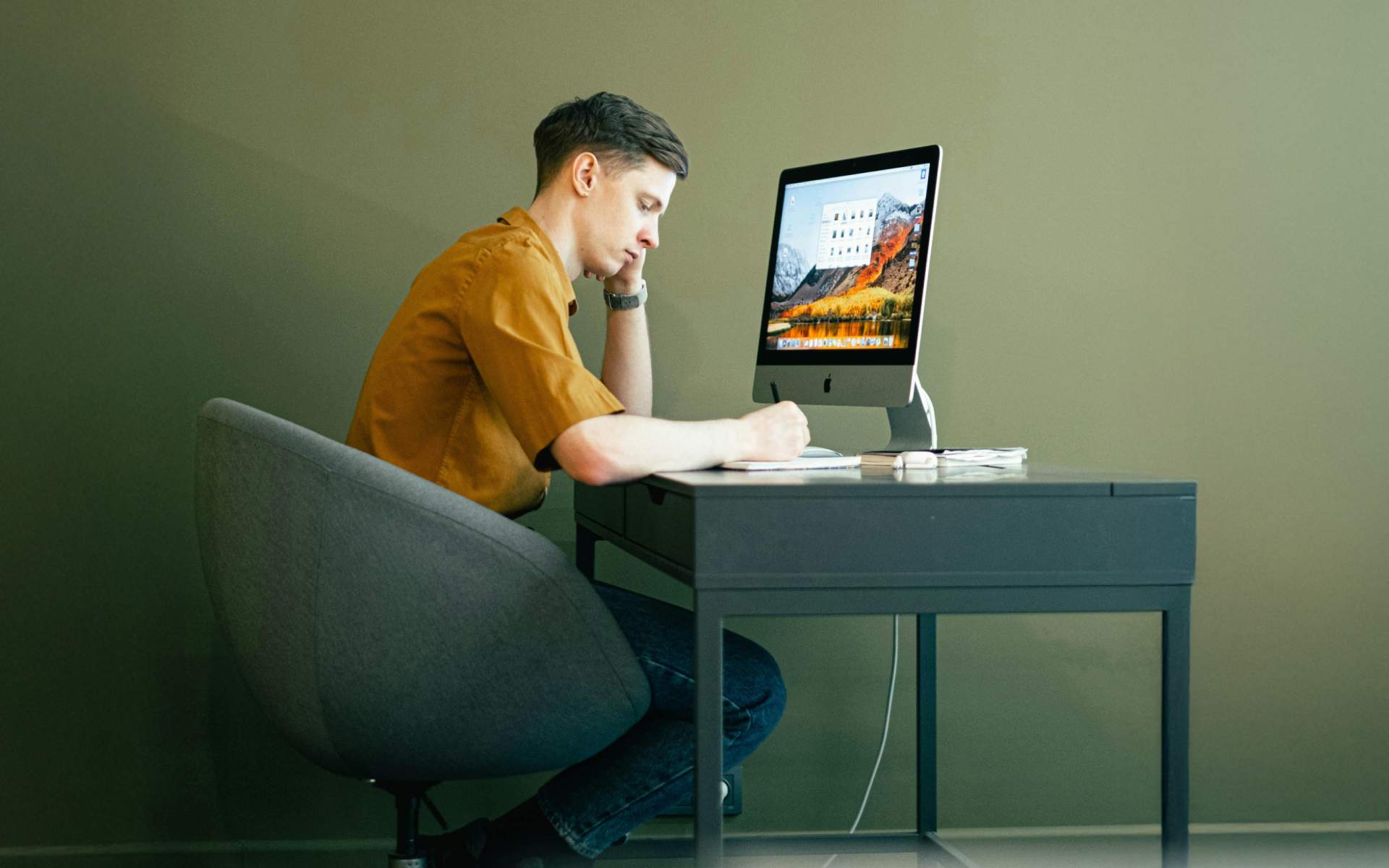
    It’s 3p.m., and you’ve been at your desk for all or most of the day. Maybe you even worked through lunch, hunched over your keyboard while eating a sandwich. If you paused and tuned into your body, would you notice how your eyes are burning, how your neck and shoulders are tense and achey? Swamped at work, trying to stay on deadline, can you remain focused and calm your frazzled mind—or do you struggle with staying on task?

    Or how about when the workday is over? Maybe you crawl into bed, exhausted—but still can’t sleep through the night. And when you’re away from your office, how often do you remember to unplug and wander screen-free in healing green spaces? 

    All of these are extremely common symptoms and contributors to what we call screen-related stress, digital fatigue, and burnout—and they’re endemic in the workplace. 

    The good news is that you don’t have to keep living this way. We have the option to work more mindfully: by improving our computer station; learning on-the-spot de-stressing techniques; taking nature breaks to recharge; and establishing better tech habits.

    When we get serious about Digital Wellness, we can create healthier workplaces, be kinder to our bodies and minds, and engage in activities that actually replenish our energy and combat burnout when we’re not at work.

    Our Digital Wellness Best Practices: 4 Easy-to-Use Tips

    I’ve been fortunate to work with Dr. Michael Rich, Director of Harvard University’s Digital Wellness Lab, in developing these research-backed strategies for greater digital wellness. Dr. Rich contributed to our book Less Screen More Green, and we were truly blessed to have the late Dr. Jane Goodall write the foreword.

    The reality is, today’s digital workplace was not designed for our wellbeing, as you probably know all too well. It’s clear that we need to be intentional about fostering our wellbeing more than ever. Here are four essential places to start.

    1. Check Your Workstation Ergonomics

    How your workstation is set up has a significant impact on you and your work. Pamela Dempster, a Certified Professional Ergonomist and collaborator in our programs, cautions: “Laptops can be a health issue as they promote more neck bending/cervical flexing which should be avoided for extended periods of time. Also, poorly designed workstations, and the current trend of ‘hot desking’ [where workstations are continually rotated], significantly increase workplace stress.” So let’s look more closely at how a workstation should be set up to limit stress and promote better skeletal, muscular, nervous-system, and eye health.

    First, a good chair with lumbar (lower back) support and a good armrest is key. Supportive armrests are critical for upper body/upper extremity health, and they’re best if padded with soft foam underlay. Your screen should be an arm’s length away and at eye level so you are looking straight ahead into the upper part of the screen, not looking down and straining your neck. Monitors at eye height promote neutral head/neck positioning. This promotes downward eye gazing which is healthier for our near-sighted visual system and its ability to focus better on what it’s reading.

    As you probably know, staring at blue-lit screens and unhealthy tech habits, including poor ergonomics, increase our stress levels and our exhaustion. They drain our physical and mental fuel and contribute to burnout. To support eye health, invest in blue-light filtering glasses to ease eye strain, and keep lubricating eyedrops at your desk and remember to blink. (Yes, we “forget” to blink when we’re glued to screens!)

    2. Do Regular Deskercises

    It’s important to keep the body moving during the day, even when you’re right at your desk. This keeps us from developing muscle strain and repetitive injuries like “Tech Neck.” Regular gentle movement practices like Chi Gong, and intentional practices like mindfulness meditation and breathing exercises (yes, we “forget” to breathe, as well) help relax our bodies and calm and focus our minds. This not only increases ease and productivity at work, but also helps us sleep much better at night.

    Turn away from your screen frequently to refocus your gaze and take some deep breaths for on-the-spot relaxation and recharging. One of the easiest deskercises we recommend is called 20-20-20: Set a timer, and every 20 minutes, shift your gaze away from your screen—even better if it’s out a window. Look at least 20 feet away, for at least 20 seconds, and do some deep breathing.

    One of our Digital Wellness participants reported that since doing the Mindful Tech program, she’s rearranged her desk and computer setup, relieving tension in her neck and low back. She now also takes regular breaks to do the 20-20-20 practice and stand up and stretch. “It’s made me feel better with the amount of screen time in my work, and it’s non-negotiable.”

    3. The Nature Remedy: A Daily Dose of Nearby Nature

    In a world that is tech-obsessed, noisy, and chaotic, it’s so easy to forget that “nature” is not something out there in the woods. It’s not separate from us. We humans are part of nature! (Although this isn’t always evident by how recklessly we treat our environment.) Being in the forest, a city park, a patch of grass, or just pausing to turn inward for a moment and take some lungfuls of fresh air is coming home to our true selves, in some way.

    We call this intentional practice The Nature Remedy, and it is the ground of our workplace wellness program.

    Scientific evidence by researchers including Dr. Qing Li, the Scientific Advisor for The Forest Bathing Institute, supports the benefits of mindfulness in nature for many physical and mental health issues including: hypertension, anxiety, depression, empathy fatigue, and burnout. This Japanese practice of Shinrin Yoku is emerging as a key strategy for workplace wellness and is practiced by many eminent health professionals themselves.

    Our co-author Dr. Rich is an advocate of the healing power of nature as a key aspect of workplace wellbeing and was surprised by the effect of Shinrin Yoku: “Recently, at a conference in Aspen, I had my first experience with Forest Bathing. Surprisingly, it may seem that nothing is happening; there we were under the canopy of trees just focusing on specific senses. Yet somehow it is everything as we paused, slowed down, and listened to the trees. Most of this digital generation are so used to being hyper-stimulated that it takes them time to ease into the quiet that is so key to their mental health. Gearing down, being in nature, without our phones, is truly beneficial for us all.”

    Dr. Rich explains what is happening in this simple moment. Forest Bathing works, because when we shift from our habitually speedy and cluttered mind, this can have a profound impact on resetting our nervous system. We’re shifting from the sympathetic (stress) mode, to the parasympathetic (relaxation) mode. The mental health benefits are similar to clearing your mind in meditation. You’re connecting with an inner stillness that is usually drowned out by the noise of our highly urbanized workplaces.

    Remember, it’s important to do this screen free. Screens disrupt our sense of connection to time and place and our bodies, which limits our ability to settle into the quietness.

    We’ve found that this intentional reconnection with nature is resonating, even with people whose jobs require them to spend entire days on screens. One IT professional reported this experience after taking our Digital Wellness program and trying our Nearby Nature tip: “Instead of moaning about not being able to get out for a long hike, I take frequent breaks. Just walk around the block without checking my phone or listening to music. That’s a big change for me! I am seriously hooked, worse than my caffeine habit. Our boss is happy we’re taking fewer sick days. It’s a good reminder to do some of my mindfulness stuff outdoors when I can, without my phone.”

    4. Sleep Strategies

    The quality and duration of your sleep has an immense impact on your mental, emotional, and physical wellbeing. We need it for good immune function, to process thoughts and emotions, and to repair our bodies and balance our nervous system. But we don’t always make the connection between our daily screentime, digital fatigue, burnout, and our ability to get the very sleep we need to recover.

    One of the most helpful things you can do is just unplug at least one hour before bedtime. Leave your phone powered off; get a battery alarm clock to use instead. As you may know, there’s scientific evidence that wireless radiation affects our sleep, so you will also sleep much better in this tech-free sanctuary if you also turn off your WiFi. Avoid all caffeine in the late afternoon and evening, and consider natural supplements such as calcium, magnesium and low-dose melatonin. When you can’t get to sleep, fussing about not sleeping generally tends to make things worse. Instead, doing a sleep meditation or deep breathing can often help you sink into a deep rest.

    Reclaiming Our Right to Workplace Wellbeing

    Inertia is a strange thing. It’s easy to assume, just because most workplaces, by default, encourage unhealthy daily routines and habits, that this is “just the way it is.” The truth is that it doesn’t have to be this way at all. We can reclaim our right to workplace wellbeing.

    We’re also seeing positive signs every day that change is coming: A significant number of businesses and organizations are waking up to how crucial it is to have employees take care of themselves if they want workplaces that can actually function.

    If you’re inspired to take action for your own wellness, please try these practices for yourself, and check out the resources we offer.

    Details about our program: www.DigitalWellnessPrograms.com

    Our book: www.LessScreenMoreGreen.org

    Our nonprofit: www.GlobalHealthAlliance.ca

    More from Pamela Dempster and healthy ergonomics: www.DempsterWellness.com

    Details about The Forest Bathing Institute: www.tfb.institute 


    Source link

  • Biological age tests: Should you get one?

    Biological age tests: Should you get one?

    If you’ve heard of billionaire Bryan Johnson, you’ve likely encountered the phrase “bio age testing.”

    Johnson, the subject of the Netflix documentary Don’t Die, says he’s on a quest to achieve the lowest possible “biological age” (also known as bio age).

    He reportedly spends millions each year on anti-aging treatments—dozens of daily supplements, weekly acid peels for his skin, injections to boost collagen production, hyperbaric oxygen therapy, and plasma infusions extracted from his 17-year-old son’s body.

    To determine what’s working, Johnson has undergone numerous tests to assess his bio age. Johnson says these tests show his age is now 5.1 years younger than when he embarked on his anti-aging quest.

    Apparently, he’s aging in reverse.

    Granted, not everyone’s buying it. A New York Times exposé, for example, claims Johnson’s biological age, in reality, has increased by 10 years.1

    Still, Johnson’s “don’t die” crusade is gaining traction.

    Bio age tests are a frequent topic on popular podcasts by Peter Attia, Joe Rogan, and Andrew Huberman. Google “bio age testing” and you’ll see dozens of ads for mail-order blood or urine testing kits that claim to reveal your biological age, pace of aging, and more. With prices tumbling into affordability, it’s natural to wonder…

    Should you or your client sign up for bio age testing?

    If so, which test is best? Just as importantly, what should you do with the information?

    In this story, you’ll learn:

    What is your bio age?

    Your biological age (bio age) refers to how your cells function. It’s not necessarily the same as your chronological age, which refers to the number of candles on your birthday cake.

    For example, let’s say Chang, a 50-year-old man, works at a desk, spends his free time in front of the TV, lives in the most polluted city in the world, eats a candy bar for lunch, and smokes. On the other hand, Jabari, a different 50-year-old man, hits the gym several times a week, lives in the mountains, doesn’t smoke, relishes his five servings of veggies a day, meditates, and spends most evenings in his garden.

    Genetics aside, you’d be wise to wager that Jabari’s bio age is younger than Chang’s.

    How do these tests measure bio age?

    Bio age testing kits measure one or more biological markers of aging, also known as biomarkers.

    For example, some tests focus on the size of your telomeres, the protective caps at the ends of chromosomes. Others measure DNA methylation, a physiological process that chemically alters DNA.

    Once a company isolates and measures these markers from your blood or urine, it plugs the bio data into a formula that calculates your bio age.

    However, if you see a doctor with any regularity, you’re likely already tracking some biomarkers of aging. For example, biomarkers such as blood pressure, cholesterol levels, and blood glucose can help predict your risk of future cardiovascular disease, a leading cause of premature death.

    What’s the point of biomarker testing?

    Biomarker testing can help you monitor your wellness proactively rather than waiting for disease symptoms to appear.

    For some, it also serves as a motivator. If you learn you have the bones of someone 20 years older, this may give you the nudge you need to start strength training consistently.

    In addition, biomarkers provide objective data, allowing you to track and evaluate various health-related actions quantitatively. By monitoring your blood pressure, you might learn that consistent exercise helps, but your late-afternoon energy drink does the opposite.

    5 FREE biomarker tests

    You don’t have to be a billionaire (or even a millionaire) to track biomarkers of aging.

    In this section, we’ll cover several massively underappreciated, scientifically validated tests you can use to gain insight into your bio age—for FREE.

    Before scientists developed high-tech blood-based bio age tests, researchers used these free tests to calculate the pace of aging in the people they studied.

    FREE biomarker test #1: Get off the floor

    People who are fitter and stronger tend to live longer.2

    That’s because muscles do more than just move us around. They also secrete anti-inflammatory substances, help to regulate blood sugar, slow cellular aging, protect the lining of the arteries, and more. All this helps reduce the risk of age-related diseases, such as type 2 diabetes, high blood pressure, and heart disease, a phenomenon we explore in our article, The New Science of Muscle.

    Related to strength, your ability to balance is also key. If you’re middle-aged or older and can’t stand on one foot for at least 10 seconds, your risk of dying in the next seven years is double that of someone who can stand for longer, according to a study of 1,700 people.3

    The Sitting-Rising Test (SRT) is one way to assess both strength and balance at the same time.

    People with low scores on this test have a higher risk of dying from cardiovascular disease, according to a 12-year study of 4,200 adults between the ages of 46 and 75.4

    ▶ How to measure it

    Lower yourself to the floor with your legs in a crisscross position. Then, with your legs in the same position, stand back up. As you stand, notice if you must use a part of your body—hand, shin, knee—as leverage.

    To score yourself, start with 10 points. Then, for each body part you used to stand, deduct a point. Subtract a half point if you became unsteady or lost your balance.

    Keep in mind that this (and other tests) serve as a proxy for your fitness. A low score indicates that your balance and coordination, muscle strength and power, and mobility may all require some attention.

    FREE biomarker test #2: Squeeze a ball

    Like the SRT test, your grip strength provides insight into your overall fitness. If the muscles in your hands are weak, the muscles throughout your body are more likely to be weak, too.

    Poor grip strength can also predict future muscle weakness. In one study, people with a weak grip were more likely to walk slowly and be unable to rise from a chair, complete rigorous housework, or climb a flight of steps 25 years later.5

    Low grip strength has also been associated with:6

    • Low bone mineral density
    • Increased risk of falls
    • Poor nutritional status
    • Depression
    • Poor sleep, cognitive function, and/or quality of life
    • Increased risk of heart disease, cancer, and premature mortality

    According to one study, grip strength was a better indicator of longevity (or lack thereof) than blood pressure.7

    ▶ How to measure it

    Grab a standard tennis ball, and squeeze as hard as you can, for as long as you can.

    If you can manage 15 to 30 seconds before your grip fatigues, you’re doing fine. Ninety seconds puts you well above average—anything over 90 ranks you solidly in the upper-third percentile.

    If you’re below 15, keep in mind that this test is also just one indicator of your overall strength. (And squeezing balls to improve grip strength without training the rest of your body is unlikely to make significant improvements in your overall health and fitness.)

    A hand-held dynamometer—available for use at most occupational therapists’ and some gyms—can also test grip strength. (If you’re willing to shell out some cash, you can buy your own for somewhere between $100 and $500.)

    FREE biomarker test #3: Stand on one foot

    An ability to balance on one foot for an extended period can help reduce your risk of falls, one of the leading causes of injury-related death among older adults.

    In addition, many different bodily systems—the eyes, inner ear, skeletal muscles, and brain—must work together to help you stay upright.

    Conditions like diabetes, heart disease, and cancer can all affect balance. As a result, an inability to stand on one foot can serve as a warning sign for eroding health and fitness.8

    ▶ How to measure it

    Stand near a wall or chair for safety. Keep your eyes open and hands on your hips. Then, lift your dominant leg and start timing yourself. Once you put your foot down, stop the clock. Repeat the test with your non-dominant leg.

    Once you have your times, compare them to the following averages, from a study out of Duke University, to see how you did compared to your age-matched peers.9

    Age Seconds on one leg (males) Seconds on one leg (females)
    30-39 59 56
    40-49 56 55
    50-59 42 48
    60-69 40 38
    70-79 27 25
    80+ 13 11

    FREE biomarker test #4: How you feel

    Sometimes you know why you’re tired, such as the morning after binge-watching the last few episodes of a thriller. Once you catch up on your sleep, the weariness lifts.

    That’s not the same thing as fatigue, which describes persistent exhaustion that worsens over time and interferes with life. In addition to feeling physically tired, someone who’s fatigued feels mentally dull and emotionally exhausted.

    Think of fatigue as an early sign that something’s off, especially if you don’t know the cause.

    Let’s say you’ve already ruled out the usual suspects like too much caffeine, dehydration, too much alcohol, medication side effects, chronic stress, or too much or too little exercise. What’s left is likely a sleep disorder or a developing health problem such as anemia, obesity, depression, cancer, or diabetes, to name a few.

    If you’re 60 or older, fatiguability—or how worn out you feel after an activity—can also predict longevity.

    According to research out of the University of Pittsburgh Medical Center, the higher someone scores in fatiguability, the higher their risk of death in the future.10 Other research has linked high fatiguability with declines in gait speed, walking ability, and other tests of fitness.11

    ▶ How to measure it

    To measure fatigability, use a tool called the Pittsburgh Fatigability Scale. Using a 0 (no fatigue) to 5 (extreme fatigue) scale, rate how fatigued you think you would feel after completing the following activities:

    Activity Duration Score (0 to 5)
    Leisurely walking 30 minutes
    Brisk or fast walking 1 hour
    Light household activity 1 hour
    Heavy gardening or yard work 1 hour
    Watching television 2 hours
    Sitting quietly 1 hour
    Moderate-to-high intensity strength training 30 minutes
    Participating in a social activity 1 hour
    Hosting a social event for 60 minutes 1 hour
    High intensity activity 30 minutes
    Add all scores:

    If you score less than 15, you’re doing well. Scores between 15 and 24 are a warning sign. Anything 25 and above is regarded as severe, and worth mentioning to your healthcare professional.12

    FREE biomarker test #5: Body composition

    Despite popular belief, both too little and too much body fat can influence health for the worse, as we explore in our infographic, Is body fat good or bad for you?

    Too much fat raises the risk for: Too little muscle raises risk for:
    Heart disease Heart disease
    High blood pressure High blood pressure
    Cancer Cancer
    Fatty liver disease Stroke
    Insulin resistance Insulin resistance
    Type 2 diabetes Faster cellular aging
    Inflammation Inflammation
    Joint distress Depression and anxiety
    Sleep apnea Falls and loss of balance

    Your muscle mass also plays a role, which is why someone’s body composition matters more than their weight.

    The gold standard methods that estimate body composition—underwater weighing, air displacement (Bod Pod), and dual-energy X-ray absorptiometry (DEXA)—certainly aren’t free.

    However, a recent study determined that a good old-fashioned (and cheap) tape measure can provide a comparably accurate estimate of body composition.13

    ▶ How to measure it

    To use a tape measure to keep track of your body fat percentage, measure:

    • The widest part of your neck
    • The narrowest part of your waist (For some people, this will be at the navel. For others, it might be slightly above the navel)
    • The widest part of your hips

    Ensure the tape is snug but not so tight that it cuts into the skin. Once you have your measurements, plug those numbers—along with your age, sex, height, and weight—into our FREE Body Fat Calculator, which will take it from there.

    Doctor-approved biomarker tests

    Depending on where you live in the world, the following tests may not be free. However, as part of routine preventative care, your insurance might cover them.

    Doctor-approved test #1: Blood panel

    If your primary care doctor recommends yearly blood work, it’s for good reason.

    By keeping tabs on several blood markers, you can see if your health is trending toward type 2 diabetes or heart disease, both leading causes of premature mortality.

    Many blood markers can also be influenced relatively quickly (within 6 to 12 weeks) through lifestyle changes, supplement protocols, or medications. This makes them practical tools for monitoring whether various lifestyle or medical modifications are working.

    ▶ How to measure it

    If you’re not already doing so, consider having the following blood markers tested annually. Then, talk to your health care professional about what your numbers mean. They might use the following numbers, along with your blood pressure, to calculate a cardiovascular disease risk score.

    Blood marker Optimal range
    Total cholesterol
    LDL
    HDL > 60 mg/dL
    Triglycerides
    Alipoprotein B (Apo B)
    Lipoprotein (a)
    C-reactive protein
    Fasting glucose
    Hemoglobin A1C

    *Milligrams per deciliter of blood
    **Milligrams per liter

    Doctor-approved test #2: Bone density

    When researchers study healthy super-agers aged 90 and older, strong bones are one of their defining features.14

    That may be because, like muscles, bones are live organs that secrete substances that may be beneficial to overall health and longevity.15

    For example, bones secrete osteocalcin, a hormone that plays a role in bone remodeling. When osteocalcin circulates in the body, it’s thought to play a role in everything from helping muscles to produce ATP to regulating brain neurotransmitters.

    Because of these varied roles, it’s thought that, as bones wear away, osteocalcin levels drop, contributing to many age-related health problems, including diabetes, low muscle mass, and cognitive issues.16 17 (At least, that’s the theory. Most of this research has been done on mice.)

    Osteocalcin aside, loss of bone density can, of course, lead to fractures, which can increase your risk of death for up to 10 years after a break.18

    It’s especially important to keep tabs on bone health if you’re in any of these high-risk categories:

    • You’re female and went through menopause before age 45.
    • You’ve been sedentary most of your adult life.
    • You take medications such as diuretics or stomach-acid blockers, which are linked with an increased risk of osteoporosis.
    • You have a history of nicotine use or excessive alcohol consumption.
    • You have a medical condition, such as diabetes or thyroid disease, that raises your risk.
    • You have a family history of osteoporosis.

    ▶ How to measure it

    Dual-energy X-ray absorptiometry (DEXA) scans are a type of X-ray that measures the amount of bone mineral content packed into a square centimeter of bone.

    Insurance often won’t cover these scans for people younger than 65 unless there’s a documented risk of developing osteoporosis. Out of pocket, the average cost is about $300.

    When you receive your DEXA results, you’ll see a T-score that represents how your bone density compares to the average bone density of a young adult with peak bone mass. A T-score of +1.0 to -1.0 means you have normal bone mineral density for someone your age. Anything below -1.0 means you might have osteopenia (low bone mineral density) or osteoporosis (porous bones that are prone to fracture).

    Commercial bio age tests

    If you have some money to burn, you can learn an awful lot about your body.

    Here, you’ll find a quick run-down on some of the more high-tech tests you can get and what they can tell you.

    However, before we get into the details, we want to point out a few caveats:

    ▶ Biological age can vary over time, and by organ. Someone may go through a period of accelerated aging—saying, during a period of intense stress—then their rate of aging may slow as they focus more on recovery. Additionally, organs can age at different rates. For example, someone with heart disease may have a relatively older heart than their kidneys. (Not all tests measure individual organ age, but it’s becoming more common.)

    ▶ Commercial tests won’t always accurately reflect the changes you’re making. Until more research supports the reliability of these tests, evaluate your behaviors over isolated test results. If you’re eating more fruits and veggies, exercising more consistently, managing stress, and otherwise slaying the healthy lifestyle department, don’t sweat your results. Focus on doing the things we know improve health.

    ▶ If a company pairs your test results with a hard sell for a proprietary and expensive supplement protocol, be wary. It’s better to share and discuss your results with a trusted health professional than take health advice from a profit-seeking stranger over the internet.

    Commercial test #1: DNA methylation

    DNA methylation is a biological process that chemically alters DNA. Because the rate of methylation accelerates with aging, it can be used to estimate someone’s biological age and life expectancy, finds research.19 20 21

    The Horvath Clock and DunedinPACE both measure specific biomarkers that can be used to better understand someone’s methylation rate. Scientists developed these tests to help other scientists study how various lifestyle factors, environmental exposures, and medicines affect aging. They didn’t develop the tests as a way for the average person to pinpoint their biological age. (Which hasn’t stopped companies from selling DNA methylation testing kits to the public.) They cost about $300.

    If you decide to get one of these tests, keep in mind your results won’t give you a complete picture of your health and longevity. Aging typically occurs at varying rates throughout the body. Your liver might age faster than your heart or brain, for example. So if you measure DNA methylation in your blood, that’s all you know about. Put another way, a DNA methylation test isn’t a substitute for your annual wellness checkup or blood work.

    Commercial test #2: Telomere analysis

    Telomeres—the protective caps on the ends of chromosomes—wear away with age. The length of a telomere can predict how many times a specific cell can divide before dying.

    Abnormally short telomeres are associated with several genetic diseases. For this reason, when physicians suspect someone might have inherited a genetic disease, they’ll order a specific type of telomere test—the flow-FISH test—to measure the telomere length in all the cells in a blood sample.22 23

    It’s more debatable whether telomere tests can predict aging in healthy people.

    Just as importantly, the telomere test marketed to the public, known as the qPCR telomere test, isn’t used in research or medicine. These $100 tests are fine if you’re merely curious—just don’t base health and fitness decisions on your results.

    Commercial test #3: VO2 Max

    For years, only elite athletes cared about VO2 max, which describes the maximum amount of oxygen that your body can use during exercise.

    More recently, however, some experts have suggested that VO2 max can serve as a measure for athletes and non-athletes alike to track the rate at which their bodies are aging.

    People with high VO2 max tend not only to be more physically fit but also less likely to develop heart disease, diabetes, cancer, or stroke.24 25 26 27

    In an observational study that followed the health outcomes of 5,107 Danish men over 46 years, men with above-average V02 max during middle age lived an average of five years longer than men with below-average V02 max. Each unit increase in VO2 max was associated with a 45-day increase in longevity. The researchers suggested VO2 max may more accurately predict all-cause mortality than high cholesterol, obesity, high blood pressure, and insulin resistance.28

    You might think of V02 max as a canary and your aging body as a coal mine.

    As you age, your chest wall becomes more rigid, the muscles that surround the lungs weaker, and the oxygen-carrying blood vessels calcified and less elastic. The heart also squeezes with less force, max heart rate drops, muscle mass and strength decline, the mitochondria in cells and muscles lose their effectiveness, among other differences.

    In addition to raising your risk for many different diseases, these changes can also affect VO2 max, which tends to decline 10 percent per decade starting around age 30.29 30

    In the past, the only way to reliably measure VO2 max was in a fitness lab.

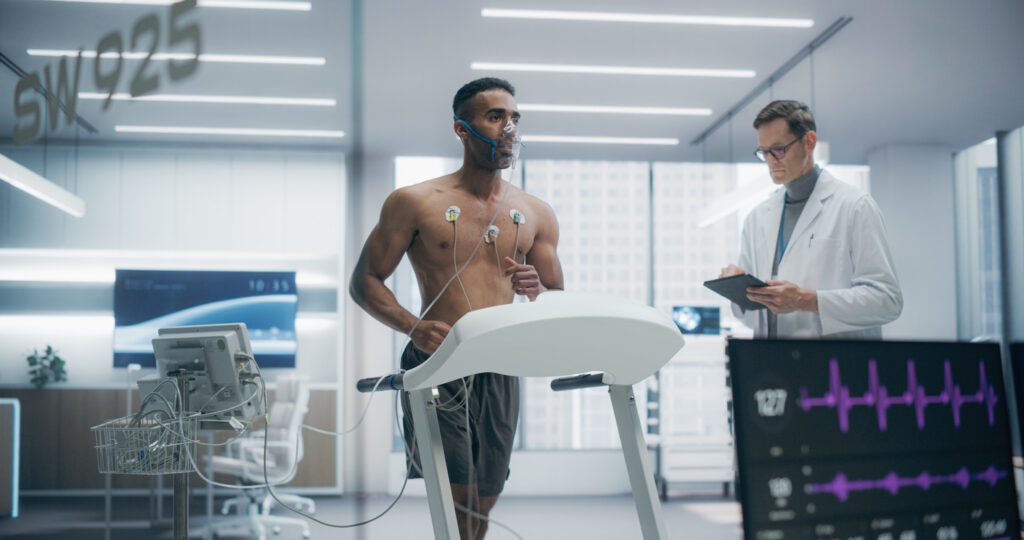
    You would wear a metabolic mask and a heart monitor while you ran or cycled to exhaustion. The mask collected your expired carbon dioxide and monitored how much oxygen you sucked into your lungs. This lab-based testing is still the most accurate way to measure V02 max as well as other key fitness metrics such as:

    • Max heart rate, or the highest number of times your heart can beat per minute during exercise
    • Ventilatory threshold 1, or the point during exercise when the body switches from mainly using fat for fuel to using a combination of fat and glucose or glycogen (stored glucose) for fuel.
    • Ventilatory threshold 2, or the point where your body moves away from aerobic metabolism (which uses oxygen) to anaerobic metabolism (which doesn’t use oxygen).
    • Tidal volume is the amount of air inhaled or exhaled during each breath

    Depending on where you live, you might be able to get your VO2 max tested for around $150.

    However, if you don’t have access to a VO2 max clinic, three somewhat less accurate options exist.

    ▶ The 1-mile walk test

    Wear a heart rate monitor as you walk one mile on a flat surface, such as a treadmill or running track. As soon as you complete the mile, record your heart rate and walk time. Then, plug it into the following formula to calculate your VO2 max:

    132.853 — (0.0769 × Weight) — (0.3877 × Age) + (6.315 × Sex) — (3.2649 × Time) — (0.1565 × Heart rate)

    If that feels like too much math, you can also use a free online tool.

    ▶ The smartwatch test

    Many smartwatches will estimate your VO2 Max for you based on information the watch gathers from your workouts, sex, and age. Compared to in-office testing, smart watches can over- or underestimate V02 max, especially in people who are very out of shape or extremely fit.31

    Because of this, you don’t necessarily want to use your smart watch measurement to determine your current state of health. However, it can help you to see trends. For example, does your VO2 estimate drop after a few weeks of skipping your usual spin class? If so, that’s good information to have.

    ▶ The PR test

    Fitness performance correlates with longevity. If you’re getting faster at running a certain distance or can go a longer distance than before, you’re getting fitter and increasing your chances of living a long, healthy life.

    One way to test this: the 12-minute run test, also known as the Cooper test. (This is a validated way to estimate VO2 max—and shows about a 90 percent correlation with lab-based measurements.)

    Here’s how it works:

    Run as fast as you can on a flat surface, such as a treadmill set at a 1 percent incline or running track, for 12 minutes. After 12 minutes, record your distance. Then, plug it into one of the following formulas to calculate your VO2 max.

    Distance in Miles Distance in Kilometers
    VO2 Max = (35.97 x distance in miles) – 11.29 (22.351 x distance in kilometers) – 11.288

    In lieu of doing math, you can also use a free online calculator.

    How to change your biological age

    Try to think of the information you gather about your body as just that—information.

    It’s not a moral judgment of who you are as a person.

    Just as importantly, it’s not a permanent situation.

    • If you’re weaker than other people your age, you can grow stronger.
    • If your cholesterol or blood glucose levels are high, you can take steps to lower them.
    • If your body is aging faster than your birthdays, consider exploring key lifestyle changes that may help turn the situation around.

    You have options. However, most people make two big mistakes when it comes to longevity-related lifestyle changes.

    Mistake #1: Ignoring evergreen, big-impact strategies

    It’s the simple, boring, “I’ve heard this a million times before” health practices that, when done consistently, add up to a long, healthy life.

    We’re talking about things like…

    • Eating more minimally processed foods and fewer ultra-processed foods
    • Consuming more brightly colored fruits and veggies
    • Moving your body regularly
    • Getting enough rest and sleep
    • Enjoying community, time in nature, and other activities that make life meaningful
    • Keeping alcohol intake moderate
    • Not using tobacco
    • Wearing sunscreen
    • Flossing

    And that’s just a partial list.

    According to thousands of studies, people who practice these and other high-impact strategies not only live longer, but also live better. They’re stronger, happier, and less likely to spend their later years disabled or in pain.

    (If you’d like to see where you stand when it comes to big impact health and longevity strategies, check out our FREE Longevity Assessment.)

    However, when it comes to health, fitness, and longevity, many people pursue options with minimal impact (at best). They reach for the latest, trendy supplement rather than taking steps to quit smoking, as just one example.

    Here’s the thing: Big rock strategies require changes in behavior. If daily physical activity were as easy as popping a pill, walkers and cyclists would clog up the streets in your neighborhood.

    (It’s precisely this reason why so many people need the support of a certified health coach who has undergone training in the science of behavior change.)

    Mistake #2: Not turning data into action

    The data gathered from biomarker aging tests can give you a sense of control.

    However…

    Data, in isolation, doesn’t lead to a longer life.

    Gathering data without changing your behavior is like checking your reflection in the mirror, seeing spinach wedged between your incisors, and leaving it there.

    You need to remove the spinach for the mirror check to be worthwhile.

    Biomarker testing is the same.

    If you don’t use your bio data to inform behavior change, you’re wasting your money and time.

    Consider your biomarker data as a baseline or starting point.

    Then, use it to assess whether various lifestyle changes or medical interventions are moving you closer to your goal of living a longer, healthier life.

    References

    Click here to view the information sources referenced in this article.

    If you’re a health and fitness pro…


    When your clients are stressed and exhausted, everything else becomes a
    struggle
    : going to the gym, choosing healthy foods, and managing cravings.


    But with the right tools, you can help your clients overcome
    obstacles like chronic stress and poor sleep—leading them toward the
    lasting health transformations they’ve always wanted.


    PN’s Level 1 Sleep, Stress Management, and Recovery (SSR) Coaching
    Certification

    will give you these tools. And it’ll give you confidence and credibility as a
    specialized coach who can
    solve the biggest problems blocking any clients’ progress.
    (You can
    join the SSR Early Access List for our biggest discount + exclusive perks.)

    Source link

  • 24 Chair Yoga Exercises for Any Age – Green Bubz

    24 Chair Yoga Exercises for Any Age – Green Bubz

    Product Name: 24 Chair Yoga Exercises for Any Age – Green Bubz

    Click here to get 24 Chair Yoga Exercises for Any Age – Green Bubz at discounted price while it’s still available…

    All orders are protected by SSL encryption – the highest industry standard for online security from trusted vendors.

    24 Chair Yoga Exercises for Any Age – Green Bubz is backed with a 60 Day No Questions Asked Money Back Guarantee. If within the first 60 days of receipt you are not satisfied with Wake Up Lean™, you can request a refund by sending an email to the address given inside the product and we will immediately refund your entire purchase price, with no questions asked.

    (more…)

  • Skincare as You Age Infographic

    When I dove into the scientific research for my book How Not to Age, I uncovered the best ways we can care for our skin as we mature. What are the most important lifestyle factors? The best topical creams? Are there any beneficial procedures? This infographic summarizes the main takeaways.

    skincare infographic 1

    skincare infographic 2

    skincare infographic 3

    skincare infographic 4

    Get this infographic as a downloadable PDF with citations here.

    For more details about the studies referenced in this infographic, watch the related videos for free on NutritionFacts.org’s YouTube channel or on our website’s Anti-aging topic page.


    Source link

  • Preorder The How Not to Age Cookbook

    Preorder The How Not to Age Cookbook

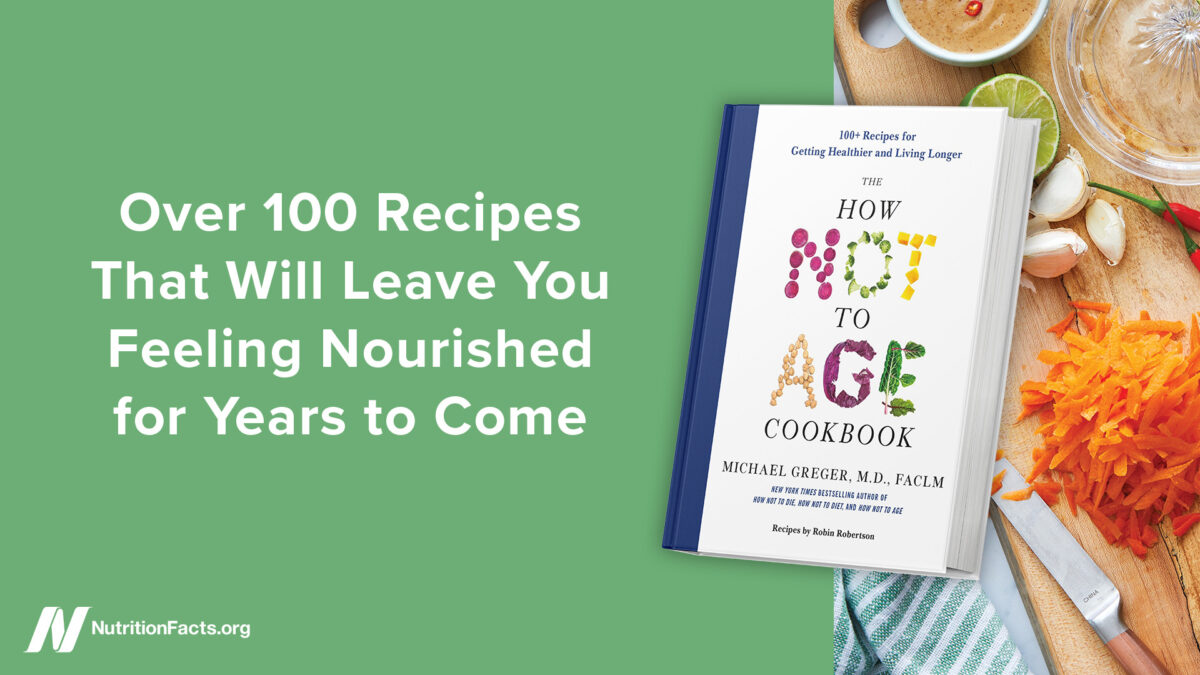
    I’m thrilled to announce that pre-orders are now open for The How Not to Age Cookbook, coming out on April 22. This much-anticipated culinary companion to my New York Times Best Seller, How Not to Age, is a beautifully-illustrated cookbook with more than 100 recipes developed again with Robin Robertson to help you age healthfully and vibrantly. Each of these simple, nutrition-packed dishes uses ingredients that have been proven to promote a healthy lifespan, and inspiration has been drawn from the places around the world where people traditionally live the longest. 

    For instance, the bright anthocyanin pigments in berries are thought to account for their benefits for our cognitive function, eyesight, inflammation, blood sugar, artery function, and cholesterol, so eat your berries, drink hibiscus tea, and enjoy savory sources like purple sweet potatoes. When it comes to our joints, strawberries, ginger, and turmeric, for example, have been found to help with osteoarthritis of the knees, a leading cause of disability in older adults. 

    Get a Signed Bookplate

    Once you pre-order your copy of The How Not to Age Cookbook, make a donation using this form and, as a token of my appreciation of your support, I’ll sign a bookplate that will be sent to you. The bookplate will fit perfectly into the front cover of the book and makes a great keepsake for yourself or an extra special gift for a loved one. As always, thank you for your support and dedication to the latest in evidence-based nutrition. Only a limited number of bookplates are available, so be sure to pre-order my new cookbook and make a donation today!

    While you wait for the book to arrive, check out my anti-aging videos, stay tuned to our social media for some recipes, and try this delicious Tempeh and Mushroom Chili

    Tempeh and Mushroom Chili with Corn and Cilantro

    Makes 6 servings

    Chopped mushrooms and tempeh add great texture and heartiness to this flavorful chili that bursts with kidney beans, corn kernels, and cilantro. This recipe calls for cremini mushrooms because they hold up well in stews and chili. If unavailable, you can substitute white button mushrooms.

    • 8 ounces tempeh
    • 1 red onion, chopped
    • 1 red bell pepper, chopped
    • 1 tablespoon white miso paste blended with ¼ cup hot water
    • 3 garlic cloves, minced
    • 8 ounces cremini mushrooms, chopped
    • 2 to 3 tablespoons chili powder (mild or hot)
    • ½ teaspoon dried oregano
    • ½ teaspoon ground black cumin
    • ¼ teaspoon ground pippali or black pepper
    • 2 (14.5-ounce) cans salt-free crushed tomatoes, drained
    • 3 cups cooked or 2 (15-ounce) BPA-free can or Tetra Pak salt-free dark kidney beans, drained and rinsed
    • 1 cup fresh or thawed frozen corn kernels
    • ½ cup chopped fresh cilantro

    Steam the tempeh in a steamer basket over a saucepan with about 2 inches of boiling water for 10 minutes, then drain, coarsely chop, and set aside.

    Heat ¼ cup of water in a large saucepan over medium heat. Add the onion and bell pepper, cover, and cook until softened, about 5 minutes.

    Add the miso mixture and garlic, then stir in the reserved tempeh, mushrooms, chili powder, oregano, black cumin, and pippali. Cook until fragrant, about 1 minute. Add the tomatoes, beans, and corn.

    Cover and simmer over low heat, stirring occasionally, until the chili is thick and flavorful, about 30 minutes. Stir in the cilantro. If the chili is too thick, stir in a little water. Serve hot.

    As always, all proceeds I receive from all of my books are donated directly to charity. 


    Source link

  • How to Build Mindful Social Media Habits in the Age of TikTok—for You and Your Kids

    How to Build Mindful Social Media Habits in the Age of TikTok—for You and Your Kids

    A few years back, I was scrolling through my Instagram feed when I came across an image of Miranda, my childhood best friend. She was on a beautiful white-sand tropical beach, tan and radiant, contorted into an incredible yoga pose. In contrast, I was sitting in my living room, pasty white and deeply bundled against the frigid Maine temps, nearly comatose from tech use. And I noticed something. As I stared at the pic, my throat clenched slightly. My shoulders rose up just a hair. And my stomach dropped. I had a wisp of a thought: Ugh. I wish that was me. This was followed by a cascade of reasons that I was better than her, in a desperate attempt to make myself feel better. 

    What makes this moment notable, even though this yucky feeling had happened a bajillion times while looking at Insta, was a recognition of how that image impacted me. If I think about my technology consumption like a diet, what I just ate left me feeling bloated and heavy—perhaps the equivalent of eating an entire bag of Cheetos. In the past, I might have scrolled on for thirty minutes, continuing with my day and feeling some unnamed uneasiness, but not really noticing or connecting my feelings to anything in particular. This time, though, it was clear as day. This time helped me wake up and ask myself, “Is scrolling through social media healthy for me?” The answer was a resounding no.

    So then I deleted all the apps and never got on social media again. 

    Yeah, right. 

    What is true is that this was the beginning of a long process of really waking up to how my technology use was impacting me. I was able to start noticing when my face felt hot and my muscles clenched because an email triggered me before shooting off a fiery response. I recognized that if I woke up and looked at the news on my phone first thing in the morning, I was extra grouchy toward my family as I got ready to teach school that day.

    Mindfulness basically asks us to take off our judgy pants for a second and really look at our experiences, especially the ones we think we already know.

    On the flip side, my awareness of some of the ways tech really served me grew as well. I was able to notice that I felt empowered by calls to action posted by friends who were promoting social justice. I was grateful for the electronic calendar that reminded me of a forgotten appointment I was supposed to go to in thirty minutes. And especially as we braved the COVID-19 pandemic, I deeply appreciated being able to connect with my students, family, and friends over Zoom.

    Listen, I have an obvious bias here. I believe it is really easy for us as humans to get sucked into mindless technology use, and I think that sometimes makes us feel like crap. I believe there are forces at work that make it hard to put the phone or video controller or computer screen down. And I believe that we do have control over ourselves and our choices, but only if we are paying enough attention to notice what’s going on. 

    Listen to Your Kids

    I want to be clear: This is not just a concern for young people. Though the specifics of the challenges around tech use may be generational, the modern struggle for balance and wellness affects all ages.

    I am a mother of two young kiddos (ages one and four at the time of publication), which means I am grappling with how to best support them in developing their own healthy relationships with technology.

    For now, it is easy because I can just turn off the iPad after one episode or take away the phone after the timer dings. But at some point, I need to transfer that power to them so they can start noticing and making their own choices about the impact their tech use has on them. Of course, they will make mistakes. Of course, I will make mistakes. But I’m hoping, much as I do with my students, that we can figure it out together.

    I encourage you to be vulnerable with the young people in your life. Model owning your struggles. Invite them to share theirs. Sit on the same side of the table and problem-solve together rather than fight. We all want less fighting. Be open to the possibility that you are in this together.

    You can learn a lot just by listening to kids. The world is different from the one we grew up in. I didn’t have a mobile phone or social media until college and a smartphone came well after that. I had an entire childhood before modern tech became a reality. I can’t fully comprehend what it would be like to grow up in a world where my relationships were mediated by technology. The closest I can come is simply listening to young people. One piece of advice that has really stuck with me came from Jeremy, a teen from Virginia, who said, “One of the biggest mistakes I see parents make is they try to relate too much. While both generations have issues, it’s not the same and they don’t fully understand. Parents should just acknowledge the generation gap, and be open to listening and understanding.” 

    So, I encourage you to be vulnerable with the young people in your life. Model owning your struggles. Invite them to share theirs. Sit on the same side of the table and problem-solve together rather than fight. We all want less fighting. Be open to the possibility that you are in this together.

    Create Social Media Habits That Serve You

    Mindfulness basically asks us to take off our judgy pants for a second and really look at our experiences, especially the ones we think we already know. When we fully pay attention, defenses down, hearts open, we can be amazed by how much more there is to learn. By hearts open, I mean we can do this work with care. We can do it because we care . . . about ourselves, about our families and friends, and about the larger community. Acknowledging that we truly do want what is best for all can help us make moves that might not feel easy. Perhaps we create a social justice post to highlight the ways we can better care for one another and this world. Perhaps we put our phones down to really show care to the people we love.

    Close your eyes. Okay, I guess you have to read through this first, but then come back and close your eyes and walk yourself through this exercise.

    1. Imagine yourself waking up on your most perfect day. What does it feel like to be in bed? How do you soak in that moment? Do you stay there for a while to enjoy the restfulness? Are you someone who loves to jump right up and throw on some upbeat music? Whatever those first few moments in your ideal day look like, imagine them.
    1. Afternoon rolls around. What now? Do you go out for a walk? Take a catnap in a sunny patch on the couch? Hit the beach or slopes?
    1. How will you wind down from your day? Watch a movie with your family? Read a book curled up in your beanbag chair? Take a short walk around the block?
    1. When you are ready, come back to the present.

    This is an idealizing exercise. Obviously, we don’t usually have this much control over every moment of the day. We must consider other people’s needs. And we do things—work, errands, exercise, and so on—that may not feel gratifying in the moment but may ultimately serve us. Some life circumstances simply do not allow for us to do all that we wish. But it can be really helpful to know in our bodies what it feels like to live a beautiful day, as well as what factors help create those feelings.

    This exercise is meant to highlight the fact that how you spend your time matters. What you fill your mind with—experiences, content, images—matters. It may be the most important thing to consider. The way we spend each moment ultimately adds up to our lives. If we really want to start being clear about how our tech can best serve us, we need to be very clear about what we want it to serve. Many people grapple with this big question their whole lives: What work, activities, causes, and ways of being in the world make me feel most alive, most connected, and most authentically myself? There will not be a final answer to this question. It will be a lifelong inquiry, and your response will undoubtedly shift as you grow and have new priorities.

    Finding meaning in our lives won’t come just from what we do, but how we show up.

    Finding meaning in our lives won’t come just from what we do, but how we show up. Are we all the way there for those experiences? Or are we distracted? Can we find meaning and contentment even in moments that are not exciting, awe-inspiring, or fun? Our tech habits do not exist in isolation. Sometimes they are a result of some unmet need in our lives. Sometimes our habits result in an unmet need. It helps to figure out what things nourish us and help us to feel most alive. Only then can we really understand how our tech use can support that. 

    You Can Always Begin Again

    The truth is, at least momentarily, it is easier not to try. It is easier not to notice. It is easier to just hop in our tech inner tube and let the tech companies’ brilliant neuroscientists and psychologists whisk us away on a “happy,” tech-fueled river float. It’s easier to let our habits and patterns whisk us away than it is to look at those habits and ask them, “Are you getting me where I want to go? Are you creating the life I want to live?” Sometimes just asking ourselves to pause can feel Herculean. We aren’t used to it. Our habits push us to stick with what we know. Knowing this, perhaps you ask yourself, Can I love the dance? Can I love my humanness? Can I love myself when my actions create sleep deprivation, jealousy, work backlogs, or sadness? Can I fuel my desire to keep coming back with love and care instead of shame?

    If we go into the practice of examining our tech habits by criticizing ourselves, and criticizing others, for not living up to our ideals, we won’t want to keep trying. Lead with love.

    Maybe we notice we have been scrolling for over an hour one day, only to miss noticing the same behavior a week later. Maybe we choose to set a timer when we play video games one day and hop up after thirty minutes to go get some fresh air, only to hole up for a whole weekend playing games a month later. Still, we can begin again.

    And still, we can value ourselves as we fall. We can value ourselves enough to try again. 

    Attention Hijacked: Using Mindfulness to Reclaim Your Brain from Tech by Erica B. Marcus. Text copyright © 2022 by Erica B. Marcus. Reprinted with the permission of Zest Books, a division of Lerner Publishing Group, Inc. All rights reserved. No part of this text excerpt may be used or reproduced in any manner whatsoever without the prior written permission of Lerner Publishing Group, Inc.

    Can We Have Compassionate Tech? 

    Aden Van Noppen, founder of compassionate tech company Mobius, answers our questions about how technology hijacks attention and how we can foster a healthier relationship with our screens.
    Read More 

    • Ava Whitney-Coulter
    • August 16, 2022

    You Can Change Your Life by Loving Yourself 

    Learning to take care of your heart, to accept the pain that comes with seeing the people you love suffer, and to be okay with suffering yourself, is the true work of self-love—and it begins with the breath.
    Read More 

    • Ali Smith, Atman Smith, and Andres Gonzalez
    • June 10, 2024


    Source link

  • 5 Simple Ways to Boost Your Brain Health as You Age

    5 Simple Ways to Boost Your Brain Health as You Age

    5 Simple Ways to Boost Your Brain Health as You Age

    As we age, our brains undergo natural changes that can affect our cognitive abilities, memory, and overall brain health. However, with simple lifestyle changes and habits, you can boost your brain health and maintain a sharp mind as you age. In this article, we’ll explore five simple ways to do just that.

    1. Exercise Your Way to Better Brain Health

    Exercise is one of the most effective ways to boost your brain health. Physical activity has been shown to increase blood flow to the brain, which can improve cognitive function and reduce the risk of age-related cognitive decline. Additionally, exercise has been linked to the growth of new brain cells, which can help to improve memory and learning.

    Aim for at least 30 minutes of moderate-intensity exercise per day, such as brisk walking, cycling, or swimming. You can also incorporate strength training and high-intensity interval training (HIIT) into your routine to challenge your brain and body.

    2. Eat a Brain-Healthy Diet

    A healthy diet rich in fruits, vegetables, whole grains, and lean proteins can help to support brain health. Foods that are high in antioxidants, such as berries, leafy greens, and nuts, can help to reduce inflammation and oxidative stress in the brain.

    Additionally, foods that are high in omega-3 fatty acids, such as salmon and walnuts, can help to support brain function and reduce the risk of age-related cognitive decline. Aim to include a variety of colorful fruits and vegetables in your diet, and limit your intake of processed and sugary foods.

    3. Get Enough Sleep

    Sleep is essential for brain health, and getting enough sleep can help to improve cognitive function and memory. During sleep, your brain is able to clear out toxins and waste products that can build up and contribute to cognitive decline.

    Aim for 7-9 hours of sleep per night, and establish a consistent sleep routine to help regulate your body’s internal clock. Avoid screens and electronic devices before bedtime, and create a relaxing bedtime routine to help you wind down.

    4. Challenge Your Brain

    Challenging your brain through mental stimulation can help to build cognitive reserve and reduce the risk of age-related cognitive decline. Engage in activities that challenge your brain, such as:

    • Learning a new language or skill
    • Reading and solving puzzles
    • Playing strategy games or chess
    • Practicing mindfulness and meditation

    Aim to challenge your brain at least 30 minutes per day, and mix it up to keep things interesting and prevent boredom.

    5. Manage Stress

    Chronic stress can have a negative impact on brain health, and can contribute to cognitive decline and memory loss. Engage in stress-reducing activities, such as:

    • Yoga or tai chi
    • Meditation and deep breathing
    • Journaling or writing
    • Spending time in nature

    Aim to manage your stress levels by taking regular breaks and engaging in activities that bring you joy and relaxation.

    Conclusion

    Boosting your brain health as you age is easier than you think. By incorporating simple lifestyle changes and habits into your daily routine, you can improve cognitive function, memory, and overall brain health. Remember to exercise regularly, eat a brain-healthy diet, get enough sleep, challenge your brain, and manage stress. With these simple tips, you can maintain a sharp mind and live a healthy, happy life.

    FAQs

    Q: How can I get started with exercising for brain health?
    A: Start by incorporating short, 10-15 minute walks into your daily routine. Gradually increase the duration and intensity of your workouts as you become more comfortable.

    Q: What are some brain-healthy foods I can add to my diet?
    A: Try incorporating foods high in antioxidants, such as berries, leafy greens, and nuts, into your diet. Also, include foods high in omega-3 fatty acids, such as salmon and walnuts.

    Q: How much sleep do I need to get for brain health?
    A: Aim for 7-9 hours of sleep per night. Establish a consistent sleep routine and create a relaxing bedtime routine to help regulate your body’s internal clock.

    Q: What are some stress-reducing activities I can try?
    A: Try yoga or tai chi, meditation and deep breathing, journaling or writing, or spending time in nature. Experiment with different activities to find what works best for you.

    Q: How often should I challenge my brain?
    A: Aim to challenge your brain at least 30 minutes per day. Mix it up and try new activities to keep things interesting and prevent boredom.

  • Vitamin D During Pregnancy Linked To Better Bone Health In Children At Age 7: Study

    Vitamin D During Pregnancy Linked To Better Bone Health In Children At Age 7: Study

    Vitamin D is essential for maintaining healthy bones, and a recent study reveals that supplementing with this vitamin during pregnancy can have a lasting impact on children’s bone health, keeping them strong into mid-childhood.

    Researchers found that children have greater bone mineral density at age 7 when expectant mothers had taken vitamin D supplements during pregnancy.

    “Our findings show that the benefits of vitamin D supplementation during pregnancy persist into mid-childhood. This early intervention represents an important public health strategy. It strengthens children’s bones and reduces the risk of conditions like osteoporosis and fractures in later life,” said Dr. Rebecca Moon, lead investigator of the study in a news release.

    The researchers began the MAVIDOS study in 2009, enlisting over 1,000 pregnant women in England to explore the potential effects of vitamin D on child bone health. During the trial, the women were randomly divided into two groups: one received an additional 1,000 International Units of vitamin D daily, while the other took a placebo. The participants and healthcare providers who attended them did not know which group they belonged to.

    As part of the study’s first phase, researchers assessed the bone mass of the children at age four using detailed bone scans. The results showed that children born to mothers who received vitamin D supplements during pregnancy had greater bone mass compared to those whose mothers had taken a placebo.

    In the latest phase of the study, researchers examined whether the benefits of prenatal vitamin D would extend into mid-childhood. They conducted follow-up bone scans on 454 children between the ages of six and seven, finding that those whose mothers had received vitamin D supplements continued to show stronger bone density at age seven.

    “These findings suggest that pregnancy vitamin D supplementation may represent a population health strategy to improve bone health, although further work is needed to demonstrate the persistence of this effect into adulthood, together with, ideally replication in additional studies,” the researchers wrote in the study published in The American Journal of Clinical Nutrition.

    Although vitamin D deficiency during pregnancy remains a significant concern, the U.S. dietary recommendations for vitamin D intake in pregnant women remain conservative. It is primarily due to concerns over potential toxicity. However, current evidence suggests that a daily intake of 4,000 IU of vitamin D3 is both safe and necessary to meet the needs of all pregnant women, with no adverse effects reported.

    Since the effects and harms of vitamin D supplementation on maternal and infant health are not yet fully understood, WHO does not recommend vitamin D supplementation as part of standard prenatal care.

    Source link

  • Poor Sleep In 40s May Add Years To Your Brain Age: Study Finds

    Poor Sleep In 40s May Add Years To Your Brain Age: Study Finds

    Missing out on sleep not only makes you feel groggy the next day, but the effects can be long-lasting. Adding to the growing body of evidence, researchers have now found that poor sleep in the middle ages is linked to accelerated brain aging in the next ten years.

    The latest study that evaluated participants’ brain health using brain scans revealed that having poor sleep quality in the 40s might add more years to the brain age.

    “Sleep problems have been linked in previous research to poor thinking and memory skills later in life, putting people at higher risk for dementia. Our study which used brain scans to determine participants’ brain age, suggests that poor sleep is linked to nearly three years of additional brain aging as early as middle age,” said study author, Clémence Cavaillès from the University of California San Francisco in a news release.

    The researchers evaluated the sleep patterns of 589 participants with an average age of 40 using questionnaires at the start of the study and five years later. After 15 years, the researchers evaluated the brain shrinkage of the participants using brain scans.

    The questionnaires evaluated participants based on six sleep issues: difficulty falling asleep, waking up in between sleep, waking up too early, short sleep duration, bad sleep quality, and daytime sleepiness.

    Based on the results, participants were divided into three groups according to their sleep quality. Those in the low group had just one poor sleep characteristic and 70% belonged to this group. However, the middle group, comprising 22% of participants, had two to three poor sleep features, while the high group, with more than three poor sleep characteristics, made up 8% of the population.

    After analyzing brain scans alongside sleep patterns, researchers found that participants in the middle group had an average brain age of 1.6 years older than those in the low group. Meanwhile, those in the high group showed an average brain age of 2.6 years older than the low group.

    Out of the six poor sleep characteristics studied, bad sleep quality, difficulty falling asleep, difficulty staying asleep and early morning awakening were linked to greater brain age. This was particularly strong when the participants consistently had it for over five years.

    “Our findings highlight the importance of addressing sleep problems earlier in life to preserve brain health, including maintaining a consistent sleep schedule, exercising, avoiding caffeine and alcohol before going to bed and using relaxation techniques,” said author Dr. Kristine Yaffe, from the University of California San Francisco.

    Source link