Category: Family Health

  • Lupus Facts and Statistics | Lupus Foundation of America

    Lupus Facts and Statistics | Lupus Foundation of America

    What is the role of genetics in lupus?

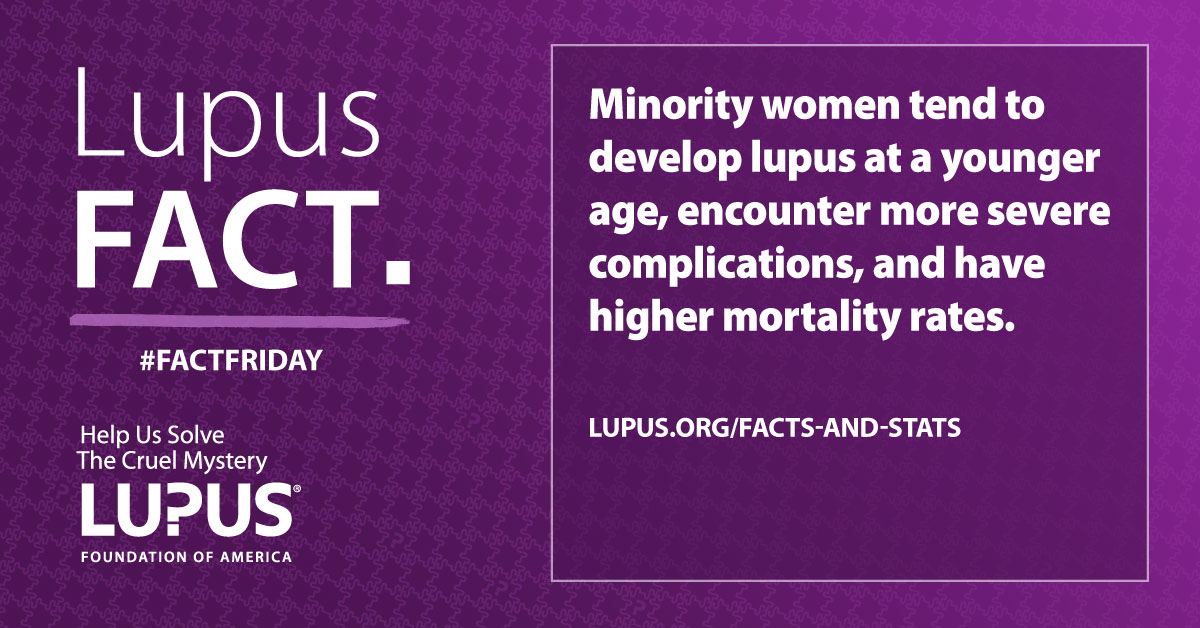
    • Genes do play a role in the predisposition to the development of lupus. There are dozens of known genetic variants linked to lupus. These genes impact both who gets lupus and how severe it is.
    • 20 percent of people with lupus will have a parent or sibling who already has lupus or may develop lupus. About 5 percent of the children born to individuals with lupus will develop the illness.[1]

    Although lupus can develop in people with no family history of lupus, there are likely to be other autoimmune diseases in some family members.[1]

    One of three patients responding to our survey reported they had another autoimmune disease in addition to lupus, and almost half had a relative with lupus.

    How long does it take to get diagnosed with lupus?

    • There are many challenges to reaching a lupus diagnosis. Lupus is known as “the great imitator” because its symptoms mimic many other illnesses. Lupus symptoms can also be unclear, can come and go, and can change.
    • On average, it takes nearly six years for people with lupus to be diagnosed, from the time they first notice their lupus symptoms.[5]
    • A majority (63%) of people with lupus surveyed report being incorrectly diagnosed. Of those reporting incorrect diagnosis, more than half of them (55%) report seeing four or more different healthcare providers for their lupus symptoms before being accurately diagnosed.[5]

    What are the biggest burdens of living with lupus?

    Responding to our survey, most lupus patients reported that they are coping well with lupus (78%), and that other family members are understanding and supportive (72%).[4]

    84% people with lupus name other family members as their primary support network.

    Participants cited pain (65%), lifestyle changes (61%), and emotional problems associated with lupus (50%) as the most difficult parts of coping with lupus.[4]

    What is the state of lupus awareness?

    • While lupus is a widespread disease, awareness of the disease lags behind many other illnesses. 63% of Americans surveyed have never heard of lupus or know little or nothing about this disease and its symptoms beyond the name indicating there is significant opportunity and need for continued public education.[9]
    • Over half of respondents (61%) believed it takes six months or less for a person to be accurately diagnosed with lupus—significantly underestimating the time it takes to receive an accurate lupus diagnosis.[9]

    Key source documents:

    [1] Pons-Estel GJ, Alarcón GS, Scofield L, Reinlib L, Cooper GS. Understanding the epidemiology and progression of systemic lupus erythematosus. Semin Arthritis Rheum. 2010 Feb;39(4):257-68. doi: 10.1016/j.semarthrit.2008.10.007. Epub 2009 Jan 10. Review.

    [2] Izmirly PM, Parton H, Wang L, McCune WJ, Lim SS, Drenkard C, Ferucci ED, Dall’Era M, Gordon C, Helmick CG, Somers EC. Prevalence of Systemic Lupus Erythematosus in the United States: Estimates From a Meta-Analysis of the Centers for Disease Control and Prevention National Lupus Registries. Arthritis Rheumatol. 2021 Jun;73(6):991-996. doi: 10.1002/art.41632. Epub 2021 Apr 23. PMID: 33474834; PMCID: PMC8169527.

    [3] Yen E, Singh R. Brief Report: Lupus-An Unrecognized Leading Cause of Death in Young Females: A Population-Based Study Using Nationwide Death Certificates, 2000-2015. Arthritis & Rheumatology. 2018;70(8):1251-1255. doi:10.1002/art.40512

    [4] Daly R, Al Sawah S, Foster S, et al. FRI0420 Health Related Quality of Life in Lupus Differs by How Patients Perceive their Health and How Often They Experience Flares: Findings from a Cross-Sectional Online Survey in the United States. Annals of the Rheumatic Diseases 2015;74:578-579. https://ard.bmj.com/content/74/Suppl_2/578.3 (accessed October 21, 2021).

    [5] Al Sawah S, Daly RP, Foster S, Naegeli A, Benjamin K., Doll H., Bond G, Moshkovich O, Alarcón G. Understanding Delay in Diagnosis, Access to Care, and Satisfaction with Care in Lupus: Findings from a Cross-Sectional Online Survey in the United States. Presented at the European League Against Rheumatism (EULAR) 2015 Annual Conference. June 2015. Rome, Italy. 

    [6] Barber, M. and Clarke, A. (2017). Socioeconomic consequences of systemic lupus erythematosus. Current Opinion in Rheumatology, 29(5), pp.480-485.

    [7] Carter, E., Barr, S., & Clarke, A. (2016). The global burden of SLE: prevalence, health disparities and socioeconomic impact. Nature Reviews Rheumatology, 12(10), 605-620. doi: 10.1038/nrrheum.2016.137

    [8] Meacock, R., Dale, N., & Harrison, M. (2013). The Humanistic and Economic Burden of Systemic Lupus Erythematosus. Pharmacoeconomics, 31(1), 49-61. doi: 10.1007/s40273-012-0007-4

    [9] Lupus Awareness Survey for the Lupus Foundation of America (2019) [Executive Summary].Washington, DC.  https://www.lupus.org/news/2019-lupus-awareness-survey-summary. June 25, 2019.

    Source link

  • Brachial plexus: MedlinePlus Medical Encyclopedia

    Brachial plexus: MedlinePlus Medical Encyclopedia

    Chad DA, Bowley MP. Disorders of nerve roots and plexuses. In: Jankovic J, Mazziotta JC, Pomeroy SL, Newman NJ, eds. Bradley and Daroff’s Neurology in Clinical Practice. 8th ed. Philadelphia, PA: Elsevier; 2022:chap:105.

    Chan K, Lee SK. Surgical management of adult traumatic brachial plexus injuries. In: Skirven TM, Osterman AL, Fedroczyk JM, Amadio PC, Feldscher SB, Shin EK, eds. Rehabilitation of the Hand and Upper Extremity. 7th ed. Philadelphia, PA: Elsevier; 2021:chap 45.

    Standring S. Pectoral girdle and upper limb: overview and surface anatomy. In: Standring S, ed. Gray’s Anatomy. 42nd ed. Philadelphia, PA: Elsevier; 2021:chap 48.

    Source link

  • Liquid medication administration: MedlinePlus Medical Encyclopedia

    Liquid medication administration: MedlinePlus Medical Encyclopedia

    URL of this page: //medlineplus.gov/ency/article/002209.htm

    If the medicine comes in suspension form, shake well before using.

    Do not use flatware spoons used for eating for giving medicine. They are not all the same size. For example, a flatware teaspoon could be as small as one half teaspoon (2.5 milliliters [mL]) or as large as 2 teaspoons (10 mL).

    Measuring spoons used for cooking are accurate, but they spill easily.

    Oral syringes have some advantages for giving liquid medicines.

    • They are accurate.
    • They are easy to use.
    • You can take a capped syringe containing a dose of medicine to your child’s daycare or school.

    There can be problems with oral syringes, however. The FDA has had reports of young children choking on syringe caps. To be safe, remove the cap before you use an oral syringe. Throw it away if you do not need it for future use. If you need it, keep it out of reach of infants and small children.

    Dosing cups are also a handy way to give liquid medicines. However, dosing errors have occurred with them. Always check to make sure the units such as teaspoon, tablespoon, mL, or cubic centimeters (cc) on the cup or syringe match the units of the dose you want to give.

    Liquid medicines often do not taste good, but many flavors are now available and can be added to any liquid medicine. Ask your pharmacist.

    Unit conversions

    • 1 mL = 1 cc
    • 2.5 mL = 1/2 teaspoon
    • 5 mL = 1 teaspoon
    • 15 mL = 1 tablespoon
    • 3 teaspoons = 1 tablespoon

    Updated by: Charles I. Schwartz, MD, FAAP, Clinical Assistant Professor of Pediatrics, Regional Medical Director of Penn Medicine Primary and Specialty Care, Perelman School of Medicine at the University of Pennsylvania, General Pediatrician at PennCare for Kids, Phoenixville, PA. Also reviewed by David C. Dugdale, MD, Medical Director, Brenda Conaway, Editorial Director, and the A.D.A.M. Editorial team.

    The information provided herein should not be used during any medical emergency or for the diagnosis or treatment of any medical condition. A licensed medical professional should be consulted for diagnosis and treatment of any and all medical conditions. Links to other sites are provided for information only — they do not constitute endorsements of those other sites. No warranty of any kind, either expressed or implied, is made as to the accuracy, reliability, timeliness, or correctness of any translations made by a third-party service of the information provided herein into any other language.
    © 1997- 2026 A.D.A.M., a business unit of Ebix, Inc. Any duplication or distribution of the information contained herein is strictly prohibited.
    All content on this site including text, images, graphics, audio, video, data, metadata, and compilations is protected by copyright and other intellectual property laws. You may view the content for personal, noncommercial use. Any other use requires prior written consent from Ebix. You may not copy, reproduce, distribute, transmit, display, publish, reverse-engineer, adapt, modify, store beyond ordinary browser caching, index, mine, scrape, or create derivative works from this content. You may not use automated tools to access or extract content, including to create embeddings, vectors, datasets, or indexes for retrieval systems. Use of any content for training, fine-tuning, calibrating, testing, evaluating, or improving AI systems of any kind is prohibited without express written consent. This includes large language models, machine learning models, neural networks, generative systems, retrieval-augmented systems, and any software that ingests content to produce outputs. Any unauthorized use of the content including AI-related use is a violation of our rights and may result in legal action, damages, and statutory penalties to the fullest extent permitted by law. Ebix reserves the right to enforce its rights through legal, technological, and contractual measures.

    Source link

  • Cyclosporiasis

    Cyclosporiasis

    Source: Medical Encyclopedia
    Related MedlinePlus Pages: Parasitic Diseases

    Source link

  • Histoplasmosis and Work | Histoplasmosis

    Histoplasmosis and Work | Histoplasmosis

    Overview

    Histoplasmosis is an infection caused by a fungus called Histoplasma. Anyone who works with or near material contaminated with Histoplasma can develop histoplasmosis.

    The fungus lives in the environment, particularly in soil that contains large amounts of bird or bat droppings. People can get histoplasmosis after breathing in the microscopic fungal spores (also known as conidia) from the air.

    Most people exposed to Histoplasma never have symptoms. For people who do get sick, the severity of histoplasmosis varies widely. The severity depends on:

    • The amount and length of the exposure.
    • If the person is at higher risk for developing the severe forms.

    Symptoms of histoplasmosis usually appear between 3 and 17 days after a person breathes in the fungal spores. Common symptoms include fever, cough, and fatigue.

    What to do

    What to do if you are exposed at your workplace

    If you think you’ve been exposed to Histoplasma at work, you should contact:

    • Your crew leader or supervisor.
    • Your occupational health or risk management department.

    If your workplace does not have these services, you should contact your local city, county, or state health department. We do not know if antifungal medication (prophylaxis) can prevent histoplasmosis after a workplace exposure. However, it can be considered for high-risk exposures.

    For more information about laboratory exposures to Histoplasma, please see Safety guidelines for laboratory workers who handle Histoplasma.

    What to do if you are sick

    If you think you have histoplasmosis after working in an area where Histoplasma is common:

    • Report your symptoms to your crew leader or supervisor.
    • Visit a healthcare provider, if needed.
    • Tell them you work in an area where Histoplasma is common.
    • Ask to be tested for histoplasmosis.

    People at increased risk

    Activities associated with histoplasmosis

    Environmental disruption of Histoplasma habitats is often a key factor associated with histoplasmosis outbreaks.1 It is also associated with isolated cases,2 although to a lesser extent. These activities include:

    • Disturbance of large accumulations of bird or bat droppings.
    • Soil disruption (digging or excavation).
    • Plant matter disruption (handling trees or landscaping).
    • Demolition, construction, or renovation.
    • Working in caves.

    Jobs associated with histoplasmosis

    In areas where Histoplasma is common, workers in some industries may be at higher risk for histoplasmosis:

    • Construction, demolition, and extraction occupations.
    • Agriculture and forestry industries.

    People who are also at risk include:

    • Workers in occupations or industries exposed to bird or bat droppings.
    • Those involved with activities that disrupt the environment.

    Most of what we know about jobs that may be related to a higher chance of getting sick comes from outbreak investigations. Approximately one-third of histoplasmosis outbreaks in the United States are work-related.1 However, outbreak-related histoplasmosis cases represent only a small fraction of overall known cases (about 5%).2 Examples of people affected by work-related histoplasmosis outbreaks include:1

    • Bridge workers.
    • Construction or demolition workers.
    • Farmers.
    • Landscapers or tree removal workers.
    • Microbiology laboratory workers.

    Histoplasmosis outbreaks have also affected people who were exposed in the workplace but not directly involved in activities that initiated the outbreak. For example, outbreaks affecting office building workers after construction or renovation.1

    Source link

  • Neuromyelitis optica spectrum disorder: MedlinePlus Medical Encyclopedia

    Neuromyelitis optica spectrum disorder: MedlinePlus Medical Encyclopedia

    Alobeidi F, Thurnher MM, Jäger HR. Non-tumoural spinal cord lesions. In: Adam A, Dixon AK, Gillard JH, Schaefer CM, eds. Grainger & Allison’s Diagnostic Radiology. 7th ed. Philadelphia, PA: Elsevier; 2021:chap 50.

    Fabian MT, Krieger SC, Lublin FD. Multiple sclerosis and other inflammatory demyelinating diseases of the central nervous system. In: Jankovic J, Mazziotta JC, Pomeroy SL, Newman NJ, eds. Bradley and Daroff’s Neurology in Clinical Practice. 8th ed. Philadelphia, PA: Elsevier; 2022:chap 80.

    Gospe SM, Chen JJ, Bhatti MT. Neuromyelitis optica spectrum disorder and myelin oligodendrocyte glycoprotein associated disorder-optic neuritis: a comprehensive review of diagnosis and treatment. Eye (Lond). 2021;35(3):753-768. PMID: 33323985 pubmed.ncbi.nlm.nih.gov/33323985/.

    Source link

  • TB Prevention in Health Care Settings

    TB Prevention in Health Care Settings

    Source: Centers for Disease Control and Prevention
    Related MedlinePlus Pages: Occupational Health for Health Care Providers

    Source link

  • Zika Cases in the United States | Zika Virus

    Zika Cases in the United States | Zika Virus

    Background

    • Prior to 2014, very few travel-associated cases of Zika were identified in the United States.
    • In 2015 and 2016, large outbreaks of Zika virus occurred in the Americas, resulting in an increase in travel-associated cases in US states, widespread transmission in Puerto Rico and the US Virgin Islands, and limited local transmission in Florida and Texas.
    • In 2017, the number of reported Zika cases in the United States started to decline.
    • Since 2018, there have been no reports of Zika virus transmission by mosquitoes in the continental United States.
    • Since 2019, there have been no confirmed Zika cases reported from US territories.
    • CDC is notified of cases by state and local health departments using standard case definitions.

    Zika cases by year

    2026 U.S. Zika cases* reported to ArboNET

    Data are preliminary and subject to change. Data are current as of July 21, 2026.

    Year US States
    Locally acquired
    US States
    Travel-associated†
    US Territories
    Locally acquired††
    US Territories
    Travel-associated
    2026 0 6 0 0

    *Confirmed and probable disease cases
    †Cases acquired through other routes (e.g., laboratory transmission) are classified as travel-associated for reporting.
    ††Since 2019, all locally acquired cases of Zika in the US territories were diagnosed by antibody testing. Since antibodies against Zika virus can persist for years after infection, serology cannot distinguish between a recent or past infection. Additionally, Zika and dengue virus antibodies cross-react, making it difficult to diagnose which virus is the cause of the current illness. Since 2019, there have been no confirmed Zika virus disease cases reported from US territories.

    Historic U.S. Zika cases* reported to ArboNET, 2015–2025

    2025 data are preliminary and subject to change. Data are current as of June 2, 2026.

    Year US States
    Locally acquired
    US States
    Travel-associated†
    US Territories
    Locally acquired††
    US Territories
    Travel-associated
    2015 0 62 9 1
    2016 224‡ 4,944 36,367 145
    2017 7‡ 445 665 1
    2018 0 74 147 1
    2019 0 28 73 1
    2020 0 4 57 0
    2021 0 2 32 0
    2022 0 5 17 0
    2023 0 7 30 0
    2024 0 22 10 0
    2025 0 7 1 0

    *Confirmed and probable disease cases
    †Cases acquired through other routes (e.g., laboratory transmission) are classified as travel-associated for reporting.
    ††Since 2019, all locally acquired cases of Zika in the US territories were diagnosed by antibody testing. Since antibodies against Zika virus can persist for years after infection, serology cannot distinguish between a recent or past infection. Additionally, Zika and dengue virus antibodies cross-react, making it difficult to diagnose which virus is the cause of the current illness. Since 2019, there have been no confirmed Zika virus disease cases reported from US territories.
    ‡Locally acquired cases reported from Florida and Texas in 2016 and 2017

    Source link

  • Preparing for Wildfires | Wildfires

    Preparing for Wildfires | Wildfires

    Be prepared for wildfires

    Aerial view of a tree-filled community on a clear, sunny day.

    Take steps to be ready for a wildfire and prepare your home and landscaping to reduce your risk from a wildfire.

    Know your community’s evacuation plans.

    • Find several ways to leave your area.
    • Drive the evacuation routes and find shelter locations.
    • Have a plan for pets and livestock.

    Gather emergency supplies, including respirators.

    Can children wear respirators?

    Children ages 2 years and older can wear respirators and masks. However, NIOSH Approved respirators do not come in suitable sizes for very young children. Choose a comfortable respirator or mask that your child can wear properly. If a respirator or mask fits poorly or is uncomfortable, a child might take it off or wear it incorrectly (for example, pulling it down from their nose). This reduces the intended benefits.

    • Choose a size that fits over the child’s nose and under the chin but does not impair vision.
    • Follow the user instructions for the respirator or mask. These instructions may show how to make sure it fits properly.

    NIOSH Approved respirators and international respirators may be available in smaller sizes that fit children. However, manufacturers typically design them to be used by adults in workplaces. They may not have been tested for broad use in children.

    Infographic: Be Ready! Wildfires

    Download Infographic PDF: English | Español

    Plan to keep wildfire smoke outside.

    • Choose a room you can close off from outside air.
    • Set up a portable air cleaner or a filter to keep the air in this room cleaner even when it’s smoky outdoors or in the rest of your home.

    Schools and commercial buildings‎

    Keep track of fires near you.

    • Listen to the Emergency Alert System (EAS) and National Oceanic and Atmospheric Administration (NOAA) Weather Radio for emergency alerts.
    • Monitor fires in your area using mapping tools. AirNow’s Fire and Smoke Map has a map of fires throughout North America. NOAA’s Fire weather outlook page maps fire watches and warnings.

    Source link

  • How do oil spills impact people? Coastal Pollution Tutorial

    How do oil spills impact people? Coastal Pollution Tutorial


    A No Fishing sign in Prince George's County, Maryland.

    Oil spills can cause closures of recreational and commercial areas (Credit: NOAA).


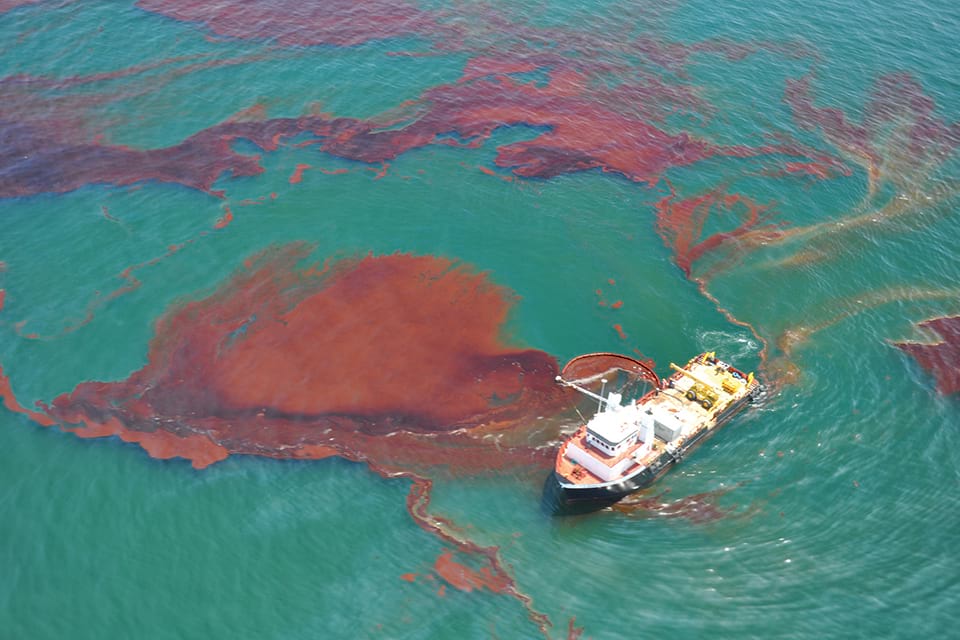
    In addition to the lives that can be lost during an oil spill event (like the explosion that led to the Deepwater Horizon spill), spills can impact the livelihoods of communities that rely on commercial or subsistence fishing, tourism, or recreation.

    Recreational activities affected by the spill in the Gulf states impacted by Deepwater Horizon included boating, fishing, and beach-going experiences like swimming, surfing, and wildlife viewing. Some beaches and recreational fisheries were closed due to oiling and cleanup activities. A group of federal and state agencies, known as Trustees, were responsible for assessing the impact of the spill. The Trustees estimated that the spill impacted recreational activities from April 2010 through November 2011. During that time, the Deepwater Horizon spill caused the public to lose more than 16 million user days of boating, fishing, and beach-going experiences. Total recreational use damages due to the spill through November 2011 were estimated at $693.2 million.

    Deepwater Horizon also devastated the commercial fishing industry. The U.S. Bureau of Ocean Energy Management estimated that the spill caused a loss of between $7.5 million and $141.1 million in revenue for harvesters across the Gulf in the eight months following the oil spill. Many people rely on Gulf fisheries for their income, from the harvesters who catch the seafood to the restaurants who serve it. Across the seafood industry, Deepwater Horizon cost up to $952.9 million in total sales, up to $309.8 million in income, and as many as 9,315 jobs from May through December 2010.

    These economic impacts can also lead to health and emotional impacts. After the destruction of the Deepwater Horizon spill, the people in Gulf coast communities experienced increases in stress and depression. Residents worried about the economy, their way of life, and the stability of their communities. All of these factors play a role in affecting their health.


    Oil spills can cause stress or depression in people who live or work in affected areas (Credit: Florida Sea Grant/Anna Hinkeldey).

    Oil spills can cause stress or depression in people who live or work in affected areas (Credit: Florida Sea Grant/Anna Hinkeldey). View and print this infographic and see the description below.


    Indigenous communities—including Native American tribes, Alaska Natives, and Pacific Islanders—as well as other cultural groups have ties to natural resources that go beyond recreational or commercial activities.

    The Exxon Valdez oil spill fouled the critically important ecosystem of Prince William Sound, Alaska, with 11 million gallons of crude oil. Native peoples account for nearly a fifth of Alaska’s overall population. Alaska Native people and cultures stretch throughout the state, intertwined with the unique land and the waters that surround it, including Prince William Sound. This area is home to several of Alaska’s tribal groups, including Aleuts, Athapaskans, Eskimos, Eyaks, and Tlingits. It offers many natural and cultural resources these groups look to for both subsistence and to uphold their way of life.

    The Exxon Valdez oil spill significantly harmed these natural and cultural resources. A U.S. Department of the Interior study found that subsistence fishing and harvesting took a long time to recover in Prince William Sound. Wild foods harvested in the villages of Tatitlek and Chenega Bay declined from more than 600 pounds per person before the spill, to 225 pounds in 1989, and 150 pounds in 1990. Years later, harvests had still not recovered to pre-spill levels.

    Infographic Description

    This graphic shows a simple map of Louisiana, Mississippi, Alabama, and Florida, with text describing the mental health impacts of the Deepwater Horizon oil spill on communities in each of these states.

    • In Louisiana, the oil spill disrupted the work, school, and social life of some coastal residents, which resulted in symptoms of anxiety, depression, and posttraumatic stress.
    • In Mississippi, some coastal residents experienced worsened financial situations, social relationships, and health issues including more mentally unhealthy days compared to residents in the rest of the state.
    • In Alabama, some coastal residents felt stress, anxiety, and depression and had more mentally unhealthy days compared to residents in the rest of the state. Residents were also worried about air quality, safe seafood and their income or economic future.
    • In Florida, some coastal residents felt anxious and depressed especially if they experienced income loss from the spill. These feelings were observed even in areas where oil did not reach the shore.

    Beneath the map, there are three icons:

    • An off-shore oil rig labeled “Oil and gas.”
    • A plane and suitcase labeled “Tourism.”
    • And a fishing vessel labeled “Fishing.”

    These icons are accompanied by text reading, “Regionally, some coastal county residents reported decreased income, lost jobs, and a disruption in their work or family life, which resulted in mental health distress in themselves and their children. People that relied on the jobs connected to the Gulf were more likely to suffer from negative mental health symptoms after the oil spill. Of these industries, negative impacts were most common in fishing communities.”

    Key Takeaway: The Deepwater Horizon oil spill affected communities in many different ways, but all reported increased mental health concerns.

    Source link