Category: Nutrition

  • Which Beans Best Block the Spread of Cancer?

    Which Beans Best Block the Spread of Cancer?

    Which legumes are best at inhibiting the matrix metalloproteinase enzymes that allow cancer to become invasive?

    Although we’re spending billions of dollars on fancy new types of chemotherapy, the overflowing sink that is cancer treatment is expected to rise by about 70% over the next two decades because drugs are being used to merely mop up the mess rather than turn off the faucet. You can’t really give drugs to people to prevent cancer because of the side effects and cost, but there is said to be “overwhelming…evidence that the dietary bioactive compounds found in whole plant-based foods have significant anticancer and chemopreventive [cancer-preventing] properties.”

    I’ve previously talked about the impact of diet and nutrition on the 10 hallmarks of cancer. The bottom line is that evidence points to a diet that includes minimal animal products and, perhaps more importantly, maximal plant foods. Some foods that seem to be especially beneficial include fruits (especially berries), vegetables (especially greens), legumes (beans, split peas, chickpeas, and lentils), nuts and seeds (especially flaxseeds), onions, garlic, mushrooms, herbs and spices (for example, turmeric), and, as a beverage, green tea.

    Chemotherapy may not even be particularly good at mopping up the mess. “Cancer drugs often impair quality of life and fail to extend patient survival.” Let me say that another way: You’re paying for drugs—maybe selling your house to pay for drugs—that may just be making your life worse for no benefit. Some have suggested we demand at least three months of extended life from pharmaceuticals, but if we demand that chemo actually works, would companies give up testing new cancer drugs altogether? On the other hand, by requiring clinically important benefits—what a concept—maybe Big Pharma would reallocate resources toward targeting the more critical cancer processes like metastatic spread, since it’s the tumor metastasis that accounts for 90% of cancer-related deaths. Who cares if some drug shrinks your primary tumor if it’s spreading and cutting your life just as short?

    What about controlling metastatic cancer with some of those natural bioactive compounds in plants? Evidently, “it has been proven that [plant] phytochemicals are able to inhibit nearly every step of the invasion-metastasis cascade,” at least in vitro (in a petri dish). Below is a list of some purported dietary sources of antimetastatic phytochemicals, which you can also see at 2:27 in my video Blocking the Cancer Metastasis Enzyme MMP-9 with Beans and Chickpeas.

    All of these foods are shown to block all sorts of cancer-signaling pathways, but let me focus on one: matrix metalloproteinases (MMPs). Since about 90% of cancer disability and death is due to cancer spreading (metastasis), let’s talk about MMPs, which “actively participate in the whole metastatic journey.” Matrix metalloproteinases are enzymes that allow the cancer to tunnel through the surrounding flesh and invade the lymph or blood vessels, and then enable it to burrow in and grow somewhere else.

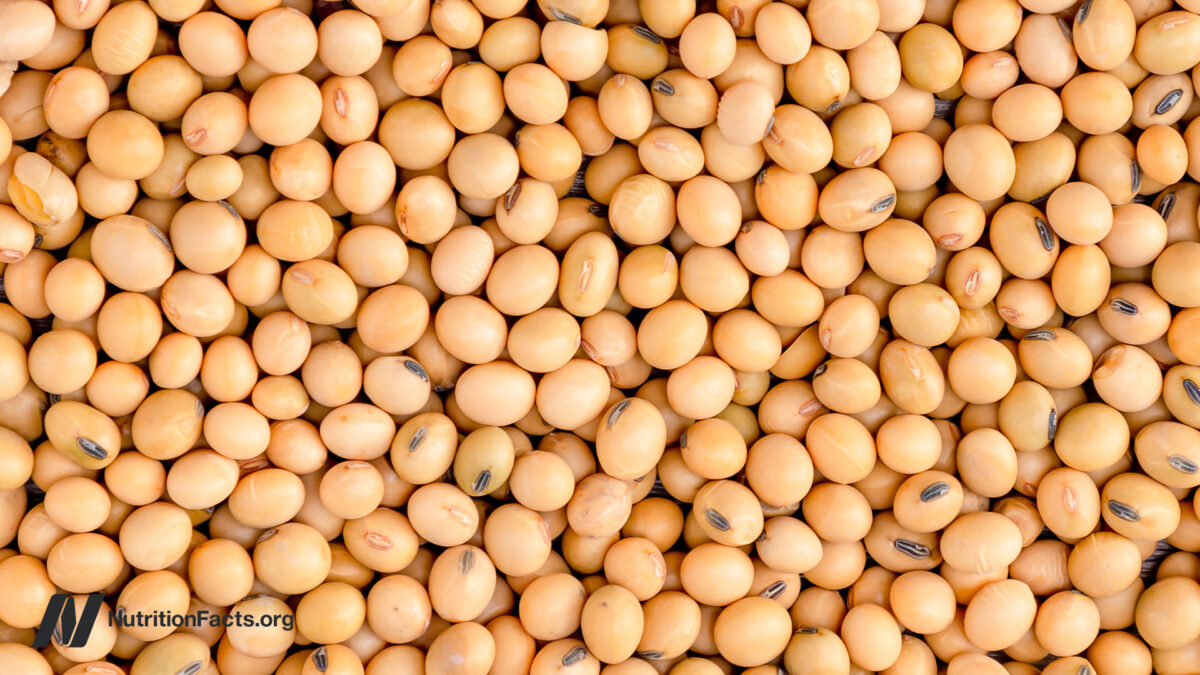
    So, Big Pharma developed matrix metalloproteinase inhibitor drugs, which worked great in animal models but caused severe side effects in humans. So, what about using food? There are special proteins in legumes (beans, split peas, chickpeas, and lentils) that reduce MMP activity. But which is the leading legume? Researchers tested eight different kinds: lupin beans, chickpeas, split peas, black-eyed peas, lentils, more common beans (like kidney, black, or pinto), fava beans, and soybeans. Which do you think worked best?

    Without any beans, the matrix metalloproteinase activity churned away at around 100%, and dripping on some protein from split peas didn’t seem to help much, but the black-eyed peas, lentils, common beans, and fava beans cut enzyme activity by more than 50%. Guess what slashed activity by more than 90%? Lupin beans, chickpeas, and soybeans, as you can see below and at 4:08 in my video.

    But does this translate into slowing down the cancer’s spread?

    Researchers plated a layer of human colon cancer cells in a petri dish and then took a razor blade to clear a strip down the middle. Within 48 hours, the cancer quickly converged to fill the gap. But when a little protein from lupin beans, chickpeas, or soybeans was dripped on, it looked like the cancer cells struggled to close the distance, as you can see below and at 4:33 in my video.

    Okay, but they used raw beans. You don’t know if these anti-cancer proteins are destroyed by cooking until you put it to the test. Researchers found that the matrix metalloproteinase inhibitors in soybeans, at least, did remain active after cooking.

    So, maybe it’s no wonder that eating legumes reduces the risk of colorectal cancer. Yes, but colon cancer, which sprouts from the inner lining of the colon, could potentially come in contact with some of these bean proteins. Presumably, they wouldn’t get into the bloodstream.

    Those eating a vegetarian diet do seem to have significantly lower levels of matrix metalloproteinases, but this is just thought to be due to their lower levels of inflammation, similar to the way non-smokers also have lower MMP levels. This is good because this enzyme isn’t just a cancer biomarker, but also may be involved in autoimmune diseases and cardiovascular disease. The machete-type nature of this enzyme can hack through the inflamed, cholesterol-filled atherosclerotic lesions lining diseased arteries and cause the plaque to rupture. People know that those eating a more plant-based diet tend to have less heart disease, but may not realize they harbor significantly less cancer risk, too, particularly among those eating strictly plant-based diets.

    Doctor’s Note

    The video I mentioned is Fighting the Ten Hallmarks of Cancer with Diet.

    For other videos on cancer metastasis, check the related posts.


    Source link

  • A Persistent Pesticide Is Linked to Alzheimer’s Risk

    A Persistent Pesticide Is Linked to Alzheimer’s Risk

    How can we avoid the breakdown products of pesticides that may increase the risk of Alzheimer’s disease as much as if you carried APOE e4, the so-called Alzheimer’s gene?

    Although there is a growing list of Alzheimer’s disease susceptibility genes, those genes account for less than half of all Alzheimer’s cases. Here is the “single most compelling” piece of data on the potential control we have over the disease: When it comes to identical twins with the exact same genes, if one gets Alzheimer’s, the other usually does not. So, we have to think about all the other contributing factors beyond just genetics.

    There’s a list of chlorinated pesticides, including DDE (a metabolite of DDT), that the U.S. Environmental Protection Agency has classified as probable human carcinogens. But in a study—which I’ve mentioned in a video on pesticides and cancer—blood levels of DDE and other pesticides were associated not with increased cancer mortality, but increased risk of other-cause mortality. This led researchers to speculate that this may be due to an associated increased risk of diabetes or dementia. I’ve talked previously about the diabetes link. What about dementia?

    A research team at Rutgers found significantly higher blood levels of DDE in Alzheimer’s disease patients compared to controls, as you can see below and at 1:22 in my video Pesticides (DDT) and Alzheimer’s Disease.

    Autopsy studies show blood levels are a good proxy for brain levels. Those patients with the highest levels were at about four times the odds of having dementia from Alzheimer’s. And in a petri dish, DDE increases amyloid precursor protein levels in human brain cells, providing a potential mechanism. Below and at 1:48 in my video, you can see the levels of the sticky protein implicated in the development of Alzheimer’s disease before and after DDE is added at the levels one finds circulating in highly exposed individuals among the general population.

    Put all these studies together, and there does indeed seem to be a link, consistent with data showing about a doubling of risk for developing dementia among those acutely pesticide-poisoned, as you can see below and at 2:01 in my video.

    Among U.S. elders, DDT and its breakdown product DDE are also associated with increased risk of cognitive decline in general, which is shown below and at 2:08 in my video.

    DDT was used extensively in the United States from the 1940s through the early 1970s. At its peak, we were churning out about 180 million pounds a year. And it is still in our bodies to this day, contaminating the bloodstreams of more than 90% of Americans, with DDE—the pesticide linked to quadrupling the odds of Alzheimer’s—found at the highest levels of all.

    It’s still in our bodies because it’s still in the food supply. In a previous video on the topic, I noted that the levels of DDT, DDE, and other banned pesticides and pollutants were much lower in the breast milk from a vegetarian mother compared to breast milk of her non-vegetarian sister. The largest difference was noted for DDE, which was four times lower in the vegetarian sister. This is what you see across the board for these kinds of pollutants. Below and at 3:20 in my video, you can see the levels of dioxins and PCBs found in beef, chicken, pork, processed meat, eggs, fish, dairy products, and all plant foods put together when food samples were collected from supermarkets across the United States.

    These toxins build up in the food chain, so it makes sense that the most contaminated foods are meat, fish, and dairy products. The toxin levels were found to be 5 to 10 times higher in meat, eggs, fish, and dairy compared to plant foods. Unfortunately, cooking doesn’t destroy pollutants like DDE—in fact, it may make them even more concentrated. And this is for a pesticide that may increase the risk of Alzheimer’s disease as much as if you carried the so-called Alzheimer’s gene APOE e4.

    Doctor’s Note

    The video I mentioned is Pesticides and Cancer Risk.

    For more videos on Alzheimer’s disease, check out the Alzheimer’s topic page.


    Source link

  • How Big Is the Cancer Risk from Processed Meat?

    How Big Is the Cancer Risk from Processed Meat?

    I quantify the risks of colon and rectal cancers from eating bacon, ham, hot dogs, sausage, and lunch meat.

    In 2018, arguably the most prestigious cancer research institution in the world, the International Agency for Research on Cancer (IARC), part of the World Health Organization, published its report on processed meat, concluding that foods like bacon, ham, hot dogs, lunch meat, and sausage are cancer-causing, classifying processed meat as a Group 1 carcinogen. “These findings,” concluded the director of the agency, “further support current public health recommendations to limit intake of meat.” Critics questioned putting processed meat in the same carcinogenic classification as asbestos and tobacco. Or, as a pesticide company roughly put it, how can eating processed meat be in the same category as mustard gas?

    As I discuss in my video How Much Cancer Does Processed Meat Cause?, the classifications only relate to the strength of evidence that the agent causes cancer or not, not how much cancer. This doesn’t mean they all pose the same level of danger. It’s safer to eat a sandwich filled with pastrami than plutonium, even though they are both Group 1 carcinogens, which means both substances are known to cause cancer in people. So, just how dangerous is meat? The relative risk of colorectal cancer was 18% for every 50 grams eaten a day. But what exactly does that mean?

    Well, 50 grams is about one hot dog, or two breakfast links, or two slices of Canadian bacon or ham. So, a daily sandwich with one or two slices of baloney would increase your colorectal cancer risk by 18%. But a half-pound of pastrami on rye would bump it up more like 80%. Okay, but what does the 18% increased risk really mean? One way to look at it is absolute risk versus relative risk. Assuming that the lifetime risk of colorectal cancer is about 5% (1 in 20), increasing your risk by about 20% would only bump up your absolute risk of getting colorectal cancer from 5% to 6%. Now, on a population scale, an 18% drop in risk could mean about 25,000 fewer cases of colorectal cancer every year in the United States, 25,000 fewer families a year dealing with that diagnosis, if we swapped out the daily baloney sandwich for hummus or if we chose veggie dogs instead. So, it all depends on how you look at it.

    Colorectal cancer is the United States’ second leading cause of cancer death for men and women combined, after lung cancer. So, if you don’t smoke, colon and rectal cancer may be your greatest cancer nemesis. But we can drop the risk of getting it by about a fifth with a single dietary tweak: cutting a serving of processed meat out of our daily diet.

    How does 18% increased cancer risk compare to other risky behaviors? In my testimony before the Dietary Guidelines Scientific Committee, I made what may sound like a hyperbolic metaphor. I asked, “We try not to smoke around our kids, why would we send them to school with a baloney sandwich?” That is not hyperbole. According to the Surgeon General, living with a smoker increases our risk of lung cancer by 15%. So, breathing second-hand smoke day in and day out increases our risk of lung cancer almost as much as eating a serving of processed meat day in and day out increases our risk of colorectal cancer.

    The meat industry responded by saying that we must consider the risks together with the benefits before we tell people what to eat or breathe. Think about all the baloney benefits—lunch meat isn’t just about cancer, but convenience.

    Indeed, processed meat isn’t just about cancer. An article railing against the World Health Organization’s “meat terrorism” cited the Global Burden of Disease studies comparing how many cancer deaths are caused by processed meat consumption compared to tobacco or alcohol use. But if you look at the study they’re referencing, the roughly 37,000 deaths attributable to higher processed meat intake are just the colorectal cancer deaths and don’t also include the 100,000 deaths from diabetes or the 400,000 deaths from heart disease. So, in actuality, we may be talking about half a million deaths attributable to processed meat, as you can see below and at 4:06 in my video.

    And it’s not just colon and rectal cancer. If you look at the science since the IARC decision was published, processed meat may also increase the risk of prostate cancer, breast cancer, and pancreatic cancer.

    Unfortunately, research shows that “despite growing public health concerns about processed meat consumption, there have been no changes in the amount of processed meat consumed by US adults over the last 18 years.” Of course, it would have helped if the last Dietary Guidelines for Americans had happened to mention that processed meat was a carcinogen. Publishing “an explicit and science-based statement on processed meat” in the next Dietary Guidelines would certainly help. But the scientific committee made no such recommendation.

    Sadly, even those with colorectal cancer “hardly improve their overall lifestyle after diagnosis,” though that may be because “70% of cancer patients have never received nutrition advice from their [medical] providers during or after treatment.” That just blows me away.

    An article published in a scientific cancer-research journal stated that “despite the continued obfuscation of the issue by the meat industry—they learned well from the tobacco merchants—meat should continue to be a focus of public health action.” New York City is leading the way, passing legislation to ban processed meats from school meals. Not giving our kids carcinogens? What a concept!

    Meanwhile, the processed meat industry is trying to reformulate its products. It’s kind of like in the pharmaceutical area, where you try to mitigate the potential adverse effects of one drug by prescribing an additional drug. For example, fiber could be added to hot dogs to try to counterbalance the risk, potentially reducing the cancer load by changing how it’s processed instead of by banning processed meat altogether.

    Doctor’s Note

    If you missed the previous video, see IARC: Processed Meat Like Bacon Causes Cancer.

    For my full testimony on the U.S. Dietary Guidelines, check out Highlights from the 2020 Dietary Guidelines Hearing.


    Source link

  • The Backlash to IARC’s Report that Meat Probably Causes Cancer

    The Backlash to IARC’s Report that Meat Probably Causes Cancer

    How did the meat industry, government, and cancer organizations respond to the confirmation that processed meat, like bacon, ham, hot dogs, and lunch meat, causes cancer?

    “It is rare, in the history of nations, that one finds good reasons to render homage to the generosity and altruism of governments and those in power: the birth of the International Agency for Research on Cancer [IARC] presents one of those rare occasions.” It all started with a single letter from a grieving husband, relating his wife’s suffering after being diagnosed with cancer, cascading into an open letter calling for governments to devote half of 1% of their military budgets to fight for life by attacking one of the greatest plagues that weighs on humanity. And 18 months later, the IARC was born in the World Health Organization. What was its overarching motive? Cancer prevention.

    As I discuss in my video, IARC: Processed Meat Like Bacon Causes Cancer, the IARC is best known for its monographs, book-sized reports evaluating whether or not some suspected carcinogen does in fact cause cancer. They are “generally accepted as close to a final word” as there is on whether or not something is carcinogenic. And its 114th monograph, published in 2018, focused on meat. After considering more than 800 different studies and thoroughly reviewing the scientific literature, a group of 22 experts from 10 countries concluded its 500-page report by saying, “Consumption of red meat is probably carcinogenic to humans (Group 2A).” But processed meat was placed as a Group 1 carcinogen, the highest level of certainty, meaning that according to the best available evidence, the consumption of processed meat causes cancer.

    So, that means foods like bacon cause cancer. Ham, hot dogs, breakfast links, and lunch meat cause cancer. But its definition also includes, for example, turkey deli slices. Specifically, eating processed meat causes colorectal cancer, cancers of the colon or rectum, which is the second most deadly cancer worldwide, after lung cancer, which is caused largely by smoking. “Colorectal cancer is the second leading cause of cancer death in the U.S.,” as well, and it doesn’t just strike older people. It is also a leading cause of cancer and death from cancer earlier in life.

    The meat industry wasn’t happy, calling it a “dramatic and alarmist overreach.” Speaking of dramatic and alarmist overreach, one agricultural group in Italy sent out a press release: Just say no to terrorism on meat.

    The gloves were off. The meat industry in Canada tried to pressure the government to cut off funds to the IARC, asking the Health Minister to pull all funding from the agency after it dared to question meat. The U.S. meat industry did the same thing. It’s no surprise that the IARC is “under siege by corporate interests” trying to challenge their cancer evaluations on Monsanto’s Roundup pesticide and meat, discredit the agency, and undermine financial backing. For example, internal documents have revealed Monsanto scientists “casually discussing ‘ghost-writing’ scientific papers and suppressing science that conflicts with corporate assertions of Roundup’s safety.”

    The chemical industry has joined the corporate cacophony, calling the IARC monographs “dubious and misleading.” These are classic strategies straight out of the tobacco industry playbook. “But there is little to suggest that, as a corporate actor, ‘Big Tobacco’ differs fundamentally from, eg, ‘Big Booze’ or ‘Big Food.’”

    One recurring corporate talking point is that the IARC never met a carcinogen it didn’t like. But the vast majority end up being categorized as just possibly carcinogenic to humans, or there really aren’t sufficient data to make a determination either way, as you can see below and at 4:20 in my video.

    The agency only spends time looking at substances for which there is already “an existing body of scientific literature indicating a degree of carcinogenic hazard to humans.” So, no wonder many of them end up, indeed, carcinogenic.

    How did the IARC respond to all the criticism? The World Health Organization received questions, concerns, and clarification requests after the publication of its meat and cancer report. It basically replied: Hey, we never told anyone to stop eating processed meat—your body, your choice. The report just indicated that consuming less of these products can reduce the risk of a leading cancer killer. So, you like cancer? You do you.

    The IARC is just a research organization that evaluates evidence on what causes cancer; after that, what you do with that information is up to you. The American Cancer Society was nice and clear when it came to alcohol. When it comes to cancer, “it is best not to drink alcohol.” But the organization got a bit wishy-washy with processed meat, suggesting people can get away with just limiting their intake. The European Commission was a little clearer. To reduce our risk of cancer, we should eat lots of whole grains, pulses (which are beans, split peas, chickpeas, and lentils), fruits, and vegetables; limit sugary, fatty, salty foods; and straight-up avoid soda, sausage, and other processed meats. After all, in answering the question of how much meat is safe to eat, the IARC replied that it’s unknown whether a safe level exists, period.

    Doctor’s Note

    So, How Much Cancer Does Processed Meat Cause? That video is coming up next.

    And, it’s not just cancer. For example, see The Effects of Processed Meat on Lung Function.

    I previously covered Monsanto and its Roundup pesticide (now owned by Bayer), see related posts below.


    Source link

  • Is Personalized Genetic Testing Worth It?

    Is Personalized Genetic Testing Worth It?

    Overrated “precision medicine” may just be serving vested interests, and consumer DNA testing can be useless—or even worse.

    Today, you can get your DNA sequenced—the letters of your entire genetic code spelled out—for about a thousand dollars, a bargain compared to the $100 million or so it cost 20 years ago. And for around a hundred dollars, you can get partial DNA sequencing. Direct-to-consumer genetic testing is “only a click away,” like 23andMe, for “ancestry, health, love…and more.” Unfortunately, many tests that are available today haven’t been validated properly. And, as a result, the buyer may be buying something “that is ultimately useless.” Or, results may just be just flat-out wrong.

    There is growing public demand for direct-to-consumer genetic tests, but when put to the test, researchers found an “alarmingly high false-positive rate.” Test results indicated that people carried a high-risk gene, but it simply wasn’t true. And this happened 40% of the time, especially with the BRCA breast cancer gene (the one Angelina Jolie publicly revealed she carries), which you can see below and at 1:08 in my video Should You Get Personalized Genetic Risk Testing?.In addition to the 40% false-positive rate, some variants the tests did identify correctly were misclassified as being high risk when, in actuality, they weren’t high risk at all. You can see how it’s in these companies’ best interest to give scary outlier results, so customers will think the money spent was worth it and maybe even pay for additional testing. But false-positive results and variant misclassification can have serious consequences for a person, including unnecessary stress and even unnecessary medical procedures. What if you got a preventive double mastectomy because you falsely thought you were at high risk when you didn’t even have the BRCA mutation?
    Yes, now, these genome-wide association studies have identified thousands of common genetic variants that affect the risk of complex diseases, as I talked about in my video on personalized nutrition. “Nevertheless, the discovered gene variants do not markedly expand our predictive ability compared with what can be achieved by using only information from long-known traditional risk factors.”

    Take type 2 diabetes, for example. Researchers have identified about 50 genes that are linked to increased diabetes risk, but even when considered collectively, “obese persons with the lowest genetic risk for diabetes were nearly 5 times more likely to develop the disease than normal-weight persons with the highest genetic risk.” In other words, this would send out the wrong message to someone who is obese, giving them a false sense of security. Knowledge about type 2 diabetes genetic susceptibility based on what we know so far has “no implications for decisions about who should be targeted for intensive lifestyle interventions.” Everyone with excessive body fat, regardless of genetics, needs to slim down to reduce the risk of diabetes.

    What about the famous study that purported to show that personally tailored dietary interventions could improve blood sugar responses, to the extent that some commentators said it raised questions about the usefulness of universal dietary recommendations? But if you actually read the study, the results do not show high interpersonal variation in relative blood sugar responses; do not show the model is superior to current methods of detecting high blood sugars; and do not show that personalized nutrition advice is better than standard dietary advice to manage high blood sugar responses after meals.

    But what about personalized genetic risk counseling to at least motivate diabetes prevention? “In a somewhat forlorn bid to regain credibility, ‘knowledge’ of individual genetic risk profile has been touted as effective in motivating test-positive individuals to commit more strenuously to relevant disease prevention efforts….” However, again, available evidence doesn’t support that claim. And indeed, it did not seem to help those at risk for diabetes.

    Researchers randomized people to get genetic tests worth hundreds or thousands of dollars to profile their subtle differences in risk for up to 40 different diseases. In this case, it was Navigenics that described its goal as empowering people with personal genetic insights to help motivate them to improve their health. Yet, it didn’t work. There were no measurable changes in diet or lifestyle, even in the short-term.

    Randomizing people to personalized nutrition insights is like determining who might genetically benefit particularly well from eating more greens or eating to lower their cholesterol, yet when researchers put it to the test, there were no significant changes in diet at month six compared to those who didn’t get that personalized info, or even at month three. So, it’s no surprise there were no differences in weight, belly fat, cholesterol, or any of the other biomarkers.

    Put all the studies together, and what do we find? There are no significant benefits to telling smokers who are at particular risk for lung cancer, or who need to eat especially healthy, or who should be more physically active. The bottom line: Expecting that being aware of DNA-based risk estimates will change behavior is not supported by existing evidence. However, that was the stated reason for the big presidential push for precision medicine in 2015: to empower individuals to take a more active role in their own health.

    It is not surprising that the theme of personal empowerment is invoked. It’s great for marketing, but it’s not particularly empowering. In fact, if anything, it leaves patients even more reliant on authority, and it is not even very personal since the genetic contributions we know of are so small compared to how we actually live our lives. Then why is patient empowerment emphasized as a “cardinal virtue”? Because “it exploits the appeal…to generate political and public support” for an “increasingly industrialized medical-industrial and scientific complex, which moves trillions of dollars around the globe.”

    This isn’t some grand conspiracy theory; it’s just the way the system works. “Healthy living directly threatens many powerful corporations….” Eat less sugar? Eat less meat? Healthier populations, after all, only reduce the demand for doctors and drugs. “Seemingly willfully blind to this evidence, the United States continues to spend its health dollars overwhelmingly on clinical care,” cleaning up our lifestyle-induced messes. So, it’s not surprising that we far outspend other countries while at the same time having worse outcomes. While major new taxpayer gifts were being promised to high-tech medicine about a decade ago, the United States had already sunk to the bottom among comparable countries with respect to disease experience and life expectancy. “Overrated ’precision medicine’ promises may be serving vested interests,…justifying the exorbitant healthcare expenditure in our finance-based medicine.” In lots of ways, the U.S. health care system is the most advanced in the world, but all our “whiz-bang technology just cannot fix what ails us.” “Let’s start with the basics. Eat your broccoli, take the stairs, and don’t worry about whether you have a 5.6 percent or 7.7 percent lifetime risk for a grave disease because either way, a sensible lifestyle is the healthiest choice.”

    Doctor’s Note

    The video I mentioned is Friday Favorites: How Useful Is Personalized Nutrition?.


    Source link

  • Are Nuts and Peanut Butter Linked to a Longer Life?

    Are Nuts and Peanut Butter Linked to a Longer Life?

    Why are nuts associated with decreased mortality, but not peanut butter?

    According to the largest study of risk factors for death in human history, a poor diet causes more deaths than anything. Cigarettes only kill about 8 million people a year, whereas humanity’s diet kills millions more, as you can see below and at 0:20 in my video Do the Health Benefits of Peanut Butter Include Longevity?.What are the worst aspects of our diet? Processed meat? Twinkies? Soda? No, the five deadliest things about our diet are: not enough fruit, not enough whole grains, not enough vegetables, too much salt, and not enough nuts and seeds, as shown here and at 0:42 in my video.

    Nuts should come as no surprise since interventional trials have shown that eating nuts improves artery function, and arterial diseases like heart disease are among our leading killers. But that’s not all nuts can do. They may also improve blood sugar control, lower cholesterol, suppress inflammation, reduce oxidative stress, and feed our friendly gut flora. Do all nuts do that, or just tree nuts?

    What about peanuts and peanut butter? About half of peanut consumption in the United States is from peanut butter, but the link between peanut butter consumption and mortality has not been evaluated thoroughly. To get that specific, we can call on the National Institutes of Health-AARP study, the largest prospective health and diet study in history that followed more than half a million people since the 1990s.

    Researchers found that nut consumption in general appeared to protect against all-cause mortality, meaning nut-eaters live—on average—longer lives. Specifically, they are less likely to die from cancer, cardiovascular disease, liver disease, respiratory disease, kidney disease, and infectious causes (so, maybe nuts help immunity as well). However, no such associations were found for peanut butter. So, when it comes to living longer, peanut butter doesn’t seem to count. Why?

    Well, we know peanut butter consumers tend to eat more meat, smoke cigarettes, and are less likely to exercise, but the researchers controlled for all those factors, as well as their alcohol consumption, fruit and veggie intake, education, and more. So, it’s not like the peanut butter eaters were just eating more white bread sandwiches or something. (The researchers didn’t control for sugar, though, so it’s possible they could have been eating more sugary jelly.)

    Another explanation: It could be the processing that goes into making peanut butter—the added trans fat, oil, salt, and sugar. But regular nuts are also often eaten with added oil, sugar, and salt.

    Could it just be the peanuts themselves? Technically, they aren’t nuts, so maybe they don’t have the same benefits. But no, a meta-analysis of all such studies found the same nut-like benefits for whole peanuts, but not peanut butter.

    Well, one thing missing from even no-salt, oil-free, sugar-free nut and seed butters is intact cellular structure. As I noted in How Not to Diet, no matter how well we chew whole or chopped nuts, some of the nutrients remain trapped in tiny particles that deliver a bounty of prebiotic goodness to our friendly gut flora. That makes me wonder if there would have been any difference between chunky and smooth peanut butter.

    Meanwhile, there is “compelling evidence” to recommend eating nuts (preferably raw nuts over salted or toasted, and whole or chopped nuts rather than nut butters) at least three times a week to maximize our chance of living a longer and healthier life.

    Doctor’s Note

    The healthiest nut may be walnuts. See Walnuts and Artery Function.

    Won’t nuts make you fat, though? See Nuts and Obesity: The Weight of Evidence.

    I mentioned my book, How Not to Diet, which you can read more about here. (All proceeds from my books are donated to charity.)


    Source link

  • Does Less Protein Increase FGF21 for Longevity?

    Does Less Protein Increase FGF21 for Longevity?

    Fasting and exercise can boost the longevity hormone FGF21, but what can we eat—or avoid eating—to get similar effects?

    Over a century ago, fasting was hailed not only as a means of combating “cerebral lassitude,” but also for the “prolongation of healthy longevity.” If that turns out to be true, FGF21 might be a missing link. FGF21 is characterized as a “systemic enhancer of longevity.” It can be boosted through prolonged fasting, but thankfully, there are other, less drastic measures, such as more carbs or less protein.

    Give people lots of starchy foods, and their FGF21 levels shoot up. The healthiest sources would likely be whole grains and beans, since butyrate appears to boost FGF21, too, and we get that from fiber. That’s one of the things our good gut bugs make from fiber-rich foods.

    Circulating FGF21 levels also increase dramatically after eating a lower-protein diet—more than a 150% increase within four weeks. By the way, “lower protein” simply means reducing intake from the typical excess consumed by most Americans down to the recommended amount.

    The recommended daily allowance of protein for most men is 56 grams of protein a day, though most American men are getting more than 100 grams. When researchers studied men who had been getting the typical excess of about 112 grams a day and reduced them down to 64, which is still more than the recommended 56 grams, so the protein “restricted” group was still getting more than enough protein—they found that FGF21 levels in the blood essentially doubled. That may help explain why they lost more body fat, despite getting significantly more calories. How can you eat 300 more calories a day and still lose two more pounds of straight body fat? By just bringing your protein levels down to normal levels. Who hasn’t fantasized about a diet that allows eating excess calories that are effortlessly burned off by ramping up fat-burning? So, maybe we should “play down protein to play up metabolism,” thanks to FGF21.

    Even just a modest protein restriction regimen down to recommended levels might have significant clinical benefits. Now, this was after a month and a half. A similar study found that even less protein restriction, taking men down to just 73 grams a day, resulted in a sixfold increase in FGF21 within a single week, accompanied by a significant increase in insulin sensitivity, as you can see below and at 2:46 in my video How to Boost FGF21 with Diet for Longevity.Researchers concluded that dietary protein dilution promotes our metabolic health.

    Evidence suggesting that lower protein intake has positive associations with better health, survival, and insulin sensitivity has continued to grow, but we weren’t sure exactly how. Maybe FGF21 provides an explanation. Interestingly, the studies were feeding people 9 percent of calories from protein, which is about what the Okinawans were getting when they were one of the healthiest, longest-living populations in the world.

    I’ve talked previously about methionine restriction to fight cancer and as a life-extension strategy. Methionine is an amino acid found predominantly in animal proteins, so one could achieve methionine restriction by cutting back on animal foods. That may actually be an FGF21 effect. Methionine restriction boosts levels, so much so that it’s been called “the most important mediator of metabolic reprogramming in methionine restriction.” Some proteins may be more important to restrict than others. The highest methionine levels are in meat. Legumes (beans, split peas, chickpeas, and lentils) have about three times less methionine than meat, as you can see below and at 3:55 in my video.FGF21 has been proposed as a potential mediator of the protection from cancer, autoimmune diseases, diabetes, and obesity, afforded by strictly plant-based diets. Maybe that’s one of the reasons whole food, plant-based diets have been shown to have such extraordinary results. Take Dr. Esselstyn’s work, for example, showing that coronary disease—the number one killer of men and women—can be largely halted or reversed, and the risk of heart attack almost eliminated, with the help of a whole food, low-fat vegan diet. This benefit can’t be attributed solely to cholesterol reduction, as we have powerful cholesterol-lowering drugs now that can force cholesterol levels as low as those of healthy eaters but appear to have less effect. So, the marked benefits Esselstyn reported seem to reflect a variety of protective mechanisms associated with whole food, plant-based diets, and FGF21 may be one of those mechanisms. So, it’s not just the fat and cholesterol—the quantity and quality of protein may also be playing a role. But there’s never been a study to see whether vegans do indeed have higher levels of FGF21…until now.

    In addition to studying New Zealand obese mice, researchers investigated the circulating FGF21 levels among those eating plant-based diets, and then put it to the test by removing meat from other people’s diets to see if FGF21 levels would go up. They found that FGF21 levels were markedly higher in vegan people compared to omnivores, and the levels went up when the omnivores were switched to vegetarian diets after just four days. And not just by a small amount—FGF21 levels increased by 232% after just four meat-free days.

    The bottom line is that “the various fasting approaches are likely to have limited efficacy, particularly on aging and conditions other than obesity, unless combined with high-nourishment diets such as the moderate calorie intake and mostly plant-based Mediterranean or Okinawa low-protein diets,” by which they mean the recommended amount of protein.

    Doctor’s Note

    I introduced FGF21 in the first video. If you missed it, check out Life Extension with FGF21.

    The methionine videos I mentioned are Methionine Restriction as a Life-Extension Strategy and Starving Cancer with Methionine Restriction.


    Source link

  • How to Boost Your Longevity Hormone

    How to Boost Your Longevity Hormone

    What can we do to boost the longevity hormone FGF21?

    In the year 2000, a new human hormone was discovered. It was the 21st documented fibroblast growth factor, so they called it FGF21. Since its discovery, FGF21 has become recognized as a key agent for the promotion of metabolic and arterial health, leanness, and longevity. Inject it into fat monkeys, and they lose body weight without reducing their food intake. And they don’t just lose a little weight—they have a 27% drop in body fat while eating the same amount. In mice, it increases their lifespan by 30 to 40%, which is comparable to lifelong caloric restriction, and, again, they achieve this without decreasing their food intake. The researchers conclude that FGF21 could possibly be used as a hormone therapy to extend mammals’ lifespans, which has gotten Big Pharma salivating, raising the question: “Can aging be ‘drugged’?”

    That’s not all FGF21 can do, either. “The idea that one drug can treat obesity, diabetes, dyslipidemia [like high cholesterol], and hypertension all at once might have seemed impossible a few years ago but is now a tantalizing and exciting prospect.” The reason you can’t just give people straight FGF21 is that it gets rapidly broken down in the body, so you’d need injections every hour or two, around the clock. So, drug companies are trying to patent a variety of longer-acting FGF21 look-alikes. And, indeed, give people a little PF-05231023, and they can lose about 10 pounds in 25 days, as well as get dramatic drops in triglycerides and cholesterol, as you can see below and at 1:48 in my video Life Extension with FGF21.Then, the side effects of these new-fangled drugs started cropping up. Okay, so what are the options? How about packaging the FGF21 gene into a virus and then injecting it so it can stitch extra FGF21 genes into our DNA? Or you can just lace up your running shoes. Exercise boosts FGF21 levels, which may in fact be one of the reasons exercise is so good for us.

    Which works better, though, aerobic exercise (eight weeks of running training) or resistance exercise (eight weeks of weights)? The answer is both, but the resistance exercise edged out the running, a 42% increase in FGF21 versus a 25% increase in the aerobic exercise group. Okay, but what can we do with food? Yes, you could try engineering and injecting it, but wouldn’t it be easier to just stimulate our own natural, endogenous production through diet? One way is through no diet at all. It’s been dubbed the starvation hormone because fasting induces FGF21, but not after just a day or two.

    Physiologically, FGF21 expression rises markedly in response to fasting or starvation. But, unlike mice, which show an increase after just six hours of fasting, humans don’t get a notable surge in FGF21 until after a week. Fasting can quadruple FGF21, but it takes 10 days of fasting, which is the very poster child of an unsustainable eating pattern. You can see the increase below and at 3:19 in my video.So, how do you get the benefits without the starvation? Might a ketogenic diet be able to mimic the fast? Nope. Keto diets don’t work. In fact, keep it up for a few months, and you can actually get a significant decline in levels. High-fat diets may even interfere with the boost you get from exercise, which was seen in a study of high-intensity interval training.
    What kind of diet does work, then? We’ll find out next.

    Doctor’s Note

    Stay tuned for part two: How to Boost FGF21 with Diet for Longevity.

    Flashback Friday: How Much Should You Exercise? Check out the video to find out.

    For more on longevity, see Friday Favorites:  How to Increase Your Life Expectancy 12 to 14 Years.


    Source link

  • How Prebiotic Foods Keep Your Microbiome Healthy

    How Prebiotic Foods Keep Your Microbiome Healthy

    We co-evolved a symbiosis with our good gut bacteria, but we aren’t holding up our end of the bargain.

    If you look at the classics—the most frequently cited articles in the scientific nutrition literature—the original glycemic index paper ranks tenth, cited more than a thousand times. Learning about fruits, vegetables, and cancer prevention comes in seventh. But hitting the top four, cited more than 2,000 times: “Dietary Modulation of the Human Colonic Microbiota: Introducing the Concept of Prebiotics.”

    As I discuss in my video How to Keep Your Microbiome Healthy with Prebiotic Foods, prebiotics are the food components that nourish and feed the good bacteria in our gut, like fiber and resistant starch. Eating high-fiber plant foods is generally “a good foundation for a prebiotic-rich diet.”

    Once upon a time, fiber was thought of as just the undigested part of food, known only for bulking up stools and keeping bowels regular. Then researchers discovered an array of receptors in the body that fiber-breakdown products fit into like a lock and key. We feed our good bacteria with fiber, and they feed us right back, munching the fiber and creating short-chain fatty acids. These fatty acids get absorbed into our bloodstream and fit into these receptors that are expressed on immune cells, generally having a direct anti-inflammatory effect.

    So, the reason behind lower systemic inflammation in plant-based eaters may not just be due to the abundance of anti-inflammatory molecules in plant foods or the avoidance of proinflammatory molecules in animal foods, but from the production of anti-inflammatory molecules from scratch by our good gut bugs when we feed them fiber. Just to give you an idea of how protective fiber-rich foods can be, those randomized to get advice on eating fiber-rich plant foods during radiation therapy for cancer didn’t just experience reduced toxicity during the treatments—the benefit persisted even a full year later.

    Indeed, the benefits of fiber are supported by more than a century of research. Prospective studies show “striking reductions” in death from all causes put together, including “total cancer deaths, total cardiovascular disease deaths and incidence, stroke incidence, and incidence of colorectal, breast, and oesophageal cancer.” And, in terms of protecting against heart attacks and stroke, type 2 diabetes, and cancer, dose-response relationships suggest that the more fiber, the better. So, at a minimum, fiber intake should be no less than 25 to 29 grams per day; higher intake may provide additional benefits. Yet, the average American only consumes about 16 grams of fiber each day.

    We have coevolved with gut bacteria over millennia, becoming reliant on our good gut bugs in a kind of symbiosis for fiber digestion and the production of short-chain fatty acids and even certain vitamins. Yet we’re not holding up our end of the bargain. We’re supposed to be providing up to 100 or so grams of fiber a day, and we are barely passing along a measly 16 grams. The simplest solution to remedy this lack of dietary fiber is to encourage eating plant-based diets rich in fiber.

    Doctor’s Note

    A hundred grams of fiber a day?! Check out Paleopoo: What We Can Learn from Fossilized Feces.

    And, for more on prebiotics, see Prebiotics: Tending Our Inner Garden.


    Source link

  • How We Eat vs. How We Think We Eat

    How We Eat vs. How We Think We Eat

    The so-called optimism bias may get in the way of a healthy lifestyle.

    Yes, media messages about nutrition are often confusing and inconsistent, but many Americans know what is considered a healthy diet. I mean, does anyone really think drinking brown carbonated sugar water is good for them? The issue is that they don’t appear to be translating their knowledge into action.

    Why do people have such difficulty changing their dietary behaviors? While ignorance and confusion may play a part, being motivated to change is likely much more important. Certainly, we are living in a world that pushes us to eat whatever we want, regardless of the long-term consequences. “One of the major problems in getting people to change their behaviour is the need to get them to recognise the need to change.”

    For example, if you ask people how much meat they eat—or how much greasy food, eggs, sweets, alcohol, or butter—they claim to be eating less than the average person. So, if people think they’re at less risk than others, they may dismiss advice to eat more healthfully, thinking that they already eat healthier. Is it possible that they actually are? No, people rated their own eating behavior as healthier on average, even when their actual eating habits were terrible. Because of this, perhaps campaigns promoting health need to make people aware of how badly they are eating. But when that is done, a strange thing happens. When people are challenged with the reality of what the average person actually eats, they change their answer to make themselves appear as though they’re still healthier than average.

    When people’s positive comparisons on risky behaviors are threatened, they tend to not only reduce their estimates of how frequently they engage in those behaviors—”oh, I don’t eat that much meat”—but they also minimize the significance of the behaviors. “Meat’s not that bad for you anyway.” It’s the same “personal fable” that smokers tell themselves. Studies show that smokers have a strong tendency to underestimate smoking-related risks, developing a series of illusions and false beliefs to support their choice to keep smoking.

    Why do so many people continue to light up in spite of smoking’s harm to their health? For many of the same reasons, people continue to eat unhealthy food. First, they convince themselves that they are less at risk than others who engage in the same behavior. Adding to this optimism bias, smokers also underestimate how much smoking elevates lung cancer risk, thinking two-pack-a-day smokers only have five times the risk of getting lung cancer when their actual risk is 20-fold higher, as you can see below and at 3:10 in my video Why Don’t People Eat Healthier?.Also, many smokers believe lung cancer is mainly determined by genetics.

    Many hazards related to the food we eat share this same “optimistic bias,” like heart attacks and heart disease (our number one killer), obesity, diabetes, and all the rest. People can often find quite ingenious reasons for believing that their own risk is less than others’ risk. So, maybe public health advocates need to be just as ingenious in understanding where this unrealistic optimism originated from and find ways to help people gain a more accurate picture of their own vulnerability. All sorts of work is being done trying to reduce or eliminate this bias, “but we must consider the possibility that reductions in optimistic bias might lead to reductions in self-esteem and psychological well-being,” if people start to realize just how much risk they truly face and how much they have themselves to blame.

    This reminds me of the tightrope wire health professionals have to walk, telling people how much power we all have over getting cancer. There is an oft-cited paper that calculated that we may be able to prevent approximately 90% of human cancers. Although its reference to “present trends” referred to the 1960s—when this paper was published—it still applies today, more than half a century later. “Genetic factors are not the major causes of chronic diseases.” Using identical twins to see how much disease risk was truly genetic, researchers found that out of 28 chronic diseases, cancers had the lowest genetic component—only about 10% attributable to bad genes. What runs in families is bad habits.

    But when you tell everyone the good news about how much power we have in preventing cancer, what about the people who already have it? When people are diagnosed with cancer, they often ask, “Why me? Did I do something wrong? Is this my fault?” So, you can imagine how the message of “well, yeah, kinda” could be destructive for patients or survivors. In other words, a message that is intended to empower people and promote prevention could just make cancer victims feel guilty.

    But the truth is still the truth, no matter how difficult it may be. So, what doctors have to do is try to guide patients to “switch from guilt feelings to a ‘responsibility’ approach.” They have personal control; they can make different choices from now on. Doctors need to give them a sense of agency in their lives. Better, though, to try to take those steps before you get cancer.

    Doctor’s Note

    For more on personal responsibility, see Why You Should Care About Nutrition and Taking Personal Responsibility for Your Health.


    Source link