


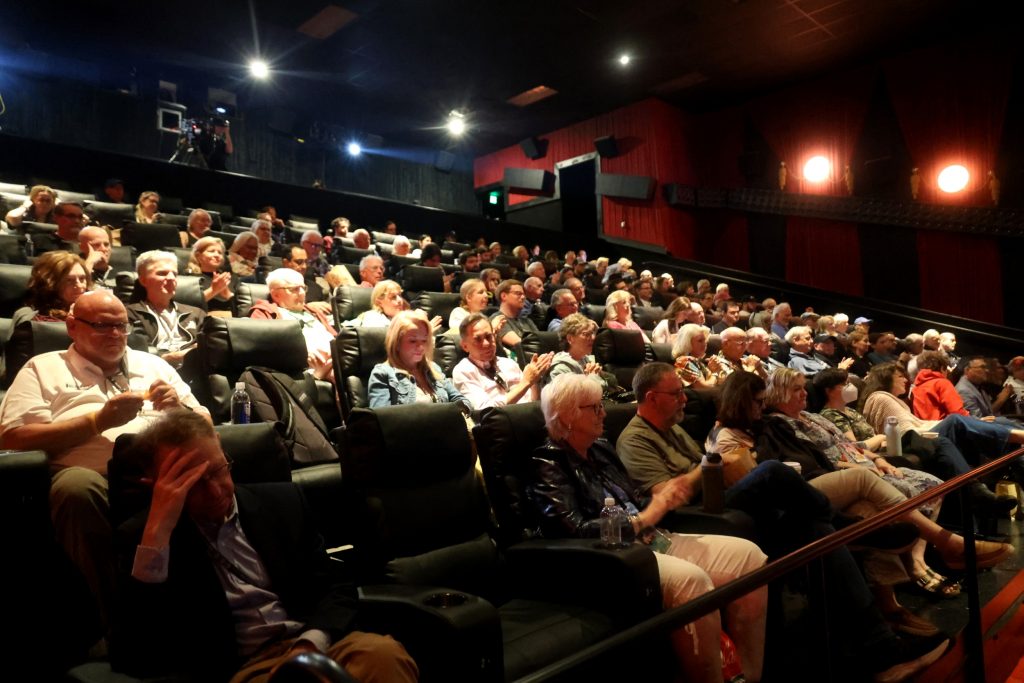
Older adults who regularly attend theaters, museums, cinemas, and concerts have a measurably lower physiological age than those who rarely participate in cultural activities, according to new research published in the Journal of Epidemiology and Community Health on July 14, 2026. The difference amounts to approximately three years of biological age, a gap that held up after researchers used a statistical technique to account for lifestyle factors and personal characteristics that remain constant over time.
The study, led by researchers at the Institute of Science Tokyo in Japan, examined 1,899 adults aged 50 and older from the English Longitudinal Study of Ageing, a long-running nationally representative cohort that follows older adults in England with repeated health and lifestyle assessments across years.
Why This Matters
Biological aging is not the same as chronological aging. Two people who are both 70 years old can have bodies that function like those of a 65-year-old or a 75-year-old, depending on a complex mix of genetics, lifestyle, and lived experience. Physiological age, measured through biomarkers across multiple organ systems, is increasingly recognized as a more meaningful indicator of health trajectory than calendar age alone.
The cultural engagement finding adds to a growing body of evidence that what people do with their time, particularly cognitive, social, and emotionally engaging activities, has measurable effects on how their bodies age. Theater, museum visits, concerts, and cinema are not typically thought of as health interventions. But this research suggests they may be functioning as one.
“At the same time, I would emphasize that this was an observational study, so it does not prove that cultural engagement directly slows aging; healthier, more mobile, and more socially connected people may also be more likely to participate,” lead researcher Dr. Thi-Thuy-Linh Trinh told Medical News Today. “Still, the consistency of the findings over time makes cultural engagement a promising addition to broader healthy-aging strategies.”
What We Know So Far
The study used data from 1,899 adults who completed questionnaires about how often they visited cinemas, museums or art galleries, and theaters, concerts, or operas. Each activity was rated from 0 (never) to 5 (twice a month or more often), creating an overall cultural participation index of 0 to 15.
Physiological age was calculated from ten physical measurements across five body systems: heart and circulation, lungs, blood, metabolism, and muscles and bones. This multimarker composite, drawn from standard clinical assessments, produces a biological age estimate that reflects functional wear-and-tear across the body.
The key findings, as reported in ScienceDaily and the peer-reviewed PMC publication of the study:
Adults with high levels of cultural engagement (participating in some cultural activity at least every few months) had an average physiological age of 66.9 years. Adults with low cultural engagement averaged a physiological age of 69.9 years, a gap of three years. Each one-point increase on the 0-to-15 cultural engagement score was associated with approximately a 0.085-year reduction in physiological age after adjustment. These associations held up cross-sectionally, at four-year follow-up, and at eight-year follow-up, and the pace of biological aging over four years was also slower in higher-engagement participants.
The researchers used a fixed-effects statistical analysis, which controls for stable individual characteristics that do not change over time, including genetics, early life circumstances, and personality traits. This approach reduces (though does not eliminate) the risk that the observed association reflects selection bias rather than a real effect of cultural engagement on aging.
Where the Research Was Conducted
The English Longitudinal Study of Ageing is a nationally representative long-term study based in England, which means the findings come from a Western, predominantly English-speaking older adult population. Whether the results would generalize equally to culturally different settings or populations with different baseline access to cultural institutions is not established by this research.
The study also found that individuals with higher cultural engagement were more likely to be women, have higher socioeconomic status, be in paid employment, and have better baseline health conditions. The fixed-effects analysis helps control for some of these factors, but the researchers acknowledge that reverse causation remains a concern: healthier people may simply be more able to attend cultural events rather than cultural attendance causing better health.
What Doctors and Experts Say
The study’s corresponding author, Dr. Yusuke Matsuyama of the Institute of Science Tokyo, published the findings alongside colleagues Sakura Kiuchi and Jun Aida. They proposed several plausible pathways through which cultural engagement might influence biological aging: stronger social ties from shared cultural experiences, better mental health through emotionally engaging activities, healthier behaviors associated with active cultural participation, and cognitive stimulation from exposure to art, narrative, and music.
The authors noted that cultural engagement may be “comparable in impact to frequent physical activity” based on the effect size of the association. This comparison requires context: the researchers are not claiming cultural engagement replaces exercise, but rather that the magnitude of the physiological age association is in a similar range to what exercise studies have found using similar analytical frameworks.
Medical News Today noted that Dr. Trinh advised expanding the research: “It would also be beneficial to explore the impact of different types and frequencies of cultural activities on biological age in diverse populations.”
What the Evidence Shows and What It Does Not
MedicalDaily Evidence Check
- Study type: Longitudinal observational cohort study with fixed-effects analysis
- Published in: Journal of Epidemiology and Community Health (BMJ Group), online July 14, 2026; doi: 10.1136/jech-2025-225753
- Institution: Institute of Science Tokyo, Japan
- Sample: 1,899 adults aged 50 and older from the English Longitudinal Study of Ageing
- Key finding: High cultural engagement (at least every few months) associated with approximately 3-year lower physiological age; 0.085-year reduction in physiological age per 1-point increase in cultural engagement score
- Statistical method: Fixed-effects analysis, which controls for time-stable confounders
- Cultural activities measured: Cinema, museums/art galleries, theater/concerts/opera
- What it shows: A consistent, longitudinally replicated association between cultural engagement and slower biological aging in older English adults
- What it does not prove: That cultural engagement causes slower aging (causal inference is not possible from an observational study); whether results generalize to non-English or socioeconomically diverse populations
- Key limitation: Participants with higher cultural engagement were more likely to be women, higher socioeconomic status, and in better baseline health; fixed-effects analysis addresses some but not all confounding
- Reverse causation: Healthier people may be more able to attend cultural events, meaning the causal arrow could run in either direction
- What readers should know: This study suggests cultural engagement is a worthwhile addition to a healthy-aging lifestyle. It is not evidence to skip other evidence-based interventions like physical activity, dietary quality, and sleep.
Who Might Benefit Most
This research is most directly relevant to:
- Adults 50 and older who are making choices about how to spend leisure time and social energy
- Clinicians and public health professionals designing healthy-aging programs and community interventions
- Policymakers evaluating the health value of cultural institution funding and public arts programs
- Older adults with limited physical mobility for whom high-intensity exercise may be difficult but cultural participation remains accessible
The finding that the effect was seen across three types of cultural activities (cinema, museums, theater/concerts) suggests that the specific activity matters less than the general pattern of regular engagement.
What You Can Do Now
- If you are 50 or older and do not currently attend cultural events regularly, consider adding one to your routine. Cinema, museums, concerts, and theater are available in most urban and suburban areas, and many offer senior discounts or community-access programs.
- For older adults with limited mobility, many museums and cultural institutions offer virtual access, audio tours, and home-delivery programs that allow engagement with cultural content without physical attendance.
- Cultural engagement works best as part of a broader healthy-aging approach that also includes physical activity, quality sleep, social connection, and dietary quality. These are complementary, not competing, strategies.
- For older adults in limited-access communities, many public libraries offer free or reduced-price passes to local museums and cultural institutions. Contact your local public library to ask about available programs.
- Avoid interpreting this finding as a reason to prioritize cultural attendance over other established health behaviors. The evidence for physical activity, sleep, and nutrition is more robust and directly supported by intervention trials.
Cost and Access: What Patients Should Know
Access to cultural events varies significantly by geography and income. Major U.S. metro areas have large free or low-cost museum days, library pass programs, and community theater options. Rural areas face greater challenges. National programs including the National Endowment for the Arts and state arts councils support community arts programs that provide access in underserved communities. Many major art museums, including the Metropolitan Museum of Art and the Art Institute of Chicago, offer free general admission on certain days or to specific populations.
What Happens Next
The research team indicated interest in exploring the mechanisms underlying the association and studying diverse populations. Future research will need to test whether interventions that actively increase cultural engagement in older adults produce measurable biological improvements, moving from association to potential causation. MedicalDaily will report on any intervention trials in this space.
The Bottom Line
A longitudinal study of 1,899 English adults aged 50 and older found that regular cultural engagement, attending cinema, museums, theaters, and concerts at least every few months, was associated with a physiological age approximately three years lower than in those who rarely participated. The effect persisted across multiple follow-up waves. The observational design means causation cannot be established, and healthier people are more likely to participate in cultural activities in the first place. But the consistency of the association makes cultural engagement a reasonable addition to any evidence-based healthy-aging strategy, alongside physical activity, diet, sleep, and social connection.