



- About 1 in 5 babies with congenital CMV infection will have birth defects or other long-term health problems.
- Hearing loss is common in babies with congenital CMV, even those without symptoms at birth.
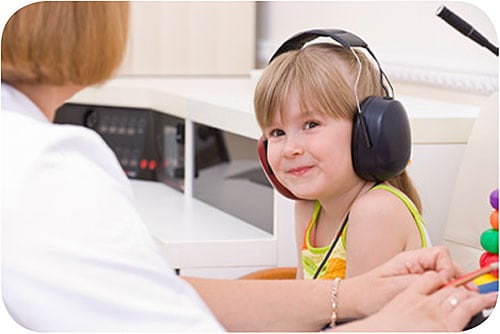
- Babies with congenital CMV infection should get regular hearing checks.

Hearing loss can occur at birth or later
Newborns with CMV may have hearing loss in one ear and may later develop hearing loss in the other ear. Hearing loss may progress from mild to severe during the first 2 years of life—a critical period for language learning.
Sometimes, hearing loss may worsen with age and progress through teenage years. Over time, hearing loss can affect your child’s ability to develop communication, language, and social skills.
Signs of hearing loss
In a baby:
- Does not startle at loud noises
- Does not turn to the source of a sound after 6 months of age
- Does not say single words, such as “dada” or “mama” by age 1
- Turns head when they see you, but not if you only call out their name
- Seems to hear some sounds but not others
In a child:
- Speech is delayed
- Speech is not clear
- Does not follow directions (could be the result of a partial or complete hearing loss)
- Often says, “Huh?”
- Turns the TV volume up too high
Hearing checks & therapies can help
Babies with congenital CMV infection, with or without signs at birth, should have regular hearing checks.
Services
Children diagnosed with hearing loss should receive services such as speech or occupational therapy. Children with hearing loss can also learn to communicate in other ways, like using:
- Sign language
- Devices such as hearing aids and cochlear implants
These services help ensure they develop important communication, language, and social skills. The earlier children with hearing loss start receiving services, the more likely they are to reach their full potential.
Medication
Some babies with signs of congenital CMV at birth may benefit from medicines called antivirals. Valganciclovir is an antiviral medication that might improve hearing and developmental outcomes. It can have serious side effects and has only been studied in babies with signs of congenital CMV infection. There is limited information on the effectiveness of valganciclovir to treat infants with hearing loss alone. Babies who get treated with antivirals should be closely watched by their doctor.
Resources
Hearing loss is common in babies with congenital CMV, even those without symptoms at birth.
CDC activities help us better understand Hearing loss in Children.